Sacramento-Yolo Mosquito and Vector Control District Guide
Mosquitoes aren't just a nuisance in the Sacramento region, they carry diseases like West Nile virus and St. Louis encephalitis that pose real health risks. The Sacramento-Yolo Mosquito and Vector Control District is the public agency responsible for monitoring and reducing mosquito populations across Sacramento and Yolo counties, and knowing how to use their services can make a real difference for your household .
At Defender Termite & Pest Management, we've served Sacramento-area homeowners and businesses since 1999, and we regularly field questions about mosquitoes alongside the termites, rodents, and insects we treat. While mosquito abatement on a regional scale falls under the district's authority, we know how important it is for residents to understand what resources are available to them, and when to call which provider .
This guide breaks down everything you need to know about the Sacramento-Yolo Mosquito and Vector Control District: what they do, how to contact them , and how to request inspections or report mosquito problems in your area. We'll also cover the diseases they track , the services they offer at no cost, and how their work fits into the broader picture of keeping your property and family protected.
What the Sacramento-Yolo district is
The Sacramento-Yolo Mosquito and Vector Control District is a public agency created under California law to protect residents of Sacramento and Yolo counties from mosquito-borne illnesses and other vector-related health threats. The district operates independently from city or county government, with its own board of trustees, dedicated staff, and a separate budget. If you live anywhere within those two counties, this agency works on your behalf whether or not you've ever contacted them.
The district covers more than 1,800 square miles, monitoring mosquito populations across urban neighborhoods, wetlands, rice fields, and suburban backyards throughout the year.
How the district is organized
The district is governed by a board of trustees made up of representatives from Sacramento and Yolo counties. Each trustee is either appointed or elected to represent a specific geographic area, which means your neighborhood has a direct voice in how decisions get made. The board sets policy, approves the annual budget, and provides oversight of district operations.
Staff at the district includes vector control specialists, biologists, and field technicians who conduct surveillance and treatment work across both counties. This is not a seasonal crew; the district runs year-round because mosquito activity in the Sacramento Valley does not stop once summer ends.
What "vector control" actually means
A vector is any organism that transmits a disease from one host to another. For this district, mosquitoes are the primary target , but their work also covers other disease-carrying pests like certain gnats and biting flies. Vector control means actively reducing pest populations and the conditions that support them , using a combination of biological treatments, targeted chemical applications, and community education programs designed to reach you directly where you live.
What services the district provides
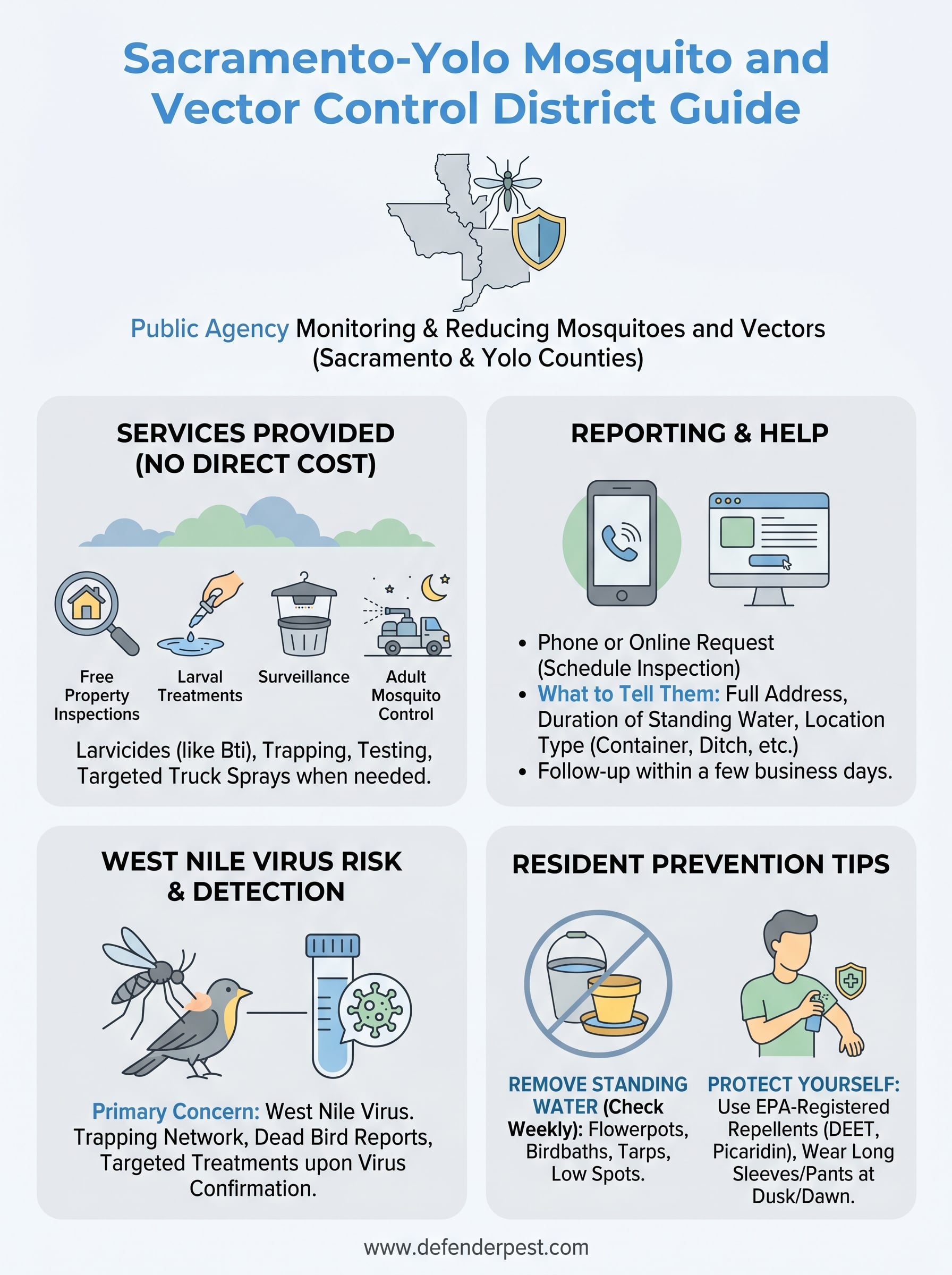
The Sacramento-Yolo Mosquito and Vector Control District delivers several services to residents at no direct cost , funded through property assessments. You do not need to pay out of pocket to request help or benefit from their ongoing work across both counties.
Free property inspections and larval treatments
If you report standing water or a suspected mosquito breeding site on or near your property, a district technician will come out to inspect and treat the source. Technicians use biological larvicides like Bacillus thuringiensis israelensis (Bti), which target mosquito larvae without harming pets, wildlife, or people. This service applies to both residential and commercial properties within the district boundary.
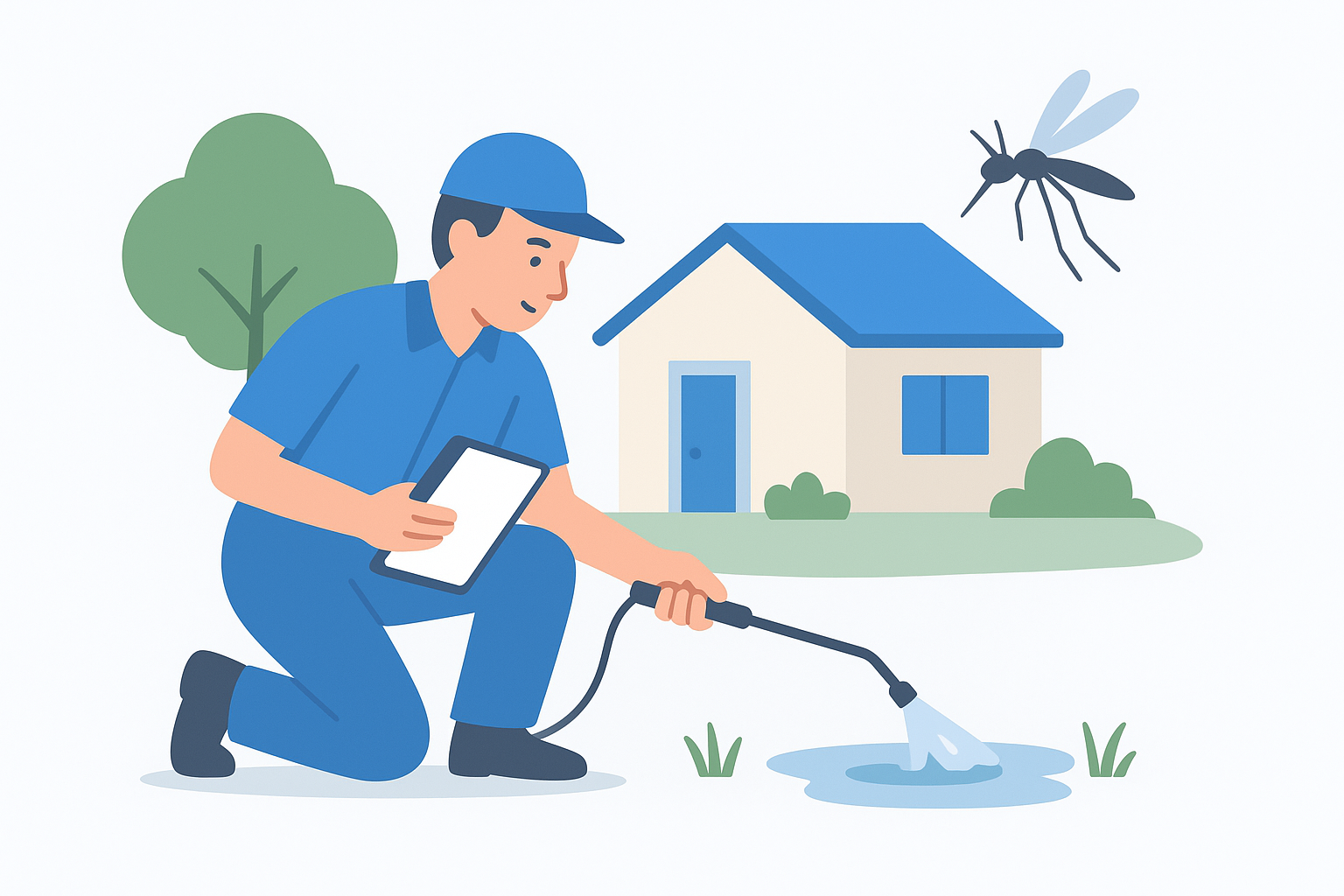
Larvicide treatments are most effective when applied early in the season before mosquito populations peak, so early reporting matters.
Surveillance and adult mosquito control
The district runs a year-round surveillance network that includes mosquito traps, field sampling, and virus testing. When mosquito populations reach threshold levels or West Nile virus is detected , the district can deploy truck-mounted sprayers for targeted adult mosquito control in specific areas. They also test dead birds and mosquito samples to track disease activity and alert public health officials when conditions become dangerous for residents.
How to report mosquitoes and request help
Contacting the sacramento-yolo mosquito and vector control district is straightforward. You can reach them by phone or through an online service request on their official website to schedule a free inspection. Both options connect you directly to staff who will arrange a property visit and treatment if they find active breeding sources on or near your property.
Report the problem early, and technicians have more options to treat larvae before adult mosquitoes emerge.
What to tell them
When you contact the district, give the most specific description you can. Include your full address and details about the standing water , such as how long it has been there and what type of area it occupies. A few details to have ready:
- Full address and best contact time
- How long the water has been standing
- Type of location: container, drainage ditch, or yard depression
After you submit your request
A field technician will follow up to schedule a visit, typically within a few business days. You do not need to be home if the breeding source is accessible from outside your property.
The technician treats the site and documents their findings for the district's ongoing surveillance records. If they identify a larger or recurring breeding area, follow-up visits may be scheduled automatically without you needing to call again.
How the district reduces West Nile risk
West Nile virus is the primary disease concern the Sacramento-Yolo Mosquito and Vector Control District monitors each year. The virus spreads through the bite of an infected mosquito, and the Sacramento Valley's warm summers and irrigated landscapes create conditions where transmission risk rises quickly if mosquito populations go unchecked.
Testing and early detection
The district runs a network of surveillance traps across both counties that collect live mosquitoes for virus testing throughout the active season. Technicians also collect dead bird reports from residents , since birds like crows and jays are highly susceptible to West Nile and their deaths often signal active virus circulation in an area.
Early detection through trapping and dead bird testing allows the district to respond before human cases appear.
Targeted treatments when virus is detected
When West Nile virus is confirmed in a trap or sample, the district moves quickly. Field crews deploy truck-mounted adulticide sprayers to reduce adult mosquito populations in the affected zone, typically at night when treatment is most effective and exposure to non-target insects is minimized.
You can check the district's official website for active treatment notices and spray schedules in your area so you know when crews will be working near your neighborhood.
What residents can do to prevent bites
The sacramento-yolo mosquito and vector control district handles regional mosquito control, but your property is your responsibility . The steps you take at home directly reduce how many mosquitoes breed near your family, and they complement the district's broader work across both counties.
Remove standing water around your home
Mosquitoes breed in small amounts of still water , and they do not need much. A clogged gutter, a neglected bucket, or a plant saucer filled with rainwater can produce hundreds of mosquitoes within a week . Walk your yard regularly and eliminate any water that has been sitting for more than a few days.
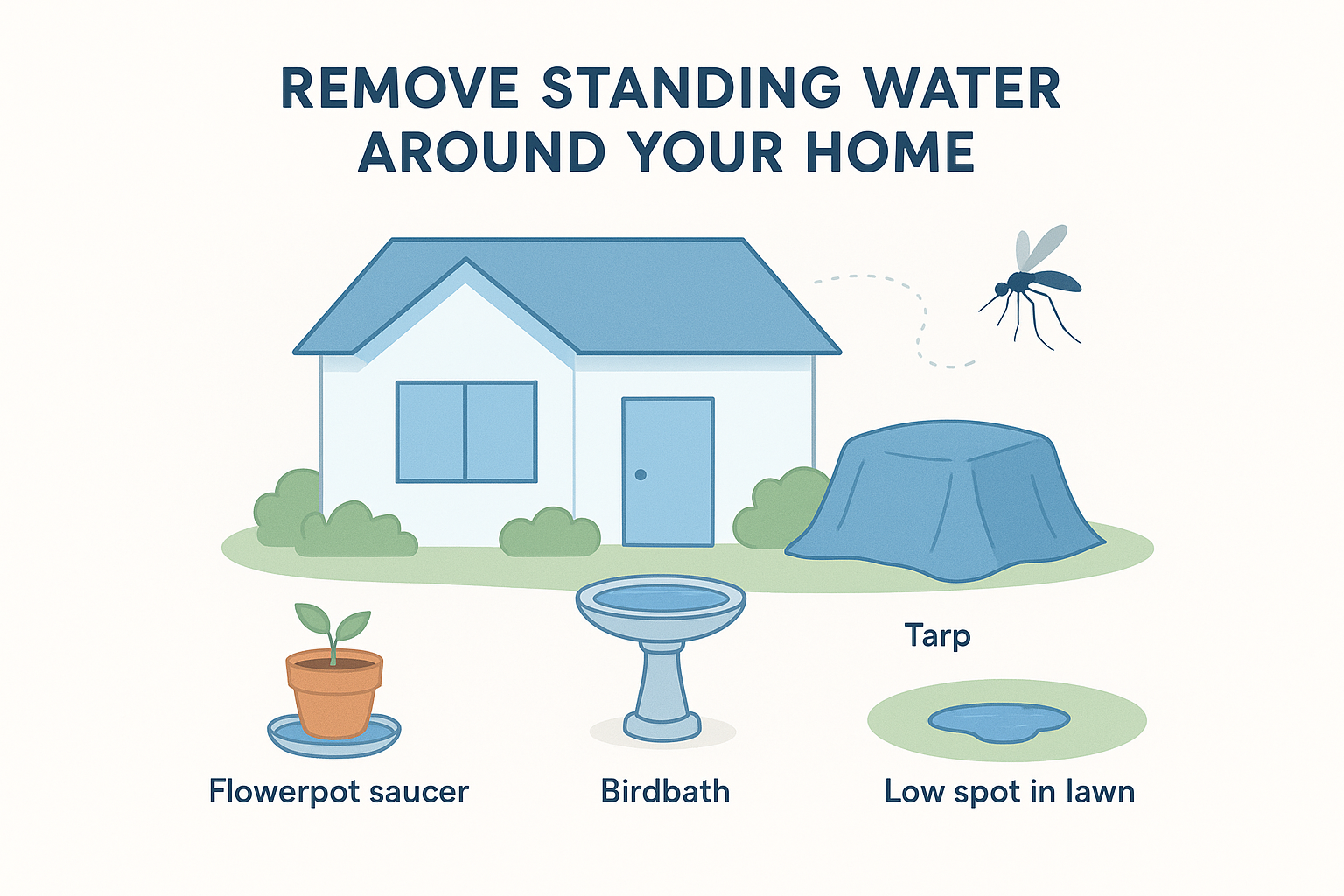
Even a bottle cap holding water is enough for a mosquito to lay eggs.
Common sources to check and empty:
- Flowerpot saucers and trays
- Birdbaths (change the water weekly)
- Tarps and outdoor furniture covers
- Low spots in your lawn after irrigation
Protect yourself outdoors
When you spend time outside, EPA-registered repellents containing DEET, picaridin, or IR3535 provide reliable protection against mosquito bites. Wear long sleeves and pants during dawn and dusk when mosquitoes are most active. These simple habits reduce your exposure without waiting for district intervention.
Next Steps
The sacramento-yolo mosquito and vector control district gives Sacramento and Yolo county residents free inspections, larvicide treatments, and ongoing disease surveillance. Use those services. If you spot standing water near your home, report it through their website or by phone so a technician can treat it before adults emerge. Remove water sources from your yard weekly, apply a registered repellent when you go outside at dusk, and check district notices for spray schedules in your neighborhood when West Nile activity picks up.
Mosquitoes are one part of the pest picture around your home. Termites, rodents, and insects can cause damage that mosquito abatement programs do not address, and that is where a local pest professional makes a difference. If you are dealing with any of those problems on your Sacramento-area property, contact Defender Termite & Pest Management for a free estimate from a team that has served this region since 1999.