How To Keep Mosquitoes Away From Patio: 5 Fixes That Work
Nothing ruins a Sacramento evening outdoors faster than mosquitoes turning your patio into their personal buffet. If you've been searching for how to keep mosquitoes away from patio spaces, you're not alone, it's one of the most common warm-weather complaints we hear from homeowners across the Greater Sacramento area.
The good news: you don't need to retreat indoors or douse yourself in chemicals every time you step outside. There are practical, proven fixes that actually reduce mosquito activity around your outdoor living space, some you can do yourself this weekend.
At Defender Termite & Pest Management, we've been helping Sacramento-area homeowners reclaim their properties from pests since 1999 . Below, we break down five fixes that work, from simple DIY adjustments to professional-grade solutions for when mosquitoes just won't quit.
1. Get professional mosquito control for your yard and patio
If you want reliable, long-lasting results, professional mosquito control is the most effective fix available. DIY sprays and citronella candles can take the edge off, but they rarely solve the underlying problem across your full yard and patio area.
How professional mosquito control works
Professional treatments target mosquitoes at multiple life stages , not just the ones already biting you. A technician applies residual insecticide to vegetation, shaded areas, and perimeter zones where adult mosquitoes rest during the day.
Many programs also include larvicide treatments for standing water sources that can't be eliminated, which kills mosquito larvae before they ever become biting adults. This two-pronged approach is what separates professional results from store-bought fixes.
When professional treatment makes the most sense
If you've tried the basics and mosquitoes keep coming back, your yard likely has a breeding or harborage problem that DIY products can't reach. Heavy vegetation, dense shade, and neighboring properties with untreated water can all overwhelm basic repellent strategies.
Professional mosquito control is especially worth it before outdoor events, during peak mosquito season in Sacramento (May through October), or when activity is affecting daily use of your yard.
What to expect from an inspection and treatment plan
A technician will walk your property, identify resting sites and water sources , and build a treatment plan specific to your yard's layout. Most residential programs include:
- Recurring treatments every 3 to 4 weeks during active season
- Follow-up visits if activity spikes between appointments
- Adjustments based on seasonal conditions or new harborage areas
Typical pricing in the Sacramento area
Pricing varies by yard size and frequency, but most Sacramento homeowners pay between $75 and $150 per visit for recurring mosquito control. Seasonal packages reduce the per-visit cost when you commit to a full-season program , making it more cost-effective than one-off treatments.
2. Eliminate and treat standing water near your patio
Removing standing water is one of the most impactful steps for how to keep mosquitoes away from patio spaces, and it costs you nothing. Mosquitoes need only a teaspoon of still water to lay eggs, and your patio is likely surrounded by breeding sites you haven't noticed.
Why standing water creates a mosquito problem fast
Mosquitoes complete their full aquatic life cycle in just 7 to 10 days . One rain shower and a forgotten container means a new batch of biting adults by the following week.
Eliminating water sources breaks the breeding cycle before it starts, which is more effective than any repellent applied after the fact.
Where mosquitoes hide water around patios
Standing water hides in predictable spots most homeowners overlook. Check these locations at least once a week :
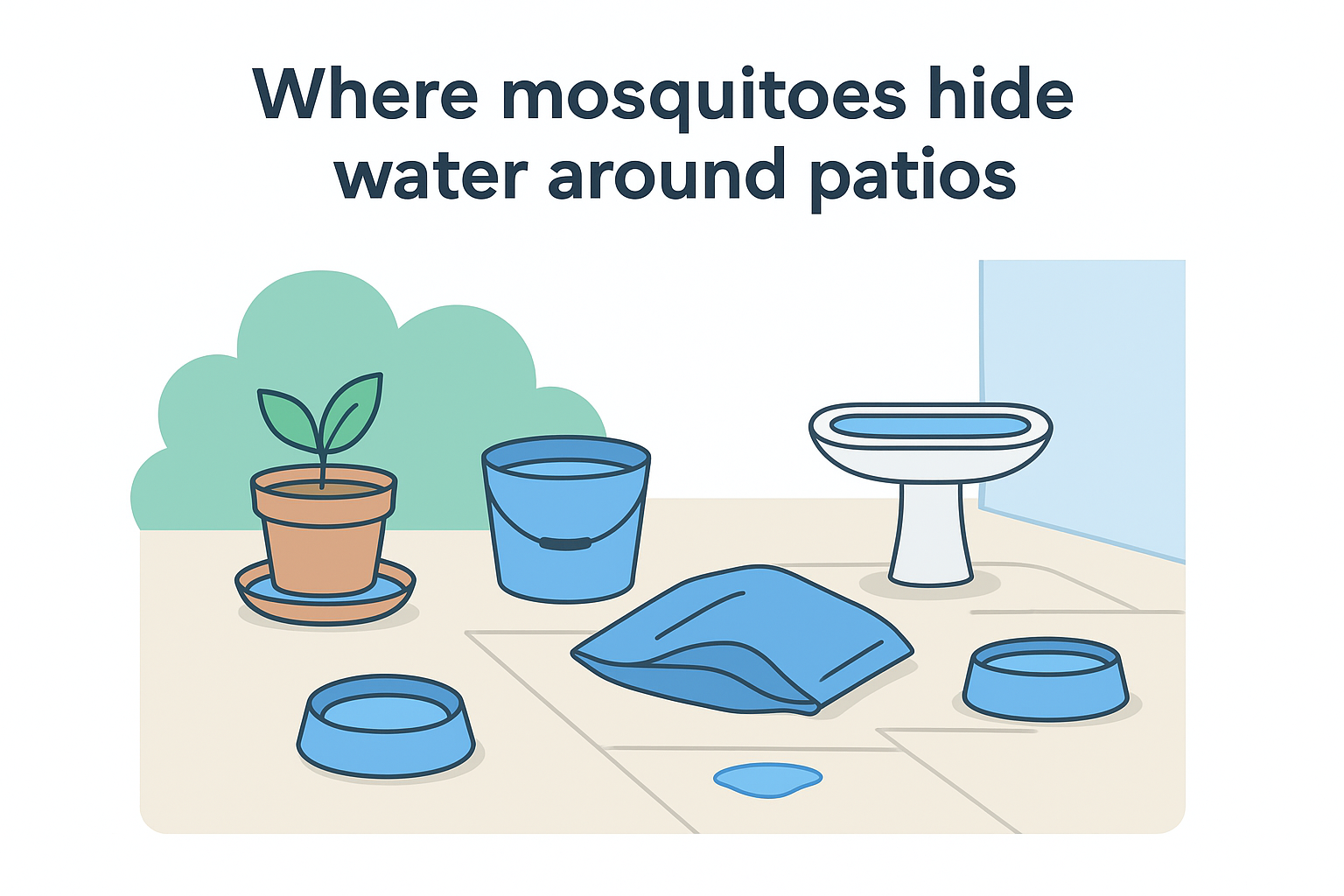
- Plant saucers, buckets, and folded tarps
- Clogged gutters and downspout trays directly above the patio
- Bird baths, pet bowls, and decorative pots
- Low spots in paving or adjacent lawn areas
What to drain, dump, cover, or refresh weekly
Empty and scrub containers that collect water at least once per week. Scrubbing matters because mosquito eggs cling to interior surfaces and survive a basic rinse.
Tipping out water once a week is faster than managing mosquitoes all summer.
What to use when you cannot remove the water
For water you cannot eliminate, such as ponds or rain barrels, use Bti (Bacillus thuringiensis israelensis) dunks . These are EPA-registered larvicides that kill mosquito larvae without harming pets, birds, or beneficial insects.
3. Add airflow with outdoor fans
Outdoor fans give you one of the most effective mechanical fixes for how to keep mosquitoes away from patio spaces without chemicals. Mosquitoes are weak flyers , and a steady breeze makes it nearly impossible for them to track you and land.
Why airflow stops mosquitoes from landing and biting
Mosquitoes locate targets by sensing carbon dioxide and body heat , both of which scatter quickly in moving air. Even a 1 to 2 mph breeze is enough to break their flight pattern and cut biting activity significantly.
Consistent airflow also reduces the humid, warm surface conditions that draw mosquitoes to your patio in the first place.
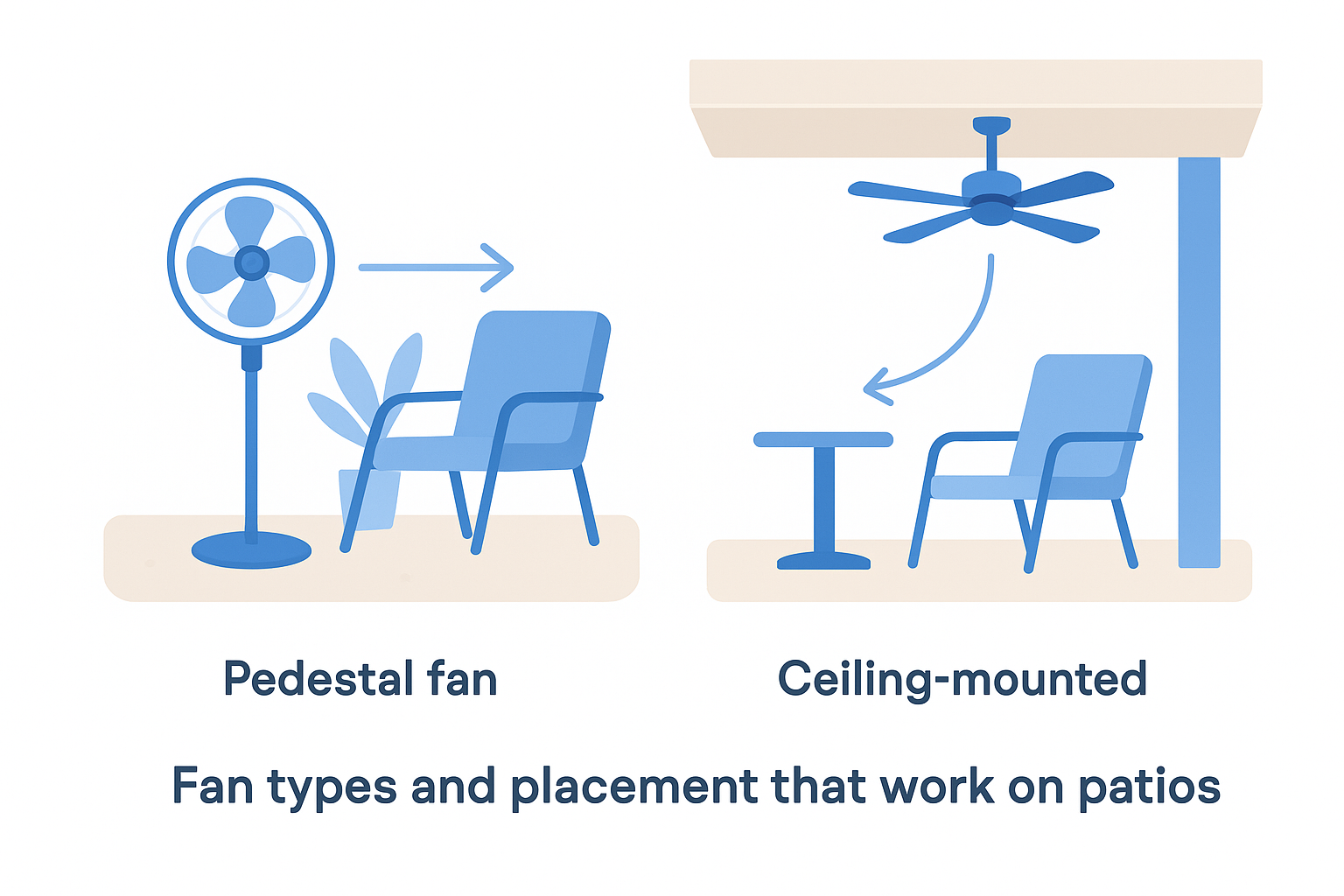
Fan types and placement that work on patios
Pedestal fans let you direct airflow straight at seating areas, making them the most flexible option. For covered patios, ceiling-mounted outdoor fans free up floor space while pushing air downward across a wider zone. Aim any fan low since mosquitoes fly close to the ground near their targets.
How many fans you need for small vs large patios
One pedestal fan handles most patios under 150 square feet. Larger spaces need two fans placed at opposing ends to build overlapping airflow with no dead zones in between.
Typical pricing and operating costs
Pedestal fans run $50 to $150 , while outdoor-rated ceiling fans cost $100 to $300 . Monthly operating costs stay well under $15 for most households.
4. Block entry with screens, netting, and door sealing
Physical barriers give you a passive, chemical-free layer of protection that works around the clock. When you think about how to keep mosquitoes away from patio spaces, blocking their entry points is one of the most overlooked fixes available.
How physical barriers beat "repellents" for patios
Repellents require constant reapplication and only protect the people wearing them. A well-sealed patio with screens or netting keeps mosquitoes out of the entire space , so everyone benefits without extra effort.
Fast options for renters vs permanent upgrades
Clip-on patio netting installs without tools and comes down easily, making it a solid option for renters. Homeowners can invest in fixed screen panels or retractable screen systems that attach to posts or pergola frames for a more durable solution.
Retractable screen systems let you open your patio fully on low-mosquito evenings and close it in minutes when conditions change.
Common gaps that let mosquitoes in anyway
Even with screens up, mosquitoes enter through gaps around door frames, utility penetrations, and torn mesh . Inspect your screening regularly and patch small tears immediately with mesh repair tape before they widen.
Typical pricing for DIY vs pro installation
DIY netting kits run $20 to $60 , while professionally installed screen enclosures for a full patio typically cost $1,500 to $4,000 depending on size and materials.
5. Use EPA-registered repellents for people and patio zones
When other fixes aren't enough on their own, EPA-registered repellents add a targeted layer of protection for both your skin and your patio space. This is a practical complement to the other strategies for how to keep mosquitoes away from patio areas.
What actually works on skin and why
DEET, picaridin, and oil of lemon eucalyptus (OLE) are the active ingredients with the strongest evidence behind them. They work by masking the chemical signals mosquitoes use to detect you, not by killing them. Stick to these three:
- DEET (20-30% concentration for adults)
- Picaridin (20% for all-day protection)
- OLE (30% for ages 3 and up)
Patio-area options like sprays, coils, and diffusers
Spatial repellents like metofluthrin-based diffusers and mosquito coils create a treated zone around your seating area. Battery-powered diffusers work better than coils in breezy conditions since they don't rely on smoke drift.
Use spatial repellents alongside personal protection for the best coverage across your full patio zone.
Scents and home remedies to skip
Citronella candles, lavender, and essential oil sprays consistently underperform in independent testing. These products may reduce odors slightly but do not provide reliable protection against biting. Skip these common options:
- Citronella candles and torches
- Lavender or peppermint oil sprays
- Garlic-based yard sprays
Typical pricing and how long protection lasts
DEET and picaridin sprays run $8 to $15 per bottle and protect skin for 4 to 8 hours per application. Patio-zone products fall in this range:
- Diffuser units: $15 to $30
- Refill cartridges: $10 to $20 per pack
- Coil packs: $5 to $10
Next steps for a mosquito-free patio
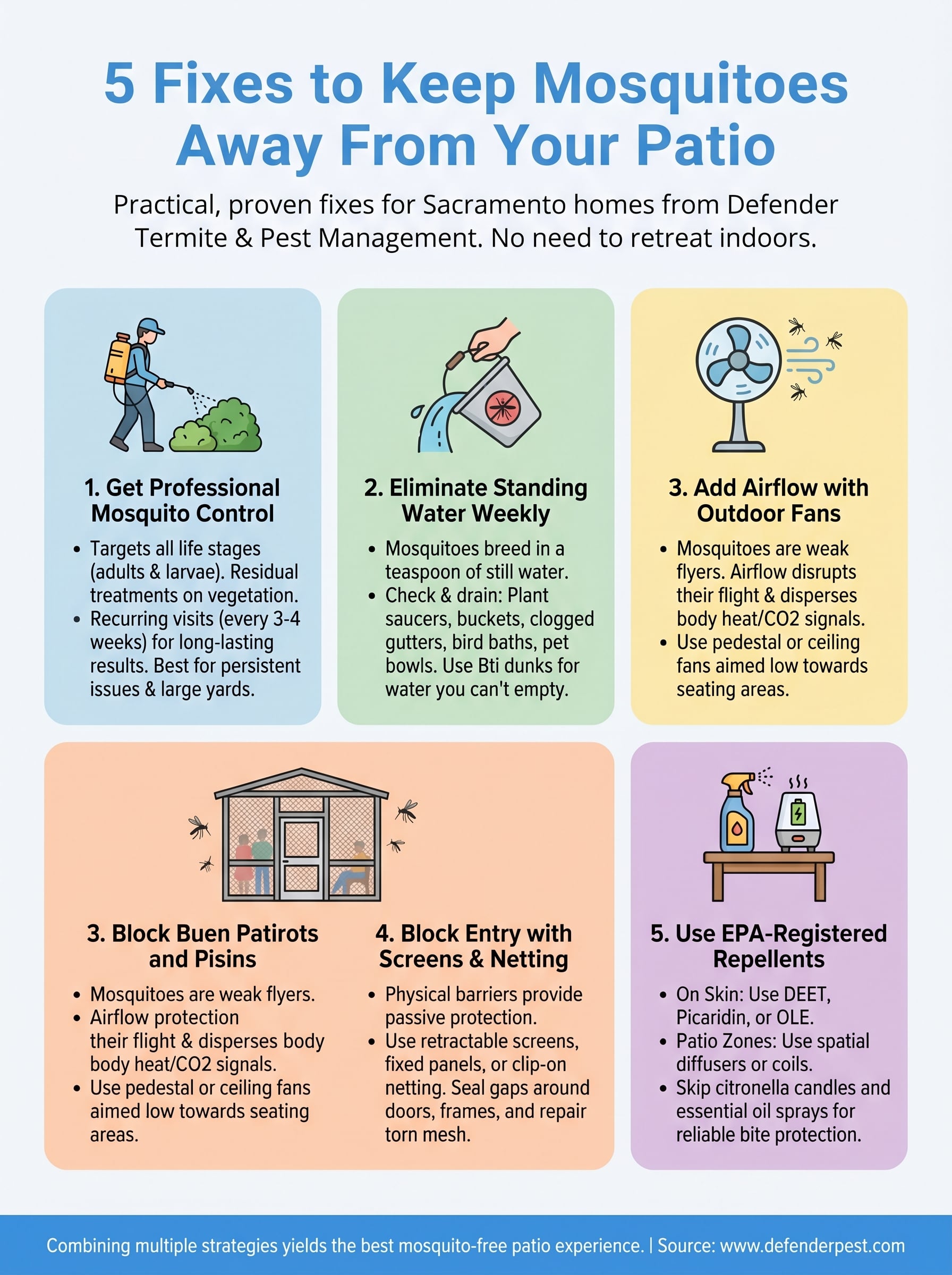
You now have five proven fixes for how to keep mosquitoes away from patio spaces. Start with the easiest wins first: dump standing water this week , add a fan to your seating area, and pick up a bottle of picaridin for personal protection. These three steps alone will cut mosquito activity faster than any single product can.
For persistent mosquito pressure, combining multiple strategies gives you the best results . Fans and repellents handle immediate comfort, while barrier screening and standing water removal address the root causes.
If mosquitoes keep showing up despite your efforts, your yard likely has a harborage or breeding source that needs professional attention. The team at Defender Termite & Pest Management has been solving exactly this problem for Sacramento homeowners since 1999. Request a mosquito control quote and get a treatment plan built around your specific yard, not a generic fix.