Ants In The House: How To Get Rid Of Ants In The House Fast
You spot one ant on the kitchen counter. Then five. By the next morning, there's a full trail marching from the window to the sink. If you're trying to figure out how to get rid of ants in the house , you're not alone, it's one of the most common pest problems Sacramento homeowners deal with, especially once temperatures start climbing. The good news is that most early-stage ant problems can be handled with the right approach and a little persistence.
At Defender Termite & Pest Management, we've been solving pest problems across the Greater Sacramento area since 1999. We've seen every level of ant infestation, from a handful of scouts near a dog bowl to full colonies nesting inside wall voids . That hands-on experience is exactly what shaped this guide. We want to give you real, practical steps you can take right now to knock out an ant problem before it gets worse.
Below, you'll find DIY methods, natural remedies, and kitchen-safe solutions that actually work, along with guidance on when it's time to call a professional . Whether you're dealing with Argentine ants, odorous house ants, or carpenter ants, this article covers what to do and why it matters for protecting your home.
Why ants show up indoors
Ants don't wander into your home by accident. Worker ants are constantly scouting for three things: food, water, and shelter. When conditions outside become too dry, too hot, or too wet, your home becomes a practical alternative. In Sacramento, this shift typically happens in late spring and early summer and again after the first fall rains, when ant colonies change their foraging patterns and start probing structures for reliable resources. Knowing what pulls them inside is the first step toward solving the problem at its source.
What draws ants to your kitchen and living spaces
The triggers are more specific than most people expect. Crumbs under the stove, a dripping faucet, and open pet food bowls are among the most common attractants found in Sacramento homes. Ants can detect sugar and protein sources from a significant distance, and once a scout finds something worth reporting, she lays a chemical scent trail back to the colony. Within hours, dozens of workers follow that exact path to the source, which is why an ant problem can go from a few individuals to a full line overnight.
Here are the most common indoor attractants to be aware of:
- Food residue : grease splatter near the stove, crumbs under appliances, or sticky residue on counters
- Standing water : leaky pipes under sinks, condensation on water lines, or pet water dishes left out
- Sugary substances : juice spills, open fruit bowls, syrup containers, and unwrapped candy
- Garbage : open trash bins or bags sitting directly on the floor
- Pet food : dry kibble left in a bowl for extended periods, especially overnight
Once a scout ant lays a scent trail to a food source, removing the food alone won't stop the traffic. You have to eliminate the trail itself or the workers will keep returning.
How ant colonies find their way inside
Ants exploit the smallest structural gaps to enter a building. Common entry points include cracks in the foundation, gaps around window frames and door sweeps, utility penetrations, and spaces where pipes pass through walls . In older Sacramento homes especially, worn weatherstripping and settling foundations create easy access routes. Once ants establish a path, they use it repeatedly, often for weeks, before you notice a visible trail indoors.
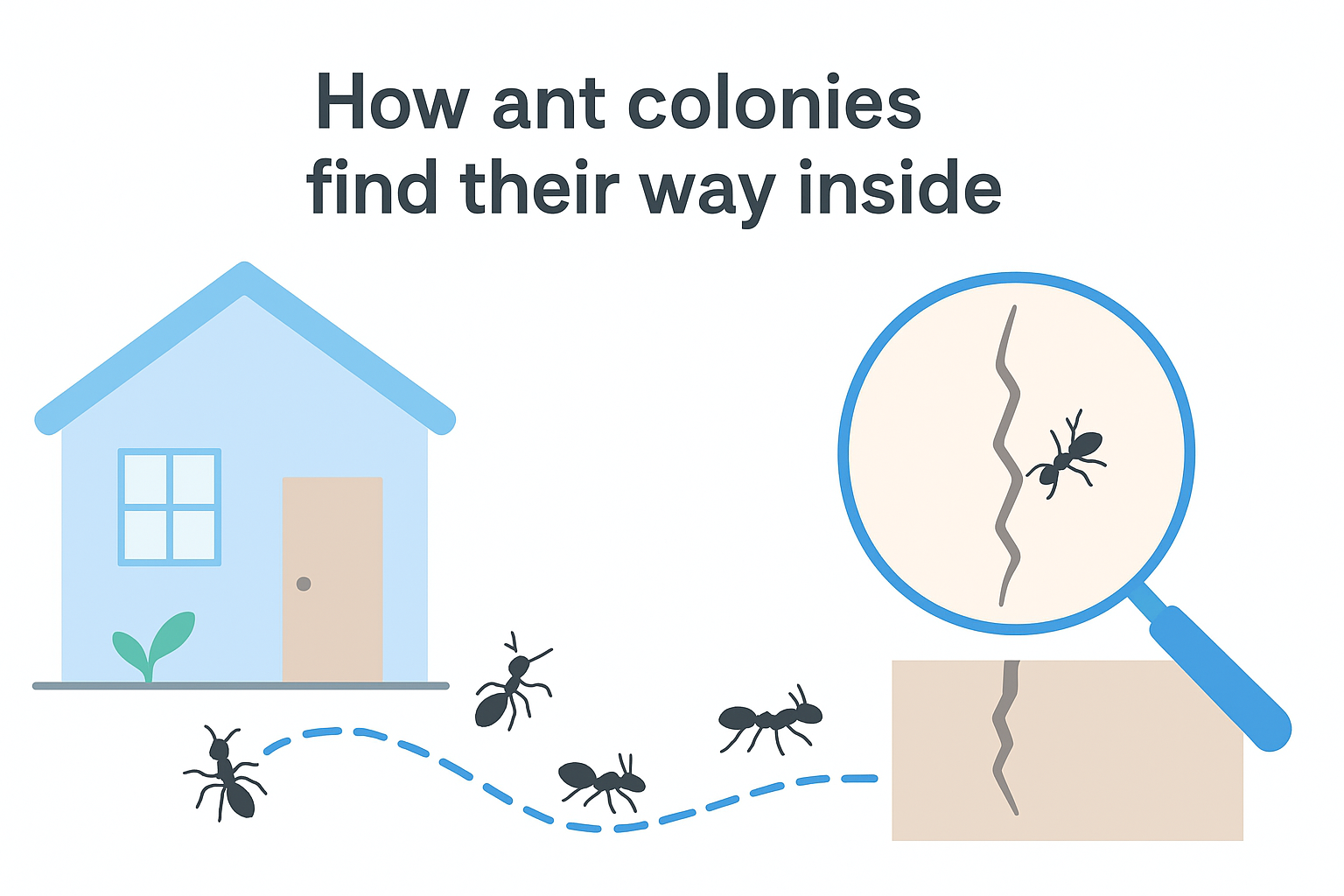
Your home's exterior condition plays a direct role in how quickly an infestation develops. A colony doesn't need a large opening to get inside. A gap the width of a credit card is enough for most ant species. That's why figuring out how to get rid of ants in the house requires more than putting out bait. You need to understand both what's attracting them and where they're physically entering before you can build a real defense.
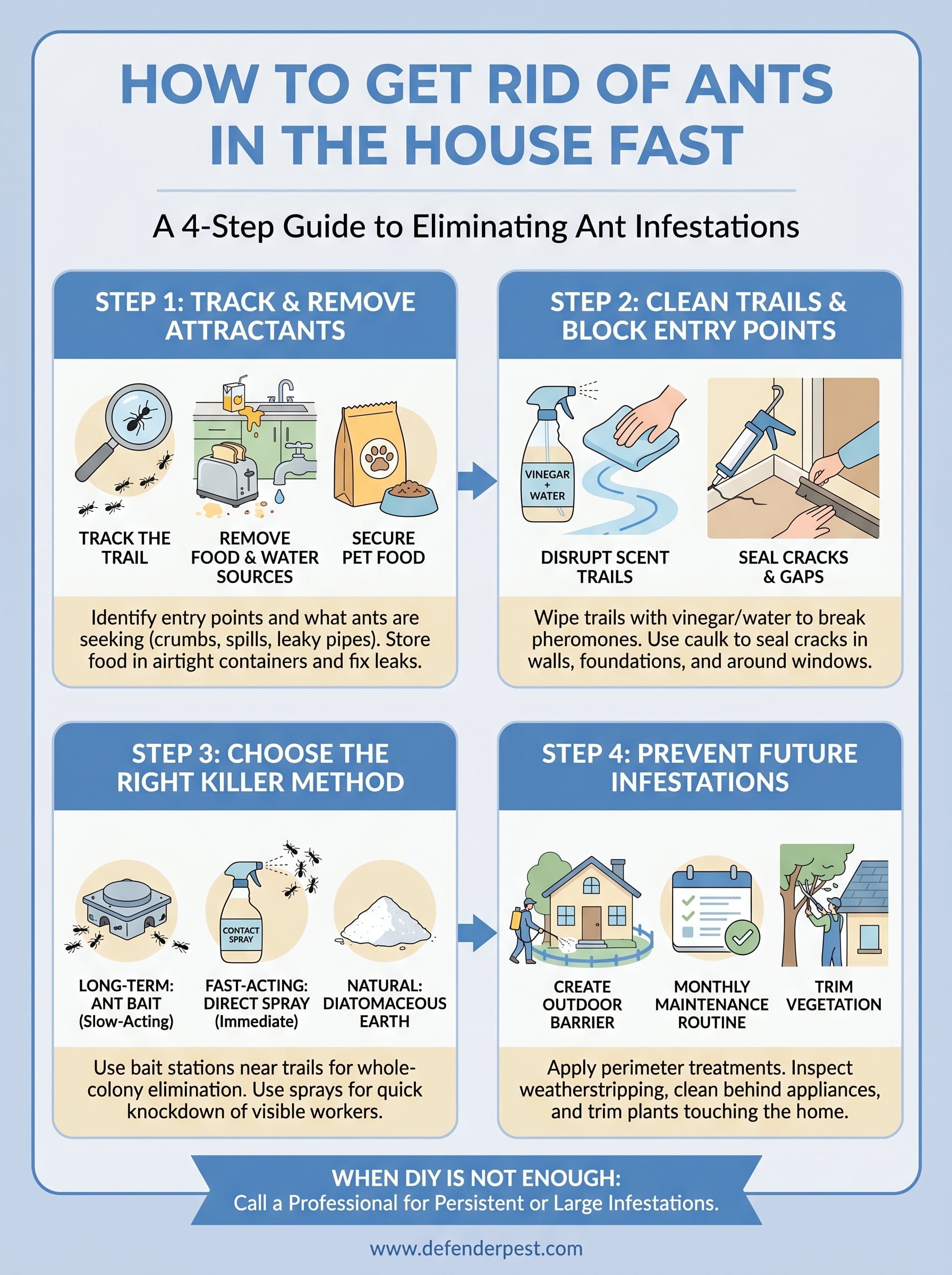
Step 1. Track the ants and cut off food and water
Before you apply anything, you need to know what you're dealing with. Follow the ant trail in both directions: back toward the entry point and forward toward the food or water source they've found. Don't disturb the trail yet. Watching it for a few minutes tells you where the colony is accessing your home and what's pulling workers inside, which gives you a clear target for the next steps.
Find and remove the food source
The fastest way to reduce ant activity is to eliminate what they came for. Check the areas around your stove, under the refrigerator, and inside pantry shelves for any residue, open containers, or spills. Transfer dry goods like sugar, cereal, and flour into sealed airtight containers rather than leaving them in their original packaging. Ants can chew through thin cardboard and plastic bags without much effort.
- Wipe down counters and the stovetop after every meal
- Empty pet food bowls at night instead of leaving them out
- Store fruit in the refrigerator rather than in open bowls on the counter
- Check behind and under appliances for grease buildup or crumbs
Cut off their water access
Many homeowners focus entirely on food but overlook moisture as an equally strong attractant . Check under sinks for slow drips, look for condensation on cold water pipes, and fix any leaky faucets you've been putting off. Ants only need a small, consistent water source to keep foraging indoors.
Fixing a dripping pipe takes less than an hour and can reduce ant activity faster than any bait or spray applied over an untreated water source.
Figuring out how to get rid of ants in the house starts here, because no treatment holds if the attractants remain in place.
Step 2. Remove scent trails and block entry points
Once you've cut off the food and water source, the chemical trail left behind by scout ants still exists on your floors, counters, and walls. That trail is invisible to you but acts as a clear highway for every worker ant following it. Cleaning the surface alone with a damp cloth does very little. You need to actively disrupt the pheromone signal to stop the incoming traffic.
Destroy the scent trail
White vinegar is one of the most effective and kitchen-safe options for breaking down ant pheromone trails. Mix equal parts white vinegar and water in a spray bottle and wipe down any surface where you've seen ant activity, including baseboards, countertops, windowsills, and the floor near entry points. Repeat this once a day for at least three days, since a single wipe rarely eliminates the trail completely.
Other effective options you can use to disrupt scent trails include:
- Dish soap and water : spray directly on visible ant trails and wipe clean
- Lemon juice : apply along baseboards and counters, the citric acid disrupts pheromone signals
- Peppermint essential oil : dilute with water and apply at known entry zones
Wiping up dead ants with a dry cloth can actually spread trail pheromones further. Always use a damp cloth with a cleaning agent to neutralize the scent.
Seal the entry points
After disrupting the trail, identify every gap, crack, or hole the ants used to enter. Common spots include the gap under exterior doors, spaces around plumbing pipes, cracks in baseboards, and deteriorated weatherstripping along windows . Use silicone-based caulk for cracks and gaps in walls or foundations, and replace worn door sweeps on exterior doors. These physical barriers are a core part of figuring out how to get rid of ants in the house for the long term, not just for the current wave.
Step 3. Choose the right killer method for your home
Not every ant treatment works the same way, and picking the wrong one can actually make the problem worse . Spraying a contact killer on an active trail, for example, kills visible workers but leaves the queen and the colony intact. The key to figuring out how to get rid of ants in the house is matching the method to your specific situation, whether you need to eliminate the colony at the source or deal with a fast-moving visible trail right now.
Ant bait: the most effective long-term option
Bait is the most reliable option for most household ant problems. Worker ants carry the slow-acting bait back to the colony , where it eventually reaches the queen. Without the queen, the colony collapses. Place bait stations directly on or next to the active ant trail, not away from it, since the workers need to find it naturally. Gel baits like Terro liquid ant bait work well for sugar-feeding species like Argentine ants and odorous house ants, which are the most common types found in Sacramento homes.
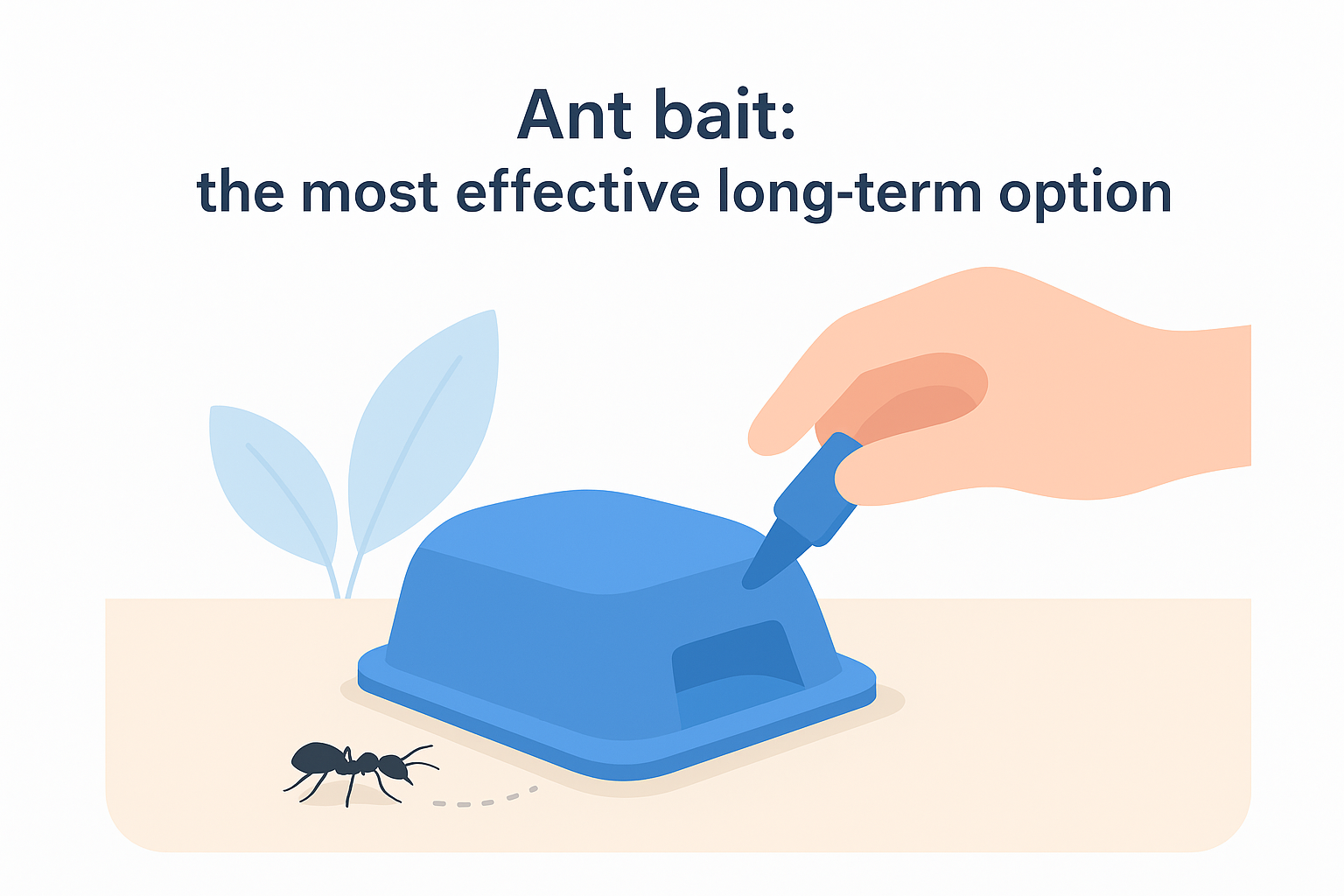
Don't spray anything near your bait stations. Residual sprays will repel ants away from the bait, which stops the bait from working entirely.
Fast-acting options for visible ants
When you have a large visible trail that needs to be dealt with quickly, a direct contact spray gives you immediate knockdown of surface workers. Food-safe options like diatomaceous earth work well along baseboards and in dry areas. Spread a thin, even layer across entry zones and behind appliances , and reapply after cleaning or if it gets wet, since moisture renders it ineffective. For kitchen areas, look for products labeled safe for use around food preparation surfaces.
Step 4. Prevent ants from coming back long-term
Stopping an active infestation is only half the job. If you don't change the conditions that invited ants in , a new wave of scouts will find their way back within weeks. Solving how to get rid of ants in the house permanently means building habits and physical barriers that make your home consistently unattractive to foraging colonies, season after season.
Set up a perimeter barrier outside
The best place to stop ants is before they reach your foundation. Apply a granular or liquid residual insecticide around the perimeter of your home , focusing on the 12-inch band directly against the foundation wall. Reapply every 60 to 90 days, or after heavy rain, since moisture breaks down most products quickly. Trim back any shrubs, tree branches, or mulch beds that touch your exterior walls, since these act as bridges that bypass your perimeter treatment entirely.
A consistent outdoor barrier treatment does more to prevent recurring infestations than any amount of indoor spraying after ants have already entered.
Build a monthly maintenance routine
Preventing future infestations comes down to consistent habits, not one-time fixes. Run through this checklist once a month to stay ahead of new ant activity before it becomes a visible problem inside your home:
- Inspect weatherstripping on all exterior doors and replace anything worn or cracked
- Check under sinks and around pipe penetrations for new moisture or gaps
- Pull appliances away from the wall and clean any grease or crumb buildup
- Reapply caulk to any new cracks in baseboards or the foundation
- Empty and clean pet food bowls each evening
- Confirm that all dry pantry goods are stored in sealed, hard-sided containers
Running through this list regularly takes less than 20 minutes and removes the conditions ants rely on to establish a foothold in your home.
When DIY is not enough
Most ant problems respond well to the steps in this guide, but some infestations run deeper than surface treatments can reach. Carpenter ants nesting inside wall voids , large Argentine ant super-colonies spanning multiple properties, and repeat infestations that return within weeks despite consistent effort all point to a problem that needs professional assessment. If you've followed every step above on how to get rid of ants in the house and still see heavy ant activity after two weeks, the colony is likely established somewhere you can't access without specialized equipment.
Professional treatments reach nesting sites inside walls, under slabs, and beneath the foundation where no consumer product goes. A licensed technician can also identify the exact ant species and apply targeted treatments that match the biology of that specific colony. If you're in the Sacramento area and ready to get the problem solved for good, contact Defender Termite & Pest Management for a professional assessment.