Tick Control: How To Get Rid Of Ticks In Your Yard Fast
Ticks don't just sit in the woods waiting for hikers. They live in tall grass, leaf piles, and overgrown edges, the exact spots where your kids and pets spend their time. If you've spotted ticks on your property, you're right to act quickly. Knowing how to get rid of ticks in your yard starts with understanding what attracts them and which methods actually work to reduce their population fast .
The good news: you have options. Chemical treatments, landscaping changes, and natural alternatives can all play a role, and many of them are safe for children and pets when applied correctly. Some you can handle yourself; others call for professional-grade treatment to get lasting results.
At Defender Termite & Pest Management, we've helped Sacramento-area homeowners deal with yard pests since 1999. As a family-owned company , we know how personal this is, it's your backyard, your family, your peace of mind. This guide breaks down the most effective tick control strategies step by step, so you can take back your yard with confidence.
What attracts ticks to your yard
Ticks don't randomly show up in your yard. They follow moisture, shade, and dense vegetation because those conditions help them survive between hosts. If your yard has any combination of tall grass, overgrown shrubs, or piled leaf debris, you're giving ticks exactly what they need to establish a population and wait for a warm-blooded host to pass by.
Ticks can survive for months without feeding, which means a single favorable hiding spot in your yard can support them through an entire season.
Yard conditions that create tick habitat
Tall grass and leaf litter are the two most common tick magnets. Ticks can't regulate their own body temperature, so they seek out cool, humid environments to avoid drying out. Shaded areas under trees, along fence lines, and near woodpiles give them that cover. Cluttered or unmaintained edges between your lawn and wooded or brushy areas are particularly high-risk zones where tick populations tend to concentrate.
Common yard features that attract ticks:
- Grass taller than 3 to 4 inches
- Piles of fallen leaves or brush
- Dense ground cover like ivy or pachysandra
- Shaded, damp soil under decks or shrubs
- Woodpiles stored directly on the ground
Wildlife that carries ticks into your yard
Deer, rodents, and birds are the primary carriers that bring ticks onto residential properties. White-tailed deer are well-known hosts for adult black-legged ticks, but mice and other small rodents are equally important because they carry immature ticks in large numbers. If deer regularly pass through your yard or you have a rodent problem nearby, your tick exposure rises significantly. Knowing how to get rid of ticks in your yard means addressing these animal pathways, not just treating the grass.
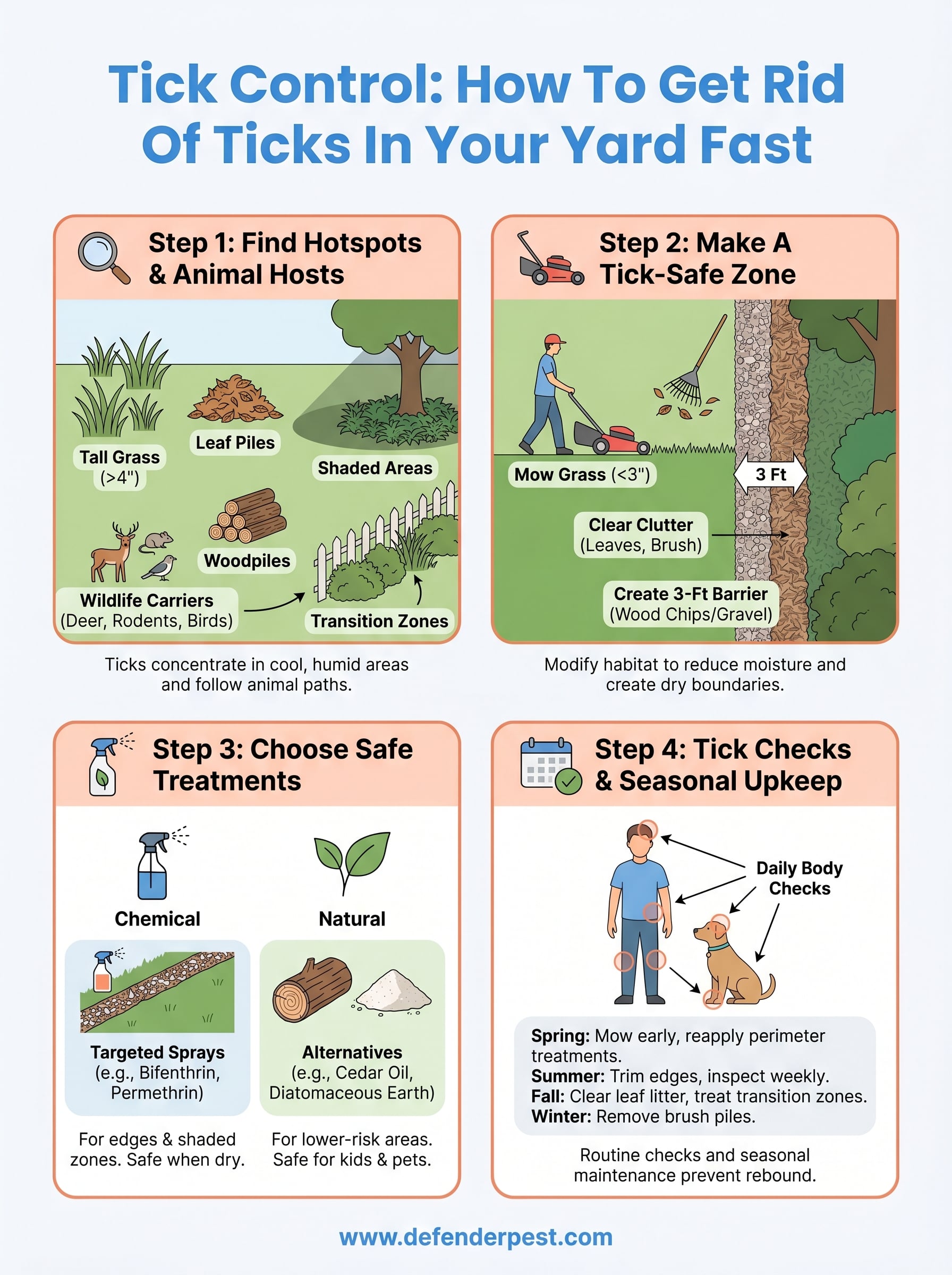
Step 1. Find tick hotspots and animal hosts
Before you treat anything, you need to know where ticks are hiding in your yard. Walk the perimeter of your property and look for areas where shade, moisture, and dense vegetation overlap. Those are the zones that need your attention first.
Where ticks concentrate in your yard
Ticks cluster in transition zones , the boundary where your maintained lawn meets taller grass, brush, or wooded areas. Check along fence lines, under decks, around shrubs, and near any woodpiles or compost bins . These spots stay cool and humid even in summer, which is exactly what ticks need to survive between feedings.
Use this checklist to identify hotspots:
- Unmowed edges along fences or property lines
- Leaf litter under trees or in garden beds
- Ground cover plants like ivy or pachysandra
- Shaded areas under decks or porches
- Brushy borders adjacent to wooded areas
Signs that animals are carrying ticks in
Deer trails, rodent burrows, and bird feeders are reliable signs that wildlife is moving through your yard and dropping ticks as they go. If you notice worn paths through your grass or disturbed soil near your foundation, those are entry points worth treating.
Addressing animal access points is one of the most overlooked steps in how to get rid of ticks in your yard for good.
Step 2. Make a tick-safe zone with yard work
Physical changes to your yard are one of the most effective ways to reduce tick pressure when figuring out how to get rid of ticks in your yard without relying entirely on chemicals. By modifying the environment itself, you remove the conditions ticks need to survive , which makes any treatment you apply afterward more effective and longer-lasting.
Cut grass and clear clutter
Mow your lawn regularly and keep grass below 3 inches to eliminate the cool, humid environment ticks prefer. Rake up leaf litter, remove brush piles, and clear out any dense ground cover near play areas or high-traffic zones. These tasks reduce available tick habitat quickly and consistently.
A clean yard perimeter cuts off tick hiding spots before populations have a chance to build up through the season.
Create a barrier between your lawn and wooded areas
Install a 3-foot-wide strip of wood chips or gravel along the border where your lawn meets any wooded or brushy zones. This dry barrier discourages ticks from crossing into your maintained lawn because they dehydrate quickly on exposed, dry surfaces. Move play equipment, seating areas, and sandboxes away from these edges and into sunnier, open spots where ticks struggle to survive.

Step 3. Choose tick treatments safe for kids and pets
Once your yard work is done, targeted treatment fills the gaps that landscaping alone can't close. Knowing which products to use and how to apply them is the most important part of how to get rid of ticks in your yard without putting your family or animals at risk.
Chemical treatments that work
Bifenthrin and permethrin-based sprays are the most effective chemical options for yard tick control. Apply them along lawn edges, shaded areas, and transition zones rather than saturating the entire yard. Keep children and pets off treated areas until the product dries completely, which typically takes 30 to 60 minutes depending on humidity.
Always read the full product label before application. The label specifies drying time, reapplication intervals, and any pet-specific restrictions.
Natural alternatives for lower-risk areas
Cedar oil and diatomaceous earth are two natural options that work well in lower-traffic zones or as a supplement to chemical treatment. Cedar oil spray disrupts tick neurology without synthetic compounds, while food-grade diatomaceous earth dehydrates ticks on contact when applied to dry soil. Neither replaces a full chemical program in high-infestation areas, but both reduce exposure in spots where kids and pets spend the most time.
Step 4. Do tick checks and seasonal upkeep
Treatments and landscaping reduce tick populations significantly, but routine checks and seasonal maintenance are what keep them from rebounding. Consistent upkeep is the final layer in how to get rid of ticks in your yard and keep them out long-term.
How to do a tick check after outdoor time
After spending time outside, check high-risk body areas including behind the knees, around the waistline, in the hairline, and between the toes. Check pets immediately after they come inside, focusing on ears, collar areas, and between the paw pads. Remove any attached ticks with fine-tipped tweezers , gripping as close to the skin as possible and pulling steadily upward without twisting.
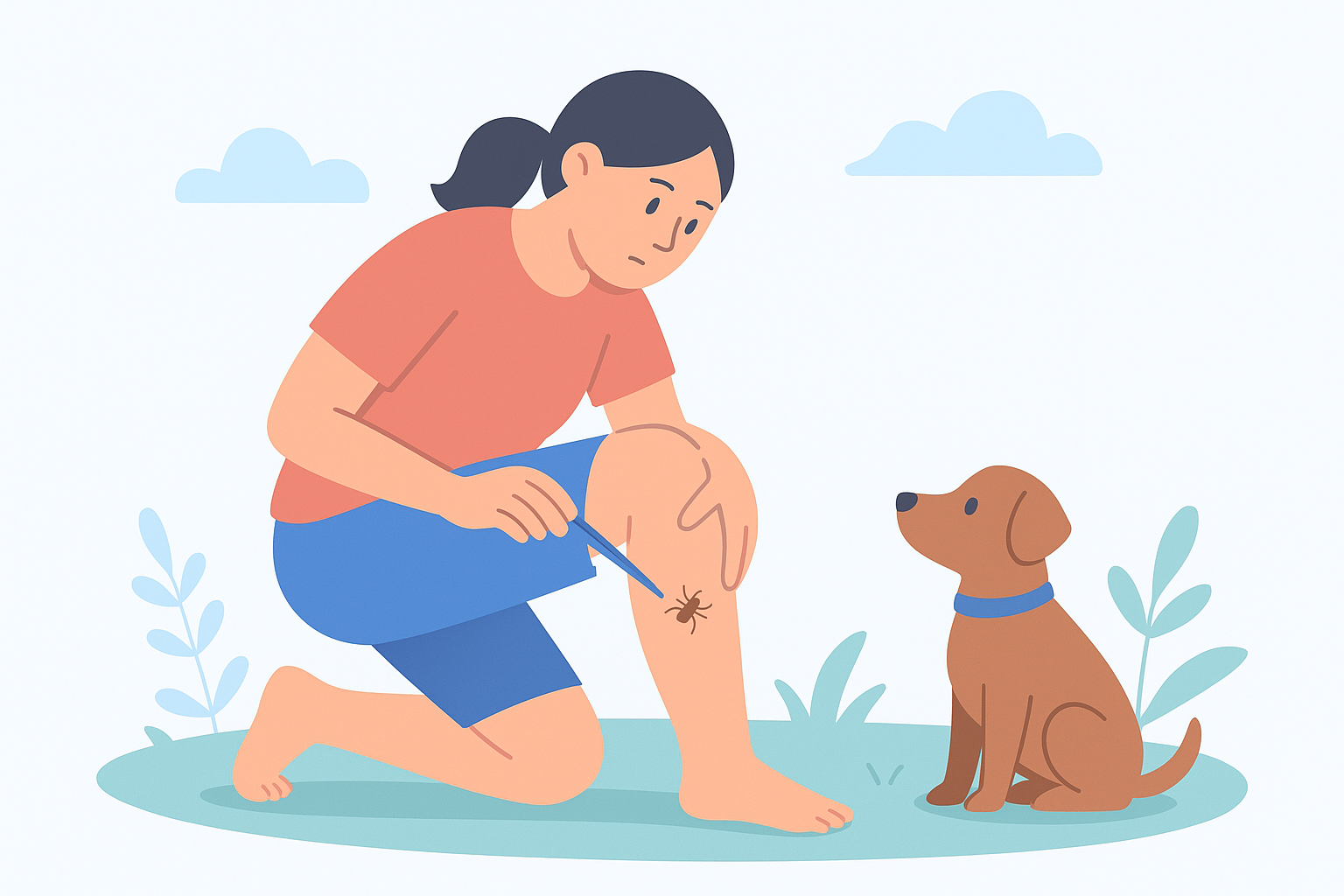
The CDC recommends showering within two hours of coming inside to wash off unattached ticks and make a full-body check easier.
Seasonal yard maintenance schedule
Your tick control routine should shift with the seasons to stay ahead of activity peaks.
| Season | Action |
|---|---|
| Spring | Reapply perimeter treatments, mow early |
| Summer | Check weekly, trim edges, inspect pets daily |
| Fall | Clear leaf litter, treat transition zones again |
| Winter | Remove brush piles before spring emergence |
Keep your yard tick-free
Knowing how to get rid of ticks in your yard is only half the job. The other half is staying consistent. Regular mowing, seasonal treatments, and daily pet checks work together to keep tick populations from rebuilding after your initial control effort. Skip one part of that routine, and you give ticks the opening they need to come back.
Most homeowners see strong results when they combine landscaping changes with targeted chemical treatment applied two to three times per year. If you're seeing ticks despite your own efforts, or if your yard borders wooded land or has regular deer activity, a professional program gives you faster, more reliable results than DIY methods alone.
Defender Termite & Pest Management has served Sacramento-area families since 1999 with treatments built around what actually works. If you're ready to stop guessing and start getting results, contact our pest control team for a yard assessment today.