6 Tips On How To Prevent Ants In The House And Keep Them Out
One ant on the kitchen counter is easy to ignore. A trail of them marching along the baseboards the next morning? That's a problem. If you're searching for how to prevent ants in the house , you're likely already dealing with scouts, the first wave that shows up looking for food and water before signaling the rest of the colony to follow.
The good news is that most ant problems start small, and a few straightforward changes around your home can stop them before they ever gain a foothold. From sealing entry points to eliminating what attracts them in the first place, prevention is far easier (and cheaper) than dealing with a full-blown infestation down the line.
At Defender Termite & Pest Management, we've been helping Sacramento-area homeowners handle ant problems since 1999, and we've seen what works and what doesn't. Below, we're sharing six practical tips you can put to use right now to keep ants out of your home. And if things have already gone past the DIY stage, we'll cover when it's time to call in a professional .
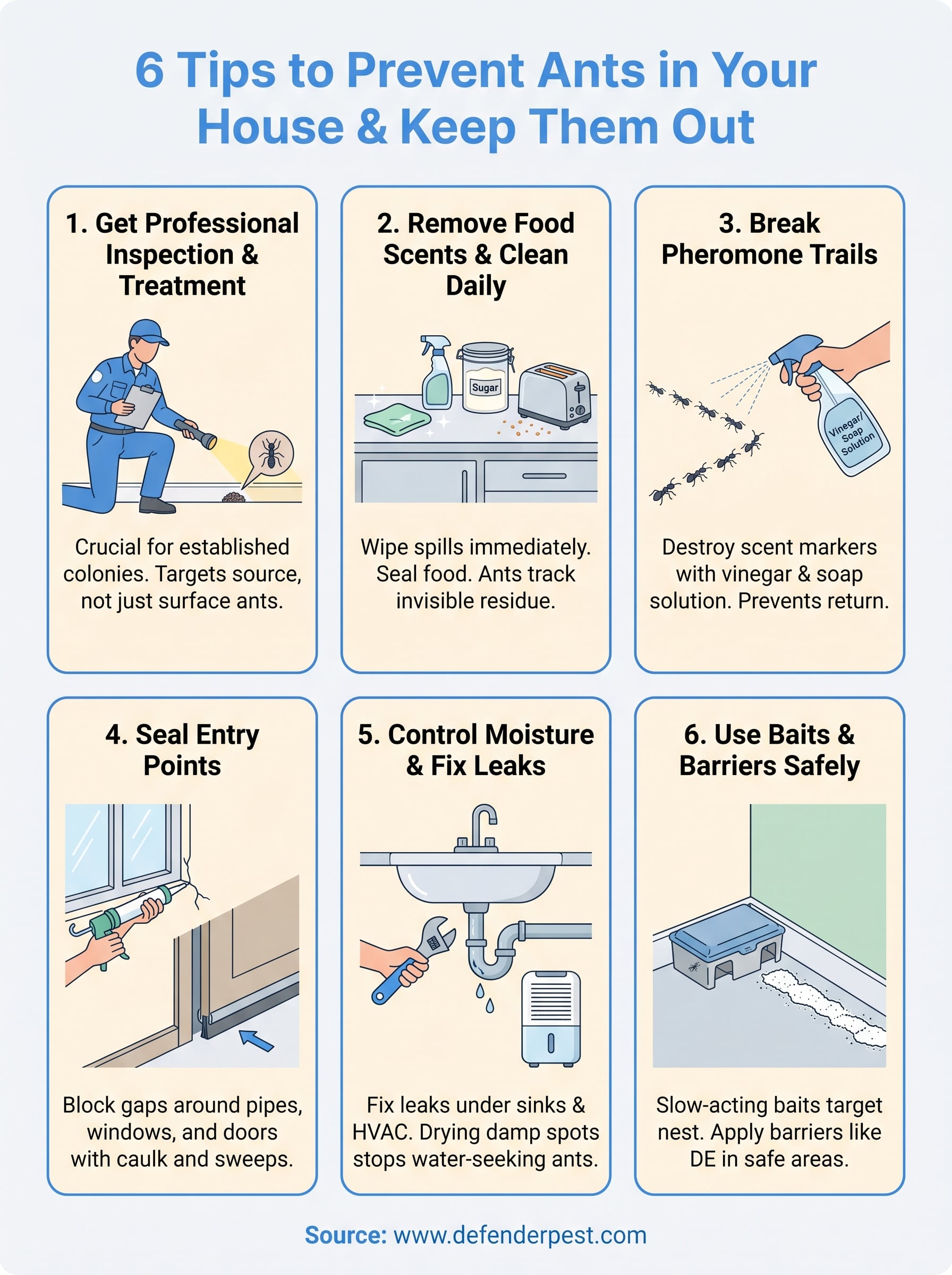
1. Get a professional ant inspection and treatment
If you're already seeing ant activity inside your home, DIY prevention tips may not be enough on their own. Starting with a professional inspection gives you a clear picture of which species you're dealing with , where they're nesting, and what conditions are drawing them in. This context shapes every other step you take, including the five tips that follow this one.
When prevention becomes a pest control job
Some signs tell you that the problem has moved past a few scouts. If you're seeing regular trails inside the home , noticing winged ants near windows or walls, or finding ants in multiple rooms at once, you're likely dealing with an established colony nearby or inside the structure . At that point, surface-level fixes won't reach the source, and prevention becomes damage control.
If ants keep returning within a few days of cleaning and sealing, a nest is almost certainly close by and needs to be located before anything else will work long-term.
What a targeted ant treatment does that DIY cannot
A professional treatment targets the colony itself , not just the ants you can see. Technicians apply products in specific locations that worker ants carry back to the queen, which is the only way to eliminate the source permanently . Store-bought sprays often kill surface ants but push the colony deeper into the structure, making the problem harder to address later.
What to expect during a visit in the Sacramento area
During a visit from Defender Termite & Pest Management, a technician will inspect interior and exterior areas where ants are most active, identify the species, and locate likely nesting or entry points. Treatment is then applied based on what the inspection reveals, whether that's targeted bait placement , a barrier treatment around the foundation, or a combination of both tailored to your property.
Typical pricing range and what affects cost
Ant treatment costs in the Sacramento area generally fall between $150 and $300 for a one-time visit , depending on your home's size and the severity of the infestation. Recurring service plans typically cost less per visit and provide ongoing protection through the warmer months when ant activity peaks. Factors like the ant species, access to nesting areas, and the number of treatment zones all affect the final price.
2. Remove food scents and clean up daily
Ants locate food through scent , not sight. Even a clean-looking kitchen can carry invisible residue from cooking oils, spills, and crumbs that pull scouts indoors. Removing these food signals consistently is one of the most reliable steps in how to prevent ants in the house.
Why ants show up suddenly in clean homes
Ants can detect tiny traces of sugar, grease, and protein that you can't see. A sticky residue behind your stove or a few crumbs under the toaster is enough to trigger scout activity within hours.
Scouts leave pheromone trails back to the colony once they find food, so cleaning up fast stops that signal before reinforcements arrive.
Kitchen and dining habits that stop scouts fast
Wipe down counters and stovetops after every meal, not just at the end of the day. Rinse dishes immediately rather than stacking them in the sink, and sweep high-traffic eating areas daily. Small, consistent habits cut off the food signals that keep scouts returning.
Pantry, trash, and pet food storage that works
Store dry goods in airtight containers and keep trash cans sealed with tight-fitting lids. Pet food bowls should be picked up between feedings and rinsed regularly to remove scent trails.
Weekly checklist that keeps ants from returning
Run through these tasks each week to close off any overlooked food sources:
- Clean behind and under appliances
- Empty and wipe down trash cans
- Check pantry containers for cracks or loose lids
- Rinse recycling before placing it in the bin
3. Break ant trails with the right cleaners
Once ants find food, they leave behind chemical pheromone trails that direct more workers to the same spot. Wiping up the ants you see is not enough. You need to destroy the trail itself to cut off the signal before more ants follow.
How pheromone trails work and why ants keep coming back
Ants communicate through scent-based markers deposited on surfaces as they travel . Each trail grows stronger as more workers follow it, which is why the same ant line reappears in the exact same spot days after you've cleaned.
Killing visible ants without removing the pheromone trail is the main reason ant problems keep coming back even after repeated cleaning efforts.
Vinegar and soap cleaning that actually resets a trail
A mix of equal parts white vinegar and water disrupts the chemical markers ants follow. Spray it along baseboards, countertops, and windowsills, then wipe with a clean cloth. Dish soap and water applied the same way dissolves the scent compounds that keep the trail active.
Follow this simple sequence for best results:
- Spray the solution directly along the trail path
- Wipe toward the entry point, not away from it
- Repeat daily until activity stops
What smells can help and what myths to skip
Peppermint oil and cinnamon can deter ants temporarily at entry points, but neither eliminates a trail that's already established . No single scent solves an active problem on its own, so treat these as extras, not replacements for actual cleaning.
Where to clean first for the biggest impact
Start with visible trail paths and entry points , specifically baseboards, window ledges, and any surface you've seen ants cross. If you want to know how to prevent ants in the house long-term, cleaning these zones weekly removes residual pheromones before new scouts can reinforce the route.
4. Seal entry points and add door sweeps
Ants don't need much space to get inside. A hairline crack in your foundation , a gap around a pipe, or a worn door seal is all it takes for scouts to find a way in. Sealing these openings is one of the most direct answers to how to prevent ants in the house long-term.
How to find where ants get in
Walk your home's perimeter and look for gaps where utility lines, pipes, and cables enter the structure . Inside, check along baseboards, behind appliances, and around window frames for small cracks or holes. You can also follow any active ant trail back to its starting point, which almost always leads directly to an entry gap.
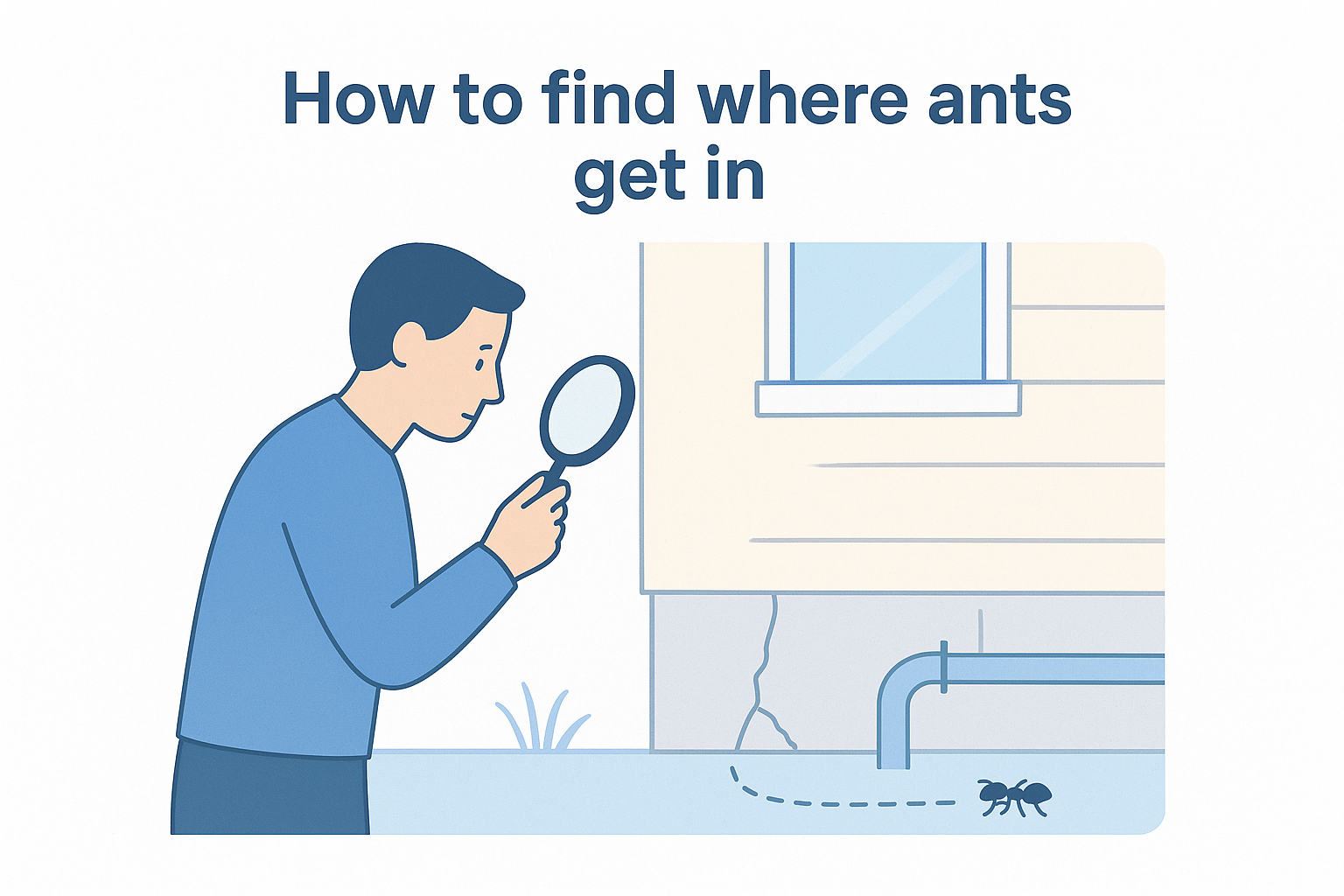
Active ant trails are the fastest way to locate the exact breach point, so follow them before you seal anything.
Caulk and sealant priorities inside and outside
Use silicone caulk to seal gaps around pipes, baseboards, and window frames both inside and outside the home. Focus first on ground-level entry points , where ants travel most often, and then work your way up to higher gaps along siding and trim.
Door sweeps, screens, and weather stripping fixes
Install door sweeps on any exterior door that has visible daylight showing at the bottom. Replace torn window screens and check that weather stripping sits flush against the frame on all sides with no remaining gaps.
How to confirm you sealed the right spots
Check your work by pressing a thin piece of paper against sealed areas to feel for air movement, which signals remaining gaps. Recheck high-traffic entry zones after heavy rain or temperature swings, since materials expand and contract and can open new cracks over time.
5. Control moisture and fix leaks fast
Ants need water as much as food , and a damp corner under your sink or a slow pipe drip is enough to draw them inside. Moisture problems are one of the most overlooked factors when people research how to prevent ants in the house, and fixing them can cut indoor ant activity significantly.
Why water pulls ants indoors
Many ant species, including odorous house ants and carpenter ants , actively seek out moisture as part of their survival. A single leaking pipe or a chronically wet area near your foundation gives a colony all the reason it needs to move closer to your home.
If you're seeing ants near sinks, water heaters, or basement walls, a moisture source is almost always the underlying cause.
Plumbing, HVAC, and bathroom moisture hot spots
Check under sinks, around toilets, and near your water heater for slow drips or condensation buildup. HVAC drainage lines that run along the foundation can also pool water, creating ideal nesting conditions for ants nearby.
Dehumidifying and ventilation moves that last
Run a dehumidifier in crawl spaces and basements where humidity tends to stay high. Make sure bathroom exhaust fans vent fully outside and that attic vents stay clear to move air through the structure consistently.
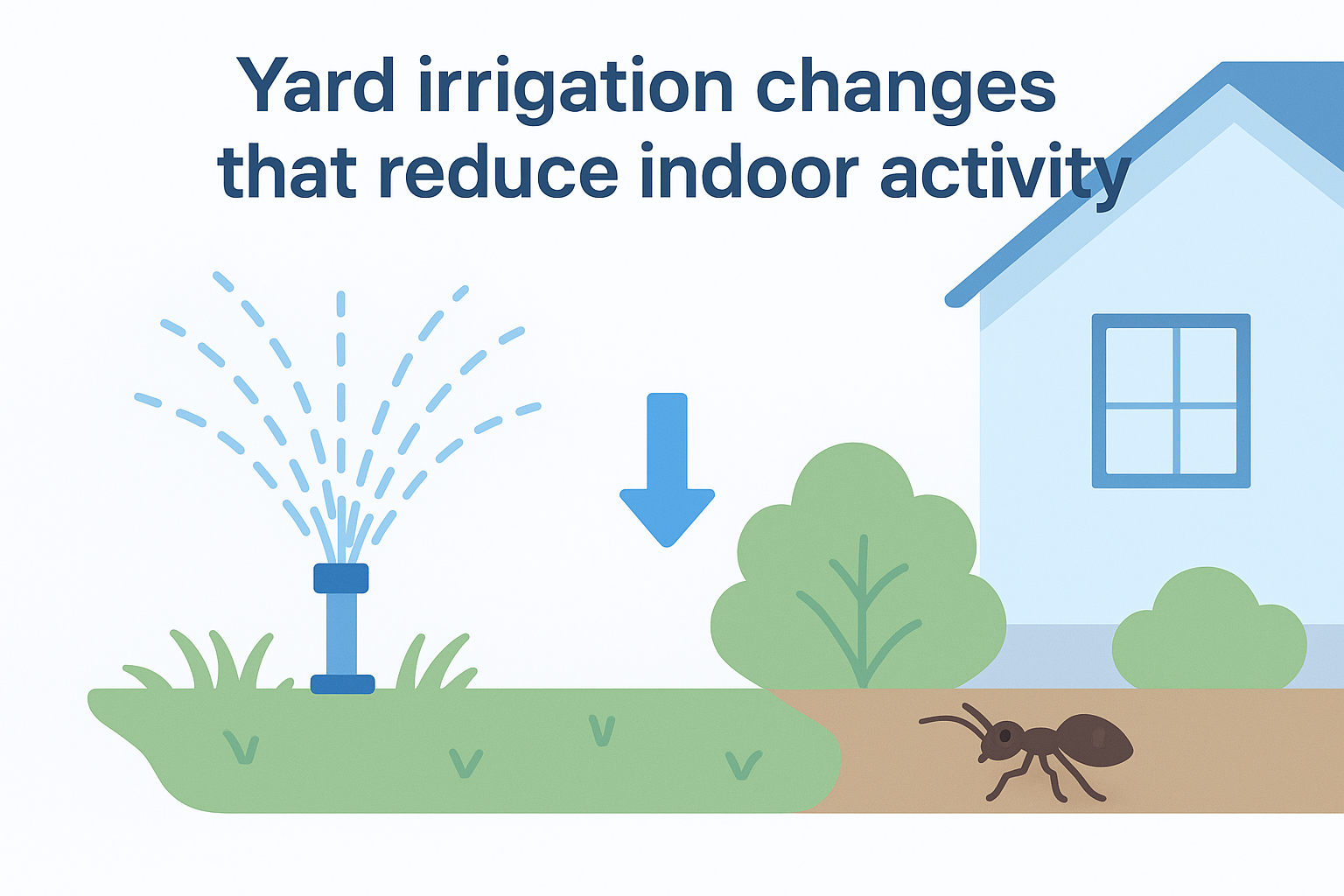
Yard irrigation changes that reduce indoor activity
Move sprinkler heads away from the foundation so water doesn't pool against the slab or siding. Trim back plants and mulch that trap moisture directly against the exterior walls , since both create a damp bridge that ants follow straight to entry points.
6. Use baits and barriers the safe way
When you've done the cleaning, sealing, and moisture work, targeted products can handle any remaining ant activity. These tools support a long-term plan for how to prevent ants in the house , but only when you match the right product type to your actual situation.
When to use bait vs repellent vs spray
Repellents and contact sprays kill on contact but never reach the colony, so activity typically returns within days. Choose your product based on what you're trying to accomplish:
- Bait: eliminating the colony at its source
- Spray: immediate knockdown of a visible surface outbreak
- Repellent: reinforcing entry points after a problem is resolved
Ant baits that eliminate the colony over time
Slow-acting bait works because worker ants carry it back to the nest before it takes effect. Place bait stations directly along active trails and near entry points, and resist the urge to spray nearby, since that kills workers before they can deliver the bait to the queen.
Patience matters here. Full colony elimination through bait can take one to three weeks depending on nest size.
Barriers like diatomaceous earth and how to apply them
Food-grade diatomaceous earth works by damaging the exoskeleton of any ant that crosses it. Apply a thin, dry layer in these locations for consistent coverage:
- Along baseboards and wall edges
- Around pipe and cable entry points
- Under refrigerators and stoves
Reapply after mopping or any moisture exposure, since wet powder loses its effectiveness entirely.
Safety rules for kids, pets, and food areas
Place bait stations behind appliances or inside cabinet corners where children and pets cannot easily access them, and never apply diatomaceous earth near open food prep surfaces.
Before treating any area, always check product labels for indoor vs outdoor ratings to confirm the product is safe and appropriate for where you plan to use it.
Next steps
You now have a complete, practical framework for how to prevent ants in the house , from breaking pheromone trails and cutting off food sources to sealing entry points and using the right products safely. Each of these steps works on its own, but the biggest results come from applying them together as a consistent routine rather than reacting after ants show up again.
If you've worked through these tips and still see regular activity inside your home, a professional inspection is the logical next move . An established colony nearby will keep sending scouts regardless of how well you clean or seal, and no surface-level fix reaches the nest. The Sacramento ant control team at Defender Termite & Pest Management has handled infestations of every scale since 1999 and can identify the source fast, then apply a targeted treatment that addresses the colony directly rather than just the ants you can see.