How To Get Rid Of Ants In The Kitchen: Fast, Food-Safe
You spot one ant on the counter. Then five more near the sink. By morning, there's a full trail running from the window to your sugar jar. Figuring out how to get rid of ants in the kitchen is urgent, this is where you store and prepare food, so whatever you use needs to be safe for your household.
The good news: most kitchen ant problems can be knocked out quickly with supplies you probably already own. The key is understanding why they showed up, cutting off what attracts them, and using targeted methods that actually work, not just spraying and hoping. We'll walk you through food-safe DIY solutions , prevention steps, and how to tell when it's time to call in a professional.
At Defender Termite & Pest Management, we've handled ant infestations across Sacramento-area homes since 1999 . This guide comes straight from what we see in the field every week, and what actually gets results.
Before you start: find the trail and the why
Jumping straight to spraying rarely solves the problem for more than a day or two. Before you can figure out how to get rid of ants in the kitchen for good, you need two pieces of information: where the trail leads and what is pulling them in. Ants leave behind a chemical signal called a pheromone trail, and every ant that follows it reinforces it. Wipe the counter, and a new wave will retrace the exact same path within hours unless you address the source.
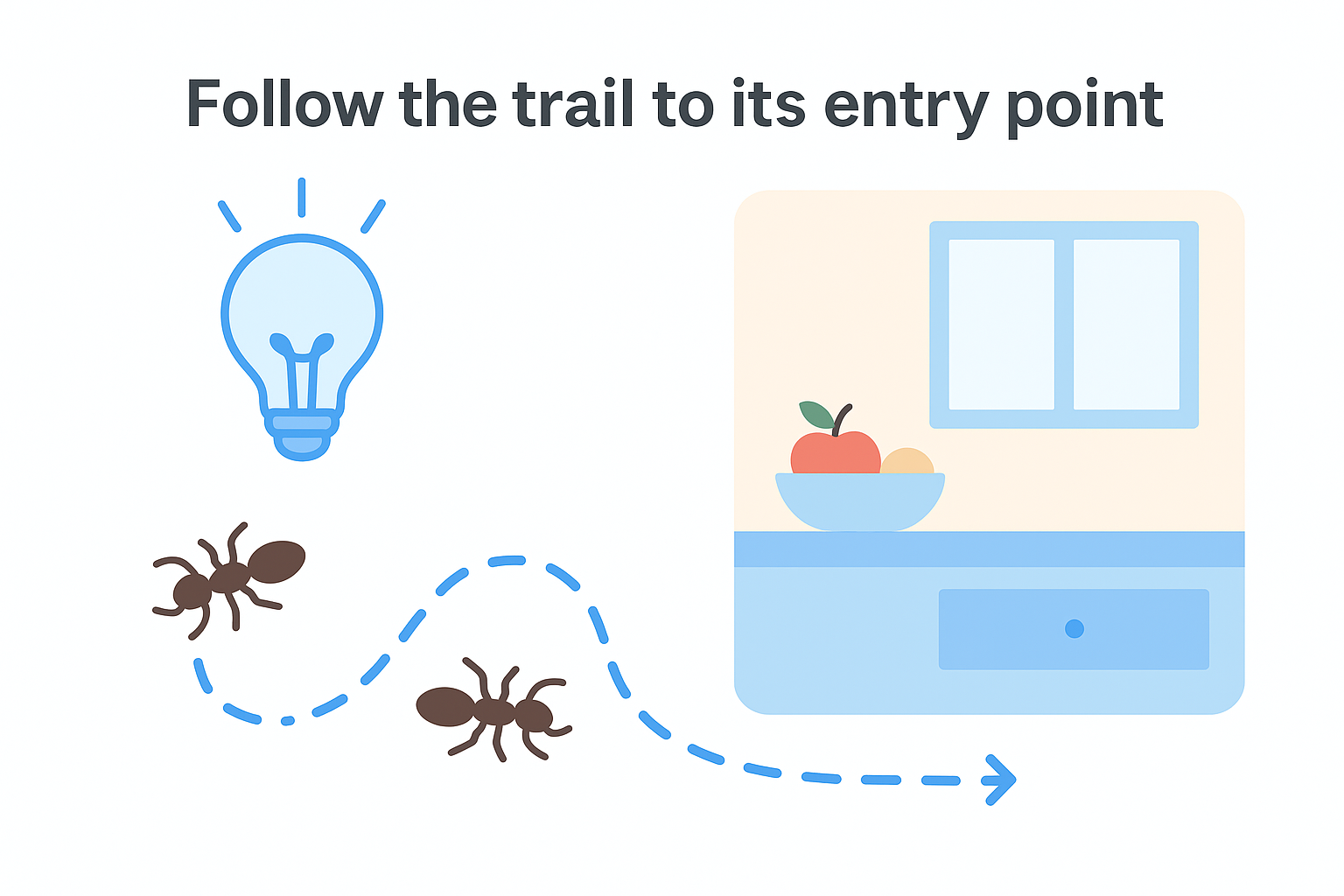
Follow the trail to its entry point
Trace the ant line from the food source backward. Do not disturb the trail while you do this - you want them moving so you can see exactly where they enter. Common entry points include gaps around window frames , cracks near the baseboard, and spaces around plumbing penetrations under the sink. Mark or photograph each spot you find so you can seal them later.
Know why they showed up
Ants enter kitchens for three reasons: food, water, and shelter . In most Sacramento-area homes, the trigger is accessible food - an uncovered fruit bowl, sticky residue behind the stove, or crumbs in a cabinet hinge. Moisture is the second trigger and is often overlooked; a dripping pipe or a wet sponge left by the sink is enough to attract ants during dry summer months.
Identifying the attractant matters more than picking a treatment. Remove the reason they came in, and your treatment will actually hold.
Your species also matters. Common ants in Northern California kitchens include Argentine ants, odorous house ants, and pavement ants . Each responds to slightly different bait types , which becomes important in Step 2.
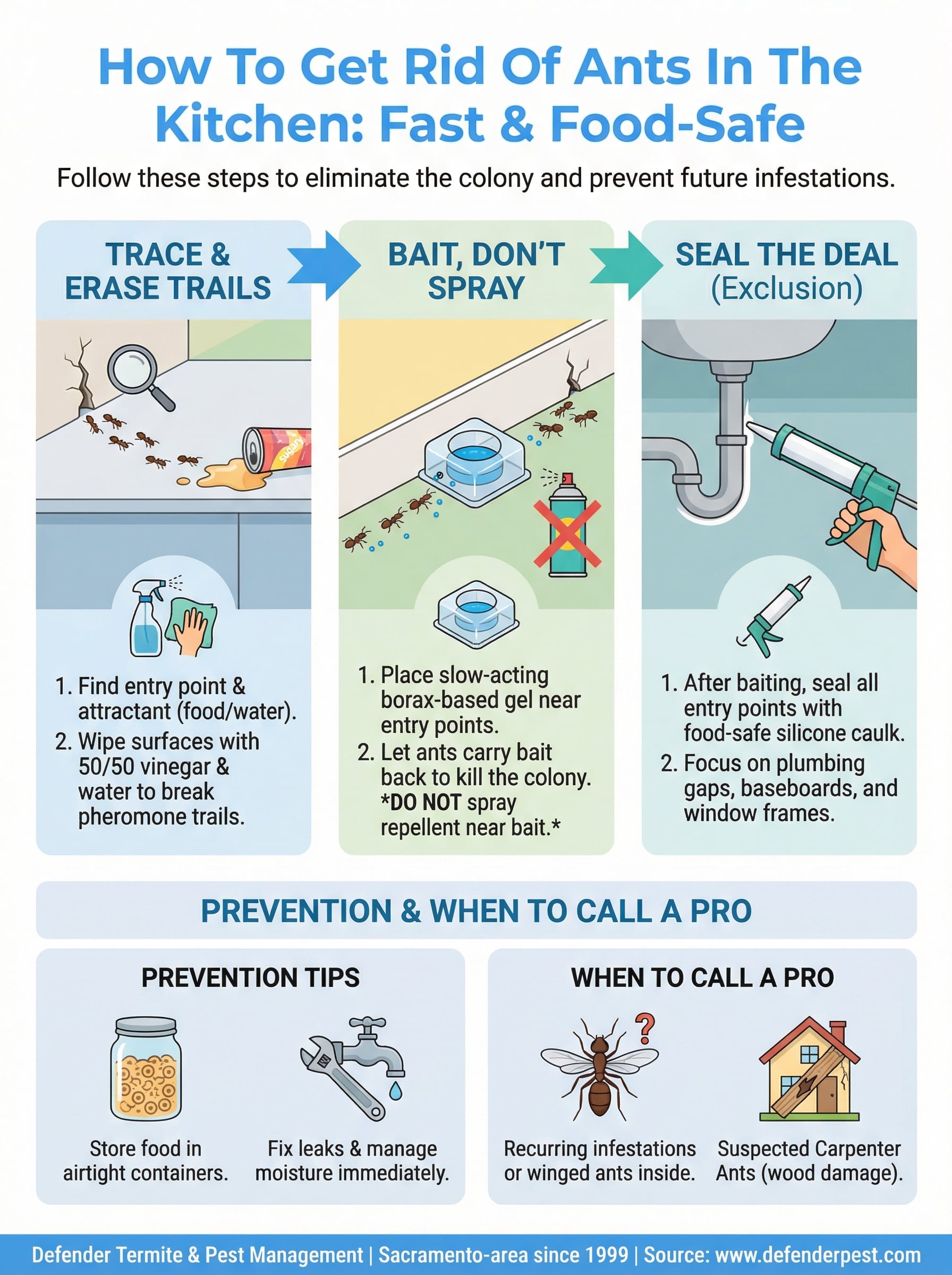
Step 1. Remove attractants and erase scent trails
The first real step in figuring out how to get rid of ants in the kitchen is not reaching for a spray. It's eliminating what brought them in and destroying the chemical highway they use to recruit more ants. Pheromone trails persist on surfaces even after you clean, which is why a fresh wave appears minutes after you wipe one away.
Clean surfaces and remove food sources
Start by wiping down every counter, shelf, and cabinet edge with a solution of equal parts white vinegar and water . Vinegar breaks down the pheromone trail and leaves no harmful residue near food. Then tackle the overlooked spots: pull out the stove , clean behind the refrigerator, and empty and wipe down the cabinet where you store dry goods. Store open packages in sealed containers immediately.
- Wipe counters with vinegar solution after every meal prep
- Transfer sugar, flour, and cereal into airtight containers
- Empty the trash daily during an active infestation
- Fix any dripping faucets or standing water near the sink
Vinegar does not kill ants, but it erases the trail signal long enough for your treatment in Step 2 to actually hold.
Step 2. Choose a food-safe treatment that works
Once you've removed attractants and erased the trail, you need a treatment that reaches the entire colony , not just the ants on your counter. Understanding how to get rid of ants in the kitchen long-term means targeting the nest. Spray-based repellents scatter ants temporarily but don't reach the queen, so they come back within days.
Use slow-acting bait for colony elimination
Place small amounts of bait near the entry points you identified earlier, not directly on the trail. Let the ants find it and carry it back. The best food-safe option is a borax-based gel bait , which uses a sugar solution that worker ants transport into the nest, eventually killing the colony.
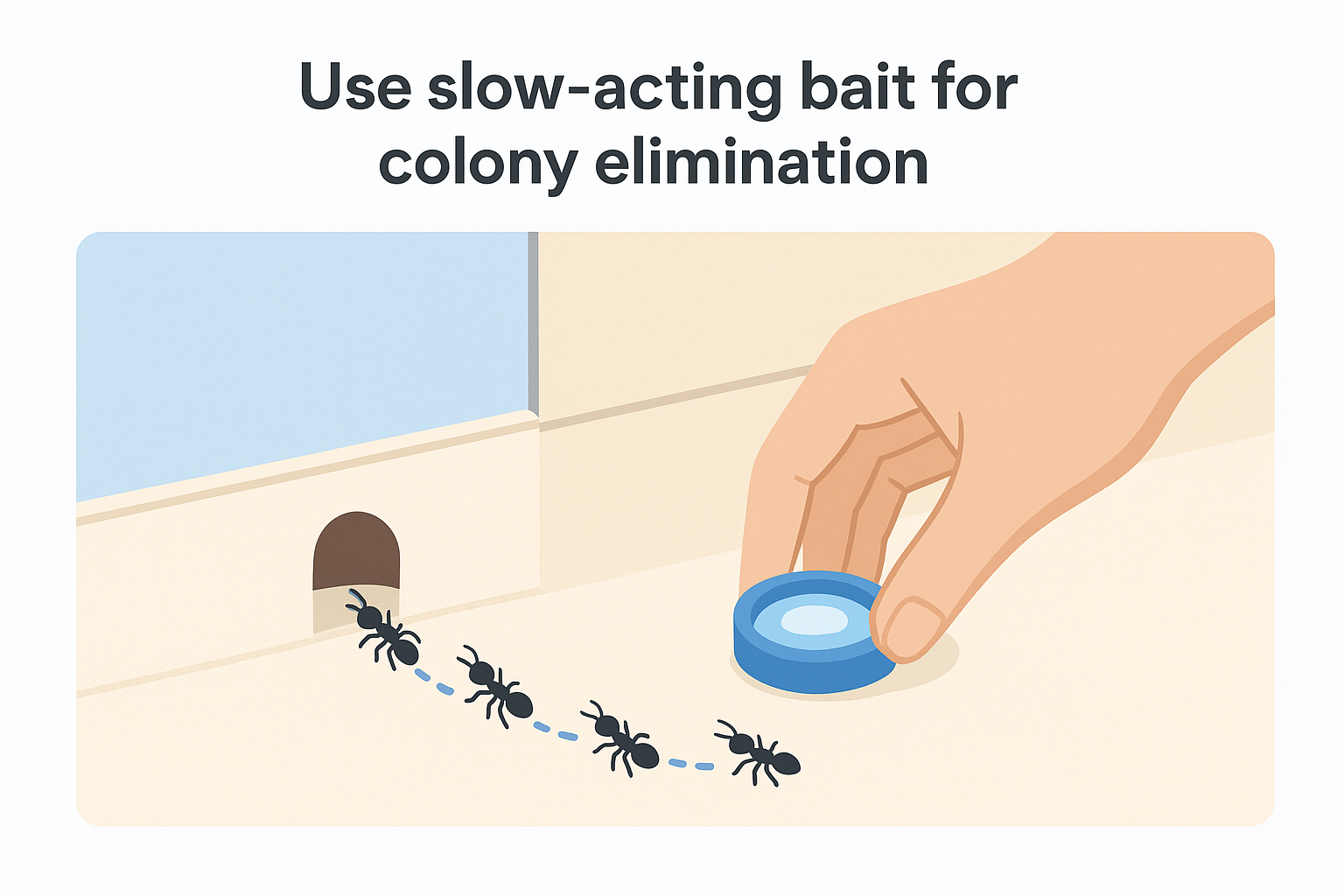
Don't spray near bait stations. Repellent sprays cause ants to avoid the bait entirely, and your treatment will fail.
- Place bait close to entry points, not in the middle of a trail
- Leave bait undisturbed for 48 to 72 hours
- Replace bait every few days until activity stops
Apply diatomaceous earth at entry points
Food-grade diatomaceous earth is a physical treatment you can use safely in a kitchen. Sprinkle a thin layer along baseboards and cabinet edges where ants travel. It damages their exoskeleton without leaving toxic residue near food surfaces.
Step 3. Stop them at the source with exclusion
Bait and cleaning solve the current infestation, but exclusion is what prevents the next one . Knowing how to get rid of ants in the kitchen for good means physically cutting off every route they use to get inside. Ants can squeeze through gaps as small as 1/16 of an inch , so even a hairline crack near a pipe or window frame is enough.
Seal every entry point you found
Go back to the entry points you marked in the first step. For gaps around plumbing under the sink and cracks along baseboards, apply a food-safe silicone caulk. It dries quickly, holds up near moisture, and does not shrink over time the way latex caulk can.
- Seal around all plumbing penetrations under the sink
- Fill cracks along baseboards and behind the stove
- Weatherstrip gaps under exterior doors
- Replace torn window screens
Caulk without treating the nest first, and you force ants to find a new entry point rather than eliminating them.
Keep the perimeter clear
Vegetation touching your exterior walls acts as a direct bridge into your home. Trim back shrubs and move mulch at least six inches from the foundation.
- Remove wood debris stacked against the house
- Store firewood away from exterior walls
- Clear leaf litter from foundation edges
When DIY is not enough: signs you need a pro
Most kitchen ant problems respond to the steps above within one to two weeks. But some infestations signal a deeper issue that DIY treatment cannot fully resolve, and recognizing those signs early saves you significant time and money .
If you've followed every step on how to get rid of ants in the kitchen and the problem keeps returning, the colony is likely established inside a wall or under the foundation, not just outside.
Signs that point to a professional treatment
Recurring infestations after you've sealed entry points and used bait correctly indicate a nest inside the structure. Another sign is finding multiple ant species active at the same time, which suggests overlapping colonies that require separate treatment approaches.
- Ants reappear within days of a thorough treatment
- You find winged ants (swarmers) inside the kitchen
- Bait stays untouched for more than 72 hours with no reduction in activity
- You spot ant activity inside wall outlets or under flooring
Carpenter ants are a specific case that warrants a professional call immediately. Unlike Argentine ants, they tunnel through wood and can cause structural damage if left untreated for even one season.
Next steps
You now have a complete process for how to get rid of ants in the kitchen : find the trail, remove attractants, use slow-acting bait, seal entry points, and know when the problem is beyond a DIY fix. Work through these steps in order and most infestations clear up within one to two weeks.
Prevention is what keeps ants from coming back next season. Store dry goods in airtight containers , fix any moisture issues under the sink, and keep your foundation perimeter clear of wood debris and overgrown vegetation. A quick inspection every few months catches new entry points before they become a problem.
If your infestation keeps returning after a full round of treatment, a professional inspection will identify the colony location faster than repeated DIY attempts. The team at Defender Termite and Pest Management has handled Sacramento-area ant problems since 1999. Request a free pest control estimate and get a clear plan without the guesswork.