5 Things That Attract Ants In The House & What To Do
You keep a clean kitchen, take out the trash regularly, and still, there's a line of ants marching across your counter. If you've ever wondered what attracts ants in the house , the answer usually goes beyond a few crumbs on the floor. Ants are resourceful, and they're responding to signals in your home that you might not even realize you're sending. Understanding those signals is the first step toward getting rid of them for good.
At Defender Termite & Pest Management, we've been helping Sacramento-area homeowners solve ant problems since 1999. After more than two decades of treating infestations across Northern California , we've seen the same handful of attractants come up again and again, and most of them are easy to address once you know what to look for. Some are obvious, others aren't.
Below, we'll break down the five most common reasons ants find their way inside, along with practical steps you can take right now to make your home far less inviting. And if the problem has already gotten ahead of you, we'll cover when it's time to call a professional and what to expect from a targeted treatment plan .
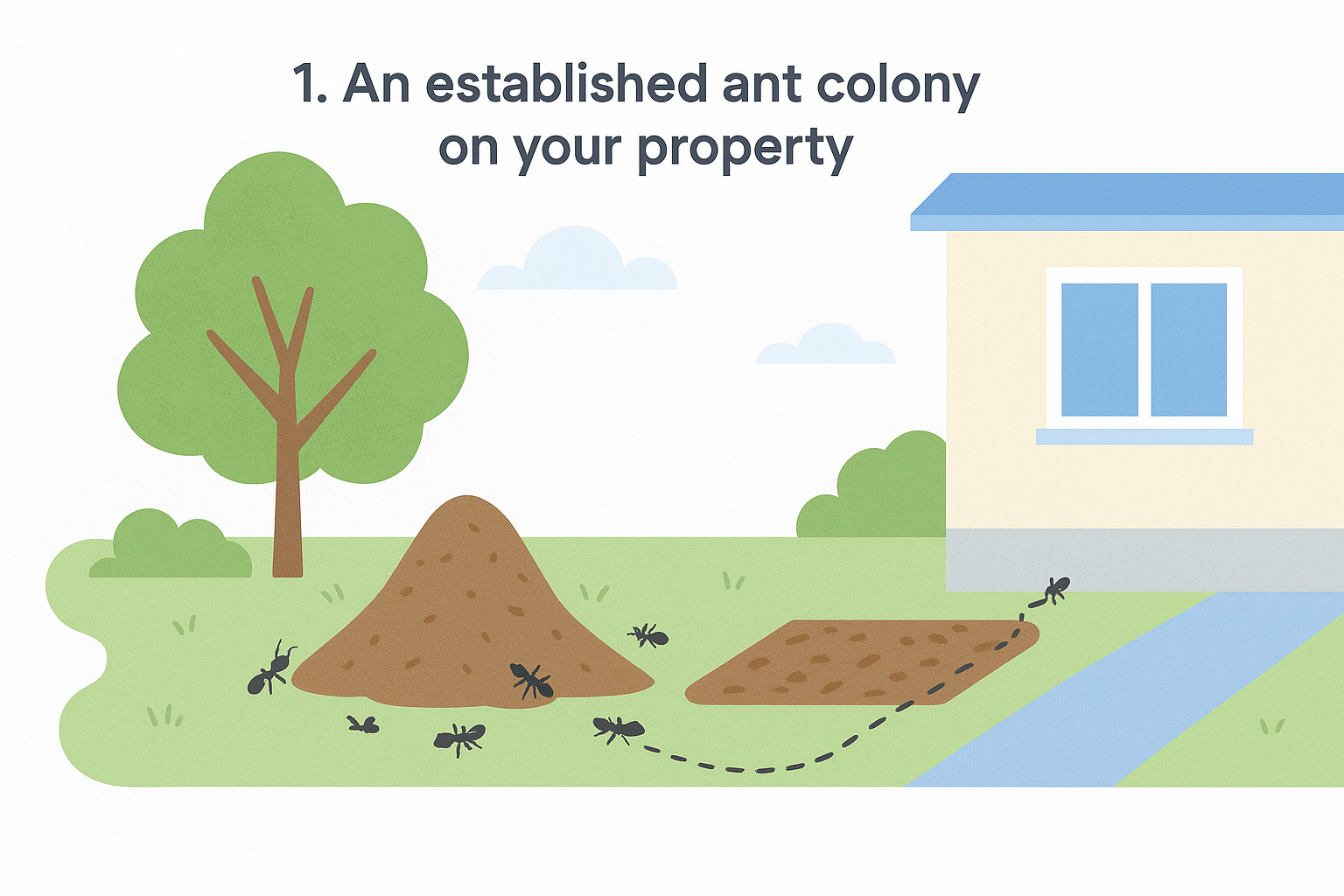
1. An established ant colony on your property
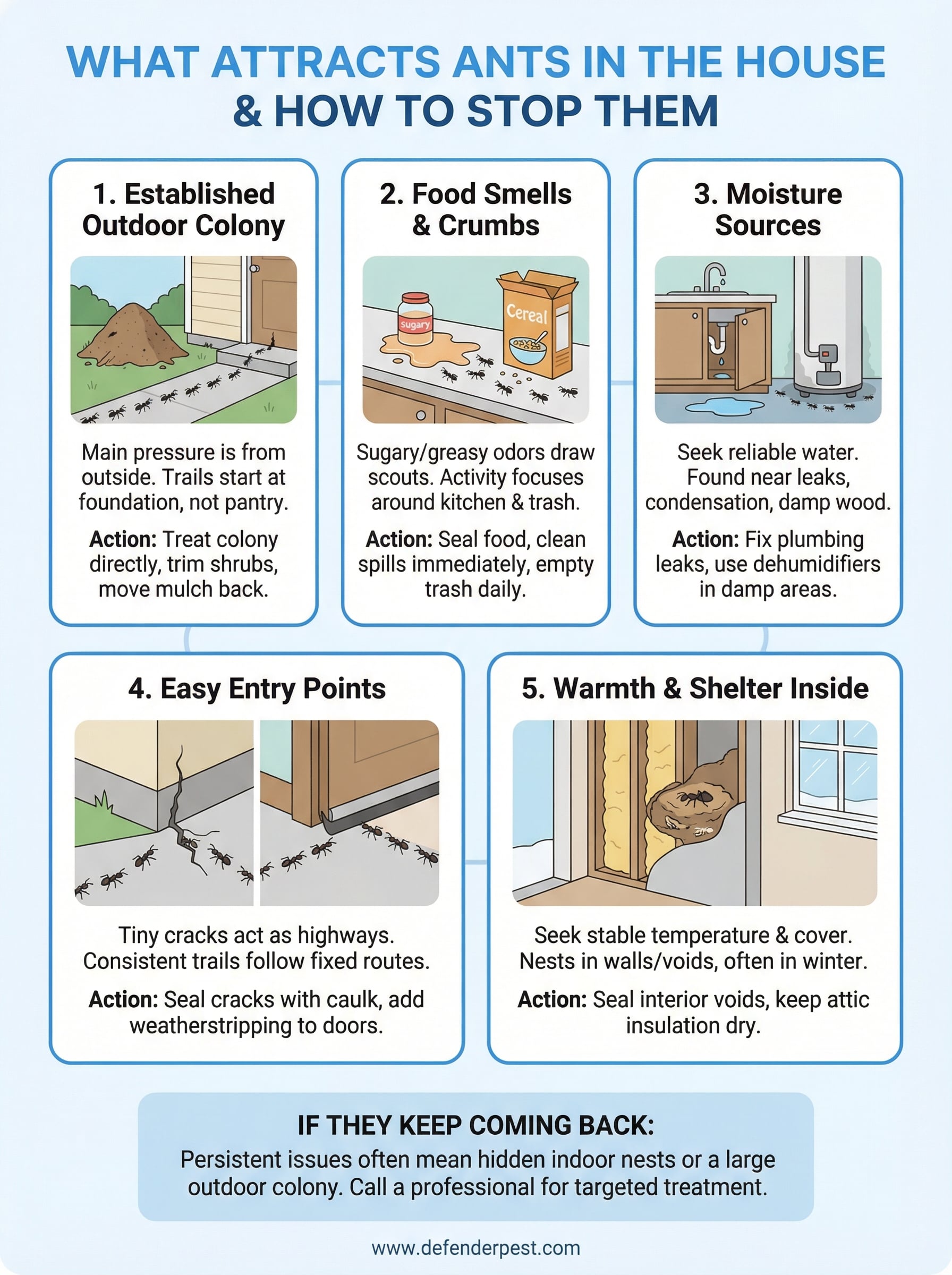
Most people focus on what's happening inside, but the real driver is usually outdoors . If there's an active colony in your yard, under your foundation, or in a nearby tree , forager ants are already scouting your home for resources. That colony is what keeps the problem coming back no matter how clean you keep your kitchen.
Why it pulls ants indoors
A single colony can hold hundreds of thousands of individuals , all working to feed the queen and expand territory. When the colony grows large enough, it sends scouts out to find food and water, sometimes traveling over 100 feet. Understanding what attracts ants in the house often starts with recognizing that the pressure comes from the outside in, not the other way around.
Signs this is the real issue
The clearest sign is a consistent trail entering from your exterior , usually along the foundation, under a door gap, or through a crack near a window. The line doesn't start in your cabinet. It starts outside. You may also find visible mounds or nesting activity in mulch beds, under paving stones, or along exterior walls close to your structure.
If ants are entering through multiple separate points, you almost certainly have a nearby established colony rather than a few random foragers.
What to do right now
Follow the trail back to its source and treat the colony directly if you can locate it. Apply a perimeter product labeled for ant control around your foundation. For colonies inside wall voids or under slabs , a professional inspection is the more reliable route since surface sprays won't reach the nest.
How to prevent it from repeating
Reducing harborage near your home cuts the risk significantly. Focus on:
- Keeping mulch at least six inches away from your foundation
- Removing wood piles, leaf litter, and debris that give colonies a place to establish
- Trimming branches and shrubs that touch your exterior walls so ants can't bridge directly onto the structure
2. Food smells, crumbs, and exposed pantry items
Food is one of the most direct answers to what attracts ants in the house . Ants can detect food odors from a surprising distance, and even trace amounts of sugar or grease on a surface are enough to bring scouts inside looking for more.
Why it pulls ants indoors
Scouts leave chemical pheromone trails back to the food source, which signals other foragers to follow the same path. Sugary spills, open pet food, and loosely sealed pantry items all broadcast strong enough signals to draw a steady stream of ants indoors within hours of the first scout's discovery.
Signs this is the real issue
Ants concentrating around your kitchen counter, trash can, or pantry shelves point directly to food as the main driver. If activity drops sharply after you remove or seal a specific item, that confirms the connection .
A single forgotten spill inside a cabinet can sustain ant activity for days even after you've cleaned everything else in the kitchen.
What to do right now
Remove any open or loosely sealed food from your counters immediately. Wipe down all surfaces, sweep up crumbs, and take your trash out rather than letting it sit overnight.
How to prevent it from repeating
Store dry goods like sugar, flour, and cereal in hard-sided, airtight containers. Clean pet food bowls at the end of each day and rinse recyclables before placing them in the bin.
3. Moisture and easy water sources
Water is often overlooked when people think about what attracts ants in the house. Many species, especially carpenter ants, need reliable moisture just as much as they need food, so a leaky pipe or a humid crawlspace can pull them inside completely independent of anything happening in your kitchen.
Why it pulls ants indoors
Ants need water to survive , and they're highly efficient at locating it. Standing water, condensation on pipes, and consistently damp wood signal to foragers that your home is a reliable source. Once they find it, they mark the route with pheromones just like they do with food.
Signs this is the real issue
You'll notice ant activity near sinks, under appliances, around water heaters, or along baseboards adjacent to exterior walls where moisture collects. If ants appear in your bathroom regularly, moisture is the primary driver , not food.
If ant activity picks up after rain, your home likely has an entry point where water is also getting in.
What to do right now
Fix any leaking pipes or fixtures immediately and dry out standing water under sinks or appliances. Run a dehumidifier in damp areas like basements or crawlspaces to drop moisture levels quickly.
How to prevent it from repeating
Long-term control means eliminating the conditions that make your home attractive in the first place. Check caulking around tubs, sinks, and windows regularly, and confirm that gutters and downspouts direct water away from your foundation rather than pooling against it.
4. Easy entry points and outdoor pathways
Ants don't need a large gap to get inside. A crack the width of a credit card is enough for most species, and most homes have dozens of unnoticed access points along their foundation, around utility lines, and under doors.
Why it pulls ants indoors
Once a scout finds food or water inside, the pheromone trail it lays turns that entry point into a permanent highway for the colony. This is a key part of understanding what attracts ants in the house : easy access amplifies every other attractant, because ants can reach indoor resources repeatedly without any resistance.
Signs this is the real issue
Tight, single-file trails moving along the same fixed route every time you spot them are the clearest indicator. Ants following a consistent path along baseboards, pipes, or window frames are almost certainly using an established entry point they've already marked with pheromones.
Killing the visible ants without sealing the entry point just prompts the colony to send more scouts through the same gap.
What to do right now
Find the specific crack or gap ants are using and seal it with silicone caulk or weatherstripping right away. Prioritize utility penetrations, door frames, and foundation cracks since these are the most common access routes in Sacramento-area homes.
How to prevent it from repeating
Walk your exterior each spring and address any new gaps or degraded caulk before ant activity peaks. Focus on:
- Replacing worn door sweeps that no longer make full contact with the threshold
- Screening weep holes in brick or stucco exteriors where ants frequently enter
5. Warmth, shelter, and hidden nesting spots inside
Some ants aren't just passing through your home to collect resources. Certain species, including carpenter ants and odorous house ants , will set up a secondary satellite nest inside your walls, insulation, or beneath flooring if conditions are right. Warmth and shelter are powerful attractants on their own, completely separate from food or water.
Why it pulls ants indoors
During colder months or after heavy rain, ants seek stable temperature and dry cover . Gaps in insulation, voids behind baseboards, and spaces inside wall cavities offer exactly that. Understanding what attracts ants in the house means recognizing that your home's structure itself can be the draw, not just what's sitting on your counter.
Signs this is the real issue
You may notice ants appearing in the same interior spot repeatedly , even after removing food sources and sealing entry points. Activity that continues through winter is a strong signal that a colony has nested indoors rather than foraging from outside.
If you're finding ants in rooms far from the kitchen or bathroom, an interior nest is likely already established.
What to do right now
Inspect wall voids, attic spaces, and areas around HVAC equipment for signs of nesting. A professional inspection is often the more reliable path here since interior nests rarely reveal themselves until the colony is well established.
How to prevent it from repeating
Reduce indoor harborage by focusing on these three areas:
- Sealing wall voids and gaps around pipes where they pass through interior walls
- Keeping attic and crawlspace insulation dry and intact
- Addressing any structural moisture damage that softens wood and creates ready-made nesting sites
What to do if ants keep coming back
If you've addressed food, moisture, entry points, and outdoor colonies but ants still show up, the infestation has likely moved past what surface-level fixes can resolve . A persistent ant problem almost always means there's a satellite nest inside your walls or a large colony in your yard that keeps sending new foragers to replace the ones you eliminate.
Understanding what attracts ants in the house is useful, but knowing when to bring in a professional matters just as much. At that point, you need targeted treatments that reach the colony directly , not just the trail you can see. Repeated DIY applications without treating the source tend to scatter the colony rather than eliminate it, making the problem harder to solve over time.
Our Sacramento pest control team can inspect your property, identify the species, and locate active nesting sites to build a targeted treatment plan that actually stops the cycle for good rather than just slowing it down.