What Is Liquid Termite Treatment Cost? Pricing & Factors
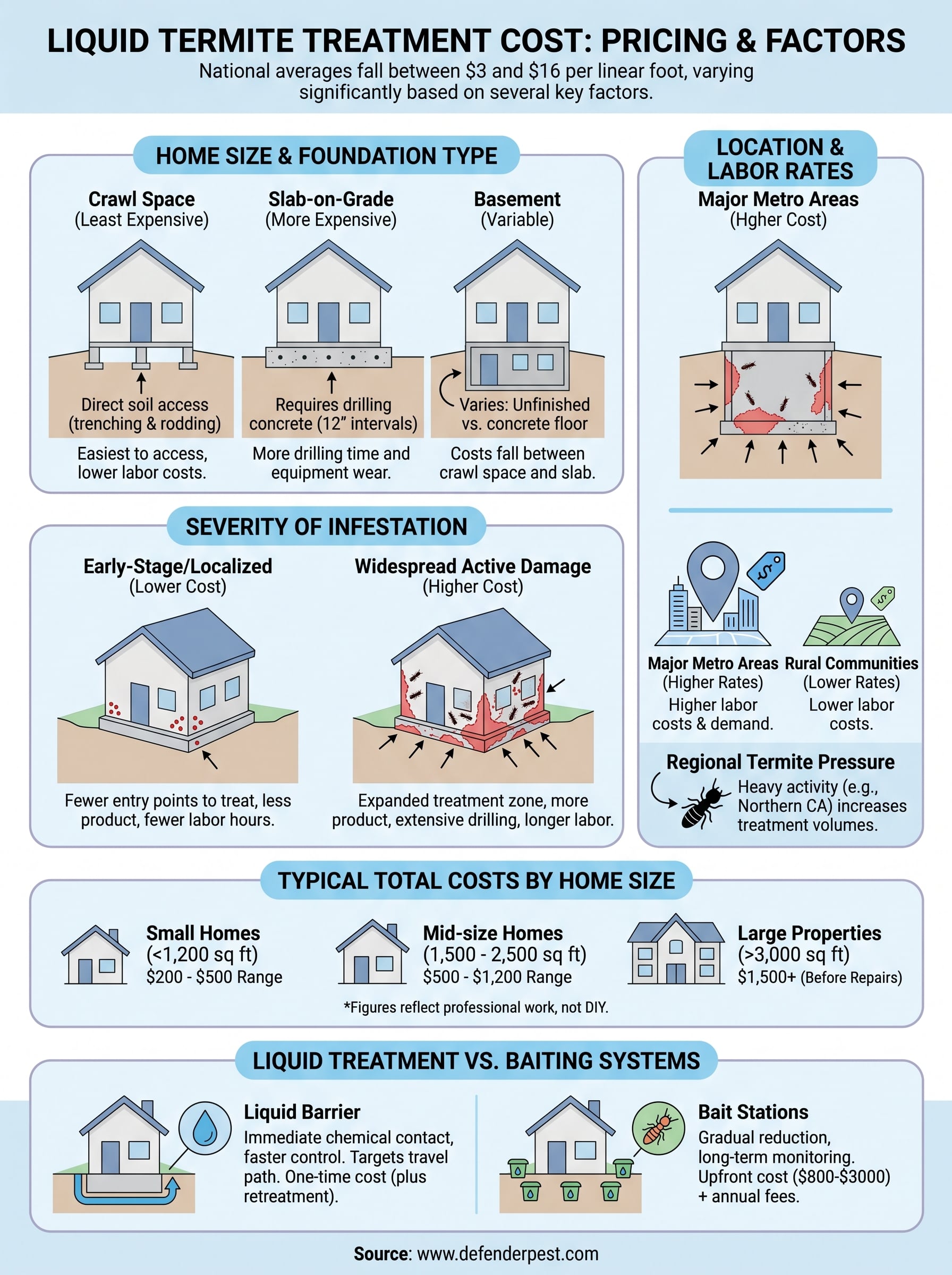
If you've found termite activity around your home, one of your first questions is probably about liquid termite treatment cost , and rightfully so. Liquid treatments remain one of the most widely used methods for creating a chemical barrier around a structure, and pricing can vary significantly depending on your property's size, soil conditions, and the severity of the infestation. National averages typically fall between $3 and $16 per linear foot , but that range doesn't tell you much without understanding what drives the number up or down.
At Defender Termite & Pest Management, we've been treating termite infestations across the Greater Sacramento area since 1999. Over that time, we've seen just about every pricing scenario, from straightforward perimeter treatments on newer homes to complex jobs involving heavy subterranean activity and structural damage. That hands-on experience is exactly what shaped this guide. We built it to give homeowners real clarity on what liquid termite treatment costs , what's included in professional service fees, and where the price differences actually come from.
Below, we break down average costs, per-linear-foot pricing, and the specific factors that affect your final bill, so you can budget with confidence before picking up the phone.
What liquid termite treatment is and what it includes
Liquid termite treatment is a professional pest control method where a licensed technician applies a liquid termiticide directly into the soil around and beneath your home. The chemical creates a continuous barrier that either kills termites on contact or transfers the product back through the colony, depending on the formula used. This method primarily targets subterranean termites , which are the most destructive species in the US and travel through soil to reach wood. Understanding what this treatment involves helps you evaluate what you're actually paying for when you review any liquid termite treatment cost estimate.
How the chemical barrier works
When a technician applies a liquid termiticide, the goal is to saturate the soil completely so there are no gaps termites can pass through undetected. To do that, they drill small holes through concrete slabs, patios, or foundation walls at regular intervals, typically every 12 inches, and inject the chemical at depth. The soil around the exterior perimeter gets treated with trenching, which involves digging a narrow channel, applying the product, and then backfilling the trench.
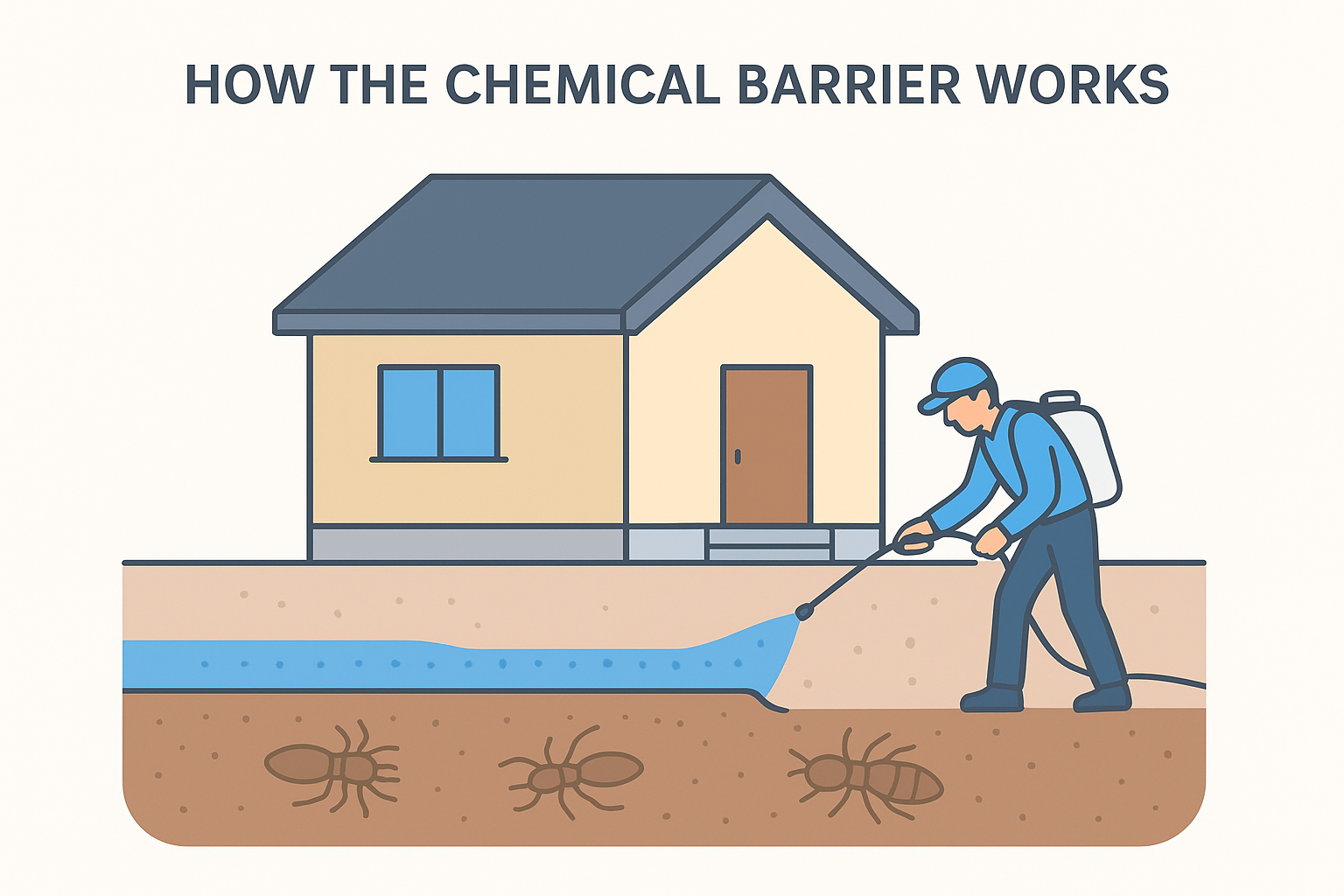
A complete barrier means every access point gets treated, including areas beneath attached structures like garages and porcelain-covered slabs that are easy to overlook.
Two types of termiticide products get used in this process. Repellent formulas like bifenthrin create a zone termites cannot enter. Non-repellent formulas like fipronil or imidacloprid are undetectable by termites, so workers carry the product back to the colony before dying, which eliminates more of the population over time. Your technician will recommend one based on your soil type, construction style, and the severity of your infestation.
What professional liquid treatment includes
A professional liquid treatment involves more than just pouring product around your foundation. Site preparation and inspection come first, where the technician assesses your home's construction, identifies active termite entry points, and maps out the treatment zone. This step directly affects how much product gets used and how long the job takes, both of which factor into your final price.
After the inspection, the actual treatment process includes trenching and rodding along the perimeter , drilling through interior slabs where needed, and treating any wood-to-soil contact points that create direct access for termites. Most reputable companies also provide a written treatment report that documents where chemicals were applied, what product was used, and the concentration used per gallon. That documentation matters if you ever sell your home or need a warranty claim honored.
Why the installation process affects your results
The effectiveness of a liquid treatment depends almost entirely on how thoroughly the barrier gets installed . Skipping spots, using diluted product, or failing to drill through interior concrete means termites can find a path around the treatment zone. This is one reason why choosing a licensed, experienced pest control company matters more than simply finding the lowest price.
Your home's construction type also plays a role here. Slab-on-grade homes require more drilling than homes with crawl spaces, which can be trenched and rodded more efficiently. Pier-and-beam construction often allows faster access to the soil, which can reduce labor time. The technician's ability to accurately identify your construction type and adapt the treatment plan accordingly is a direct reflection of the quality of work you're paying for.
Liquid termite treatment cost ranges in the US
National pricing for liquid termite treatment cost sits between $3 and $16 per linear foot across the US, but that range translates into very different totals depending on your home's size and layout. Most homeowners pay between $200 and $900 for a standard perimeter treatment on a typical single-family home. Larger properties, homes with extensive concrete slabs, or active infestations requiring interior drilling tend to push totals above $1,500 to $2,500 or higher. These figures reflect professional work with a licensed technician and a documented treatment record, not DIY products from a hardware store.
Per-linear-foot pricing
The per-linear-foot model is how most pest control companies calculate their base estimate. You pay based on how many feet of perimeter the technician needs to treat, not your home's total square footage. A 1,500-square-foot single-story home typically has around 150 to 175 linear feet of perimeter, while a larger two-story home with an attached garage can exceed 200 linear feet. Keep in mind that interior slab drilling adds to the total beyond that perimeter measurement.
Getting a linear foot measurement of your home's perimeter before calling a pest control company helps you verify that any estimate you receive is in line with national pricing benchmarks.
| Home perimeter | At $3 per linear foot | At $10 per linear foot | At $16 per linear foot |
|---|---|---|---|
| 100 linear feet | $300 | $1,000 | $1,600 |
| 150 linear feet | $450 | $1,500 | $2,400 |
| 200 linear feet | $600 | $2,000 | $3,200 |
| 250 linear feet | $750 | $2,500 | $4,000 |
Typical total costs by home size
Smaller homes under 1,200 square feet generally fall in the $200 to $500 range for a complete liquid treatment, assuming straightforward construction and no significant infestation. Mid-size homes between 1,500 and 2,500 square feet typically run $500 to $1,200 , while larger properties above 3,000 square feet often exceed $1,500 before any additional work like wood repair or retreatment gets factored in.
Your foundation type also shifts these totals depending on whether you have a crawl space, a slab, or a basement . Crawl spaces tend to be the most cost-effective to treat because technicians can access the soil without drilling through concrete. Slab foundations require more drilling, which adds both labor time and material costs to your final bill.
What changes the price on your home
Several variables push liquid termite treatment cost well above or below the national average, and most of them come down to your specific property. Before any technician can give you a reliable quote, they need to evaluate your home's size, construction type, infestation level, and location. Understanding these factors in advance puts you in a much better position to ask the right questions and recognize when an estimate is reasonable.
Home size and foundation type
Your home's linear footage and foundation construction are the two biggest pricing variables you'll encounter. Larger homes simply require more product and more labor hours, which drives the total up regardless of other conditions. Foundation type matters just as much because it determines how difficult it is for a technician to reach and saturate the soil.
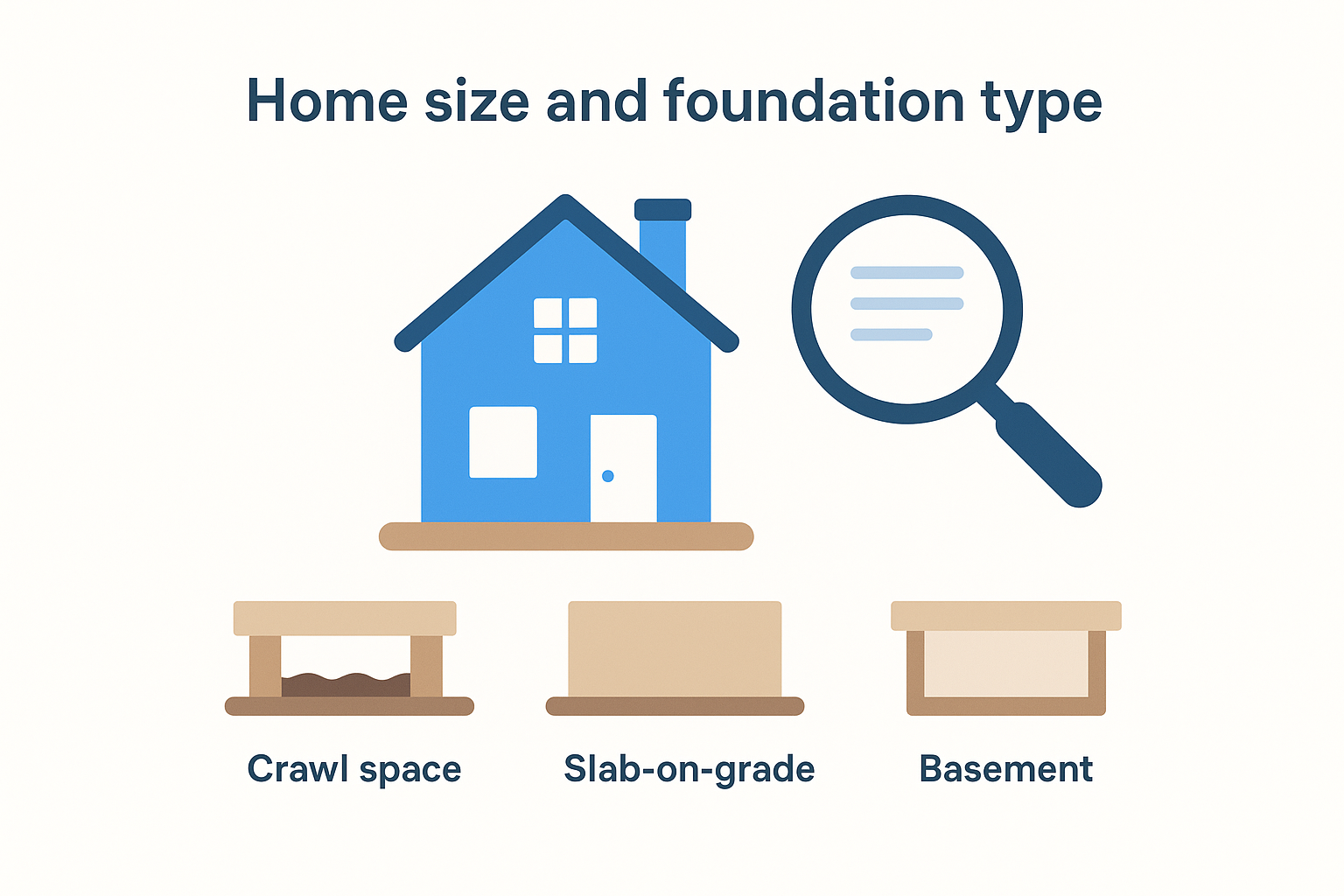
- Crawl space foundations allow direct soil access, so technicians trench and rod without drilling through concrete, which keeps labor costs lower.
- Slab-on-grade foundations require drilling through the concrete at regular intervals, which adds time, equipment wear, and cost to every job.
- Basement foundations vary depending on whether the floor is unfinished or concrete-covered, but typically fall between the two in terms of labor intensity.
The more concrete a technician has to drill through to complete the barrier, the higher your final bill will be, regardless of your home's square footage.
Severity of the infestation
Active infestations with widespread damage cost more to treat than early-stage activity, primarily because the technician needs to identify and treat a larger number of entry points. If termites have already moved through multiple areas of the structure, the treatment zone expands, which means more product, more drilling, and longer labor time. Localized infestations caught early typically require less material and fewer hours on-site, which keeps your cost closer to the lower end of typical price ranges.
Location and local labor rates
Where you live directly affects what licensed pest control companies charge for the same service. Labor rates in major metro areas like Sacramento tend to run higher than in rural communities, and regional termite pressure also influences how aggressively companies recommend treating. Areas with heavy subterranean termite activity , like much of Northern California, often see higher treatment volumes, which can work in your favor when comparing multiple estimates from local providers.
How pros price and estimate liquid treatments
Pest control companies don't pull liquid termite treatment cost numbers out of thin air. Most licensed technicians follow a structured pricing process that accounts for your property's specific characteristics before they put a number on paper. Knowing how that process works helps you evaluate whether an estimate is thorough or whether a technician is cutting corners in ways that could affect your treatment results.
How technicians build your quote
The first step in any estimate is a site inspection , where the technician walks your property and records the linear footage of your perimeter, identifies your foundation type, and looks for active termite entry points. These measurements are the foundation of the per-linear-foot calculation that most companies use. Beyond the perimeter, the technician notes how much concrete drilling will be required, how accessible the soil is around your structure, and whether any existing damage has created additional entry points that need to be addressed.
A thorough inspection before any quote is one of the clearest signs that a pest control company is being precise rather than giving you a rough ballpark.
After the inspection, the technician calculates material costs based on the volume of termiticide needed to treat your specific linear footage at the required application rate. Most termiticide labels specify how many gallons to apply per 10 linear feet, so the calculation is relatively standardized once the perimeter measurement is accurate. Labor time gets added on top, which varies based on how much drilling and trenching the job requires.
What a written estimate should include
Any professional estimate you receive should list your home's measured linear footage , the product name and concentration being used, the number of treatment zones, and the total price broken out by material and labor. This level of detail protects you in two ways. First, it lets you compare quotes from multiple companies on equal terms. Second, it gives you clear documentation if a warranty dispute ever comes up after treatment.
Ask specifically whether the estimate covers interior slab drilling if your home has a concrete foundation. Some companies quote only the exterior perimeter to keep the number low, then charge separately for interior work on the day of treatment. Getting a full-scope written estimate before scheduling prevents that kind of surprise from landing on your final invoice.
Liquid treatment vs baiting and fumigation
Choosing between liquid termiticide, bait stations, and fumigation comes down to your infestation type, property access, and budget . Each method targets termites differently, and each carries its own cost structure. Comparing these three approaches side by side helps you understand where liquid termite treatment cost fits relative to your other options and why one method might suit your situation better than another.
How baiting systems compare
Bait systems work by placing plastic stations in the soil around your home's perimeter at regular intervals. Termites find the bait, consume it, and carry it back to the colony, which gradually reduces the population over months. The upfront cost of bait installation typically runs $800 to $3,000 depending on the number of stations your property requires, but that figure doesn't cover the ongoing monitoring visits a technician needs to make every few months to replenish bait and check for activity.
Baiting costs less upfront than fumigation, but the annual monitoring fees can make it more expensive than a one-time liquid treatment over a three-to-five-year period.
Liquid barriers work faster than bait systems because the chemical contact is immediate rather than dependent on termite foraging behavior. If you have an active, spreading infestation, liquid treatment generally gives you faster control. Bait systems work better as a long-term monitoring and prevention tool after an active infestation has been resolved or when you want to avoid drilling through concrete.
When fumigation makes sense
Fumigation, or tenting, involves enclosing your entire home in a sealed tent and releasing a gas throughout the structure to eliminate all termites inside . It's the most thorough option when drywood termites have spread through multiple areas of a structure, because the gas reaches everywhere without requiring soil access. Fumigation typically costs $1,200 to $2,500 or more for an average home, and it requires you to vacate the property for two to three days.
Liquid treatment does not address drywood termites because those species live inside the wood itself rather than traveling through soil. If your inspection confirms drywood activity in multiple locations, fumigation is likely the more practical choice. For subterranean termites in the soil , liquid treatment remains the industry standard because it directly targets the travel path those termites rely on to reach your structure.
Final takeaways
Liquid termite treatment cost lands between $3 and $16 per linear foot nationally, but your actual total depends on your home's perimeter, foundation type, infestation severity, and local labor rates. Slab foundations with heavy interior drilling push costs higher, while crawl space homes with early-stage activity sit closer to the lower end. Understanding these variables before you call a pest control company helps you ask better questions and spot estimates that are vague or incomplete.
Comparing liquid treatment to bait systems and fumigation is also worth your time. Liquid barriers work fastest on subterranean termites , bait stations suit long-term monitoring, and fumigation handles widespread drywood activity. None of these are interchangeable, so your choice should follow what your inspection reveals. If you are ready to get a clear, accurate estimate from a licensed team that has been serving the Sacramento area since 1999, contact Defender Termite & Pest Management to schedule your inspection today.