Pest Control for Wolf Spiders: How to Remove Them for Good
Finding a wolf spider in your garage or bathroom sink is enough to make anyone jump. These spiders are big, fast, and hairy, and unlike the small house spiders you can ignore, wolf spiders make you want answers fast. If you're searching for pest control for wolf spiders , you're probably done coexisting with them and ready for a real solution.
The good news is that wolf spiders are easier to control than most people think once you understand why they're inside in the first place. They're hunting, not nesting in your walls, which means the fix involves cutting off their food supply and sealing the paths they use to get in, not just squashing what you see. The right combination of exclusion work, targeted treatment, and yard maintenance handles both the spiders and the insects they came in to eat.
In this guide, we'll walk through how to identify wolf spiders versus other species, the DIY methods and products that actually work, and when a large infestation signals it's time to call a professional. We'll also cover the prevention habits around Sacramento homes that keep them from coming back.
Why wolf spiders invade Sacramento homes
Wolf spiders aren't looking to move in permanently. They're hunting spiders , chasing crickets, roaches, and other insects that wander into your home looking for water and shade. When you see one indoors, it's usually a sign that its prey is already there, not that your house has become a spider colony. This distinction matters for anyone researching wolf spider control , because treating the spider without addressing what it's eating just invites the next one in.
Sacramento's dry heat pushes spiders indoors
Sacramento's long, dry summers create the exact conditions that drive this seasonal shift indoors. Once temperatures climb past 95 degrees and the surrounding grasslands dry out, insects retreat toward any source of moisture, and homes with irrigated lawns, leaky spigots, or damp crawl spaces become magnets. Wolf spiders simply follow the food. The National Pest Management Association notes that spiders enter homes primarily in search of prey and shelter from weather extremes, which lines up with what we see across Sacramento, Roseville, and Elk Grove every August and September.
Wolf spiders show up because their prey already found a way in.
What's luring them into your house
A few common conditions around Sacramento properties make a home especially attractive to wolf spiders and the insects they hunt:
- Exterior lighting left on overnight, which draws moths and beetles
- Woodpiles or dense mulch stacked against the foundation
- Cluttered garages and sheds that offer dark, undisturbed hiding spots
- Cricket or roach activity near the home's exterior
- Standing water or over-watered lawns that attract moisture-seeking insects
Eliminate these draws and you remove most of the reason wolf spiders bothered showing up at all.
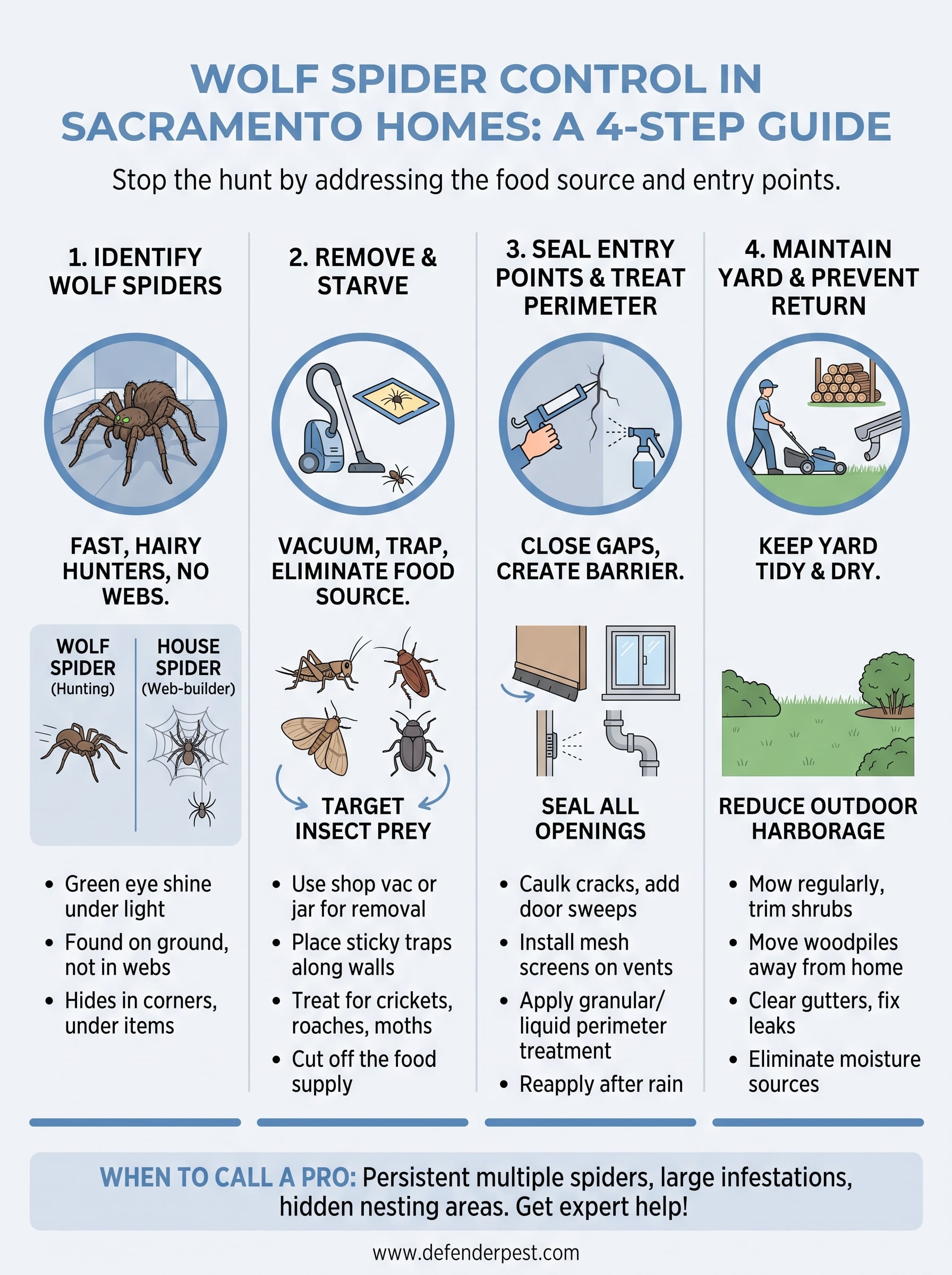
Step 1. Identify wolf spiders and their hideouts
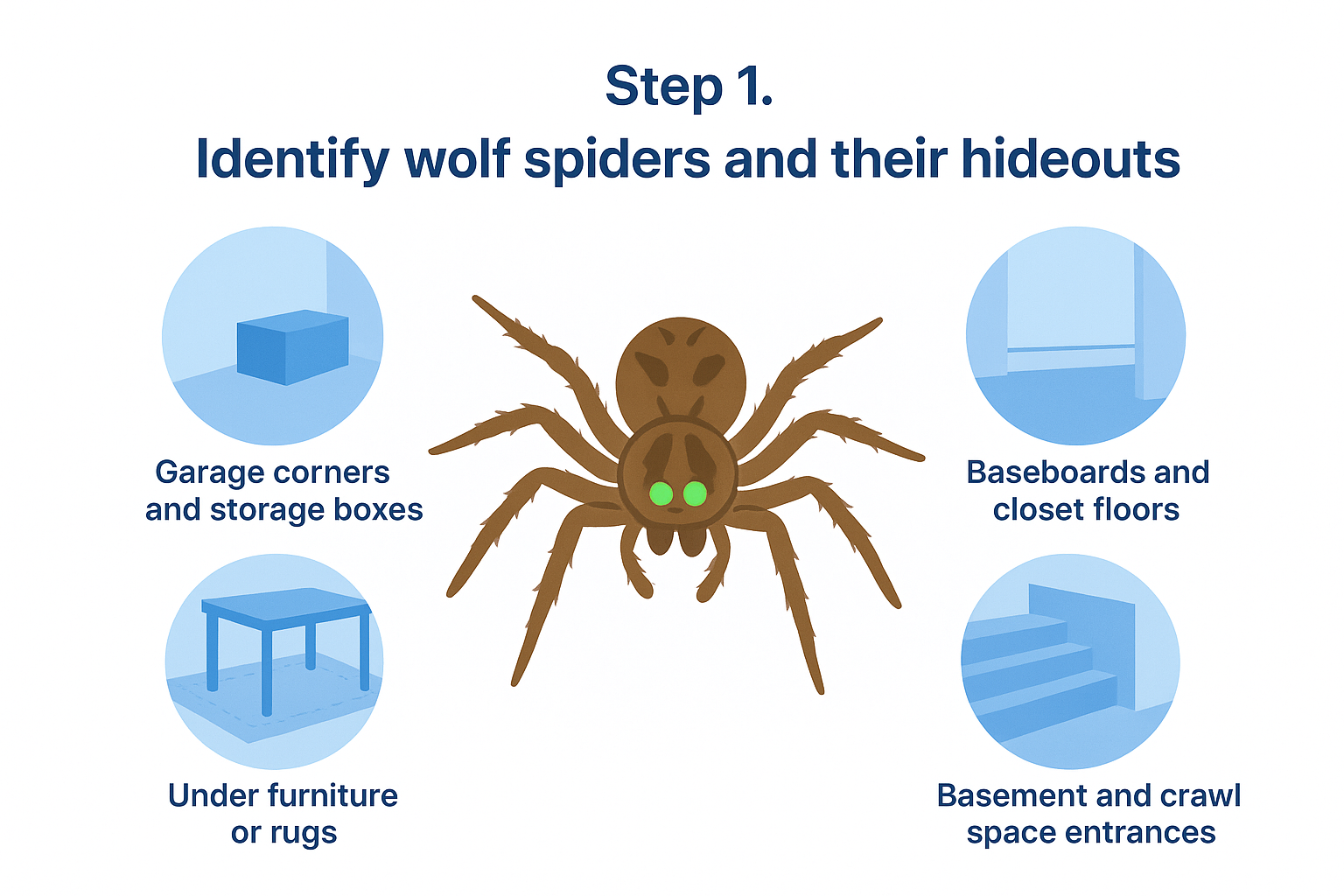
Before you can treat a wolf spider problem, confirm you're actually dealing with one. Wolf spiders are large, brown to gray, and covered in coarse hair , with bodies up to an inch long and legs that make them look even bigger. Shine a flashlight across the floor at night and you'll spot their eyes glowing green, a trait that separates them instantly from jumping spiders or common house spiders.
Spot the difference
| Trait | Wolf Spider | House Spider |
|---|---|---|
| Web | None, ground hunter | Builds visible webs |
| Eye shine | Bright green under light | None |
| Movement | Fast, erratic sprints | Slow, stays near web |
If it's running instead of hiding in a web, you're looking at a wolf spider.
Where they hide
Once you've confirmed the species, check the spots where wolf spiders typically shelter during the day:
- Garage corners and storage boxes
- Baseboards and closet floors
- Under furniture or rugs
- Basement and crawl space entrances
Knowing these hideout patterns tells you exactly where to focus your next steps.
Step 2. Remove spiders and eliminate their food source
Once you know where wolf spiders hide, the next move is physical removal , not chemical warfare. These spiders don't respond well to sprays because they're fast and often out of reach of a direct hit, so a vacuum with a hose attachment or a jar-and-cardboard catch works better than stomping around with a can of bug spray.
Vacuum, trap, and remove sightings
Run a shop vac along baseboards, garage corners, and closet floors where you spotted eye shine earlier. Sticky glue traps placed along walls overnight catch stragglers without chemicals, which matters if you have pets or kids moving through the same spaces.
Cut off the insect buffet
Wolf spider removal only sticks if you starve out their food source at the same time. Target the insects wolf spiders hunt:
- Crickets and roaches near foundations
- Moths and beetles drawn to porch lights
- Ants and pillbugs in mulch beds
Kill the bugs they eat, and the spiders stop showing up on their own.
Address these populations with targeted insect control , and you'll notice far fewer spiders within a week or two.
Step 3. Seal entry points and treat your home's perimeter
Once you've cleared what's inside, focus on blocking new entry before the next wolf spider wanders in. These spiders squeeze through gaps as small as a quarter inch, so even a well-built home usually has a few overlooked openings around doors, utility lines, and vents.

Close the gaps they use
Walk your home's exterior and check these common entry points:
- Gaps under garage doors and door sweeps
- Cracks around window frames and utility pipes
- Vents and crawl space openings without screens
- Foundation cracks near ground level
Seal what you find with caulk or weatherstripping, and add mesh screens over vents.
Seal the cracks, and you cut off the front door for spiders and their prey alike.
Treat the perimeter
Treating a treated barrier around your foundation adds a second layer of defense. A granular or liquid perimeter treatment applied along the foundation, window wells, and door thresholds targets the crickets and roaches wolf spiders hunt, which discourages spiders from crossing that line in the first place. Reapply after heavy rain or every few months during Sacramento's dry season for lasting results.
Step 4. Maintain your yard to keep spiders from returning
Your yard is the staging ground for every wolf spider that eventually finds its way inside, so ongoing yard maintenance matters as much as anything you do indoors. Mow regularly, keep grass short near the foundation, and pull weeds that create shady cover where spiders and their prey like to hide.
Manage moisture and clutter outdoors
Moisture draws the insects wolf spiders hunt, so fixing irrigation habits pays off fast. Adjust sprinklers so water doesn't pool near the foundation, and clear gutters so they drain away from the house instead of soaking the soil below.
A dry, tidy yard gives wolf spiders nowhere to wait for their next meal.
Keep the outdoor cleanup routine going
Staying ahead of clutter keeps the whole cycle from restarting. Work through this checklist monthly:
- Stack firewood at least 20 feet from the house, off the ground
- Rake fallen leaves and clear mulch buildup against siding
- Trim shrubs and branches away from exterior walls
- Store garbage cans and recycling bins away from entry doors
Consistent upkeep here does more to prevent wolf spiders long term than any single treatment ever will.
When it's time to call a pest control professional
Most wolf spider problems clear up with the steps above, but some situations call for backup. If you're finding multiple spiders weekly despite sealing entry points, or if the ones you spot are unusually large egg-carrying females, you're likely dealing with a larger insect population feeding an ongoing cycle that DIY methods can't fully break. Crawl spaces, dense landscaping, and older homes with hidden gaps often hide infestations that go beyond what a vacuum and caulk gun can solve.
Wolf spiders show up because something inside your home is worth hunting. Identify the food source, seal the gaps, and keep your yard dry and tidy, and you'll break that cycle for good. When the problem outpaces what you can handle yourself, don't wait for it to get worse. Request a free quote from Defender Termite & Pest Management and get a Sacramento-based team that handles both the spiders and the insects bringing them in.