Integrated Pest Management Steps: A 5-Step IPM Guide
Integrated Pest Management Steps: A 5-Step IPM Guide
Spraying pesticide the moment you spot an ant or a mouse dropping might kill what you see, but it rarely fixes why pests showed up in the first place. That's the gap integrated pest management steps are built to close. Instead of reacting to one bug at a time, IPM gives you a structured way to identify what you're actually dealing with, figure out why it's there, and stop it from coming back, using the least invasive method that actually works.
If you want a straight answer to "what are the steps in IPM," it comes down to five stages: inspection and identification , setting action thresholds, prevention, choosing the right control method, and ongoing monitoring. Each step builds on the last, so skipping one usually means you're back to square one within a season.
We've walked hundreds of Sacramento homes and businesses through this exact process, from termite inspections to rodent mitigation, so this guide breaks down each step with the practical detail you need to apply it yourself, or to know what a professional should be doing when they show up at your property.
What is integrated pest management and why it matters
Integrated pest management is a decision-making framework, not a product. The EPA defines IPM as an approach that combines biological, physical, and chemical tools to manage pests while minimizing risk to people, property, and the environment. Instead of defaulting to a monthly spray schedule, you're making choices based on what a specific pest needs to survive on your property: food, moisture, shelter, and easy access.
That distinction matters because most pest problems are really habitat problems. Termites need moisture-damaged wood and soil contact. Rodents need a gap wider than a quarter and a food source nearby. Ants follow chemical trails back to whatever spilled on your kitchen counter last week. When you treat only the symptom, you leave the underlying conditions in place, so the pest (or its cousins) comes right back once the chemical wears off.
Fix the conditions that attract pests, and you stop refighting the same infestation every season.
This is also why IPM tends to cost less over time. You're not paying for blanket treatments on a fixed schedule regardless of need. You're paying for targeted intervention based on actual pest pressure, which means fewer callbacks and less product used overall.
For homeowners, this looks like sealing entry points and fixing leaky pipes alongside any treatment. For commercial properties, it often ties directly into health code compliance and audit readiness. Either way, the five steps below are how you get there systematically instead of guessing.
Step 1. Identify the pest
Before you treat anything, you need to know exactly what you're dealing with. A German cockroach and an American cockroach call for different bait strategies. A carpenter ant infestation looks similar to termites but needs a completely different approach. Correct pest identification is the foundation everything else in this guide rests on, and guessing here wastes time and money on the wrong fix.
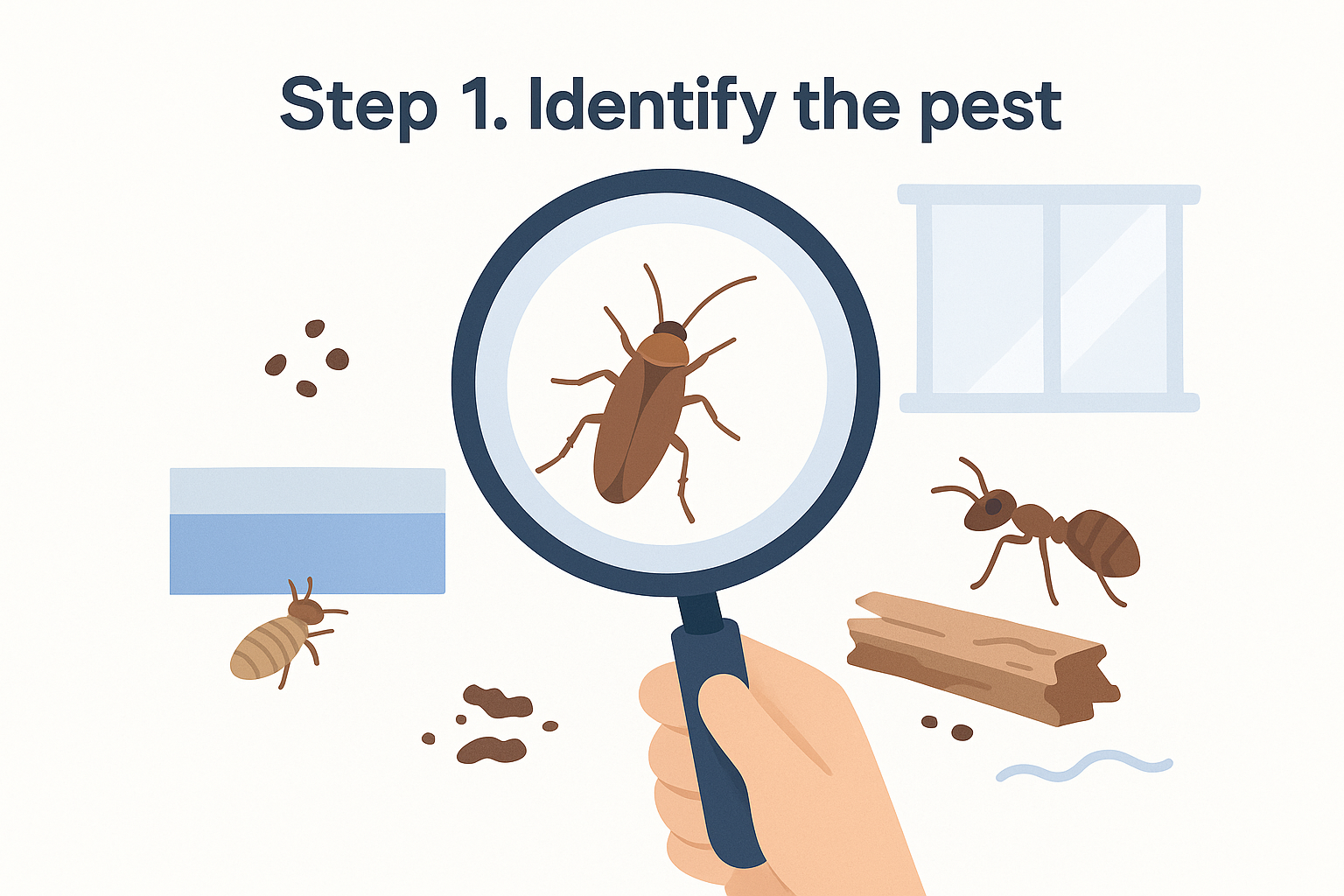
Misidentify the pest, and every step after this one works against you instead of for you.
What to look for
Start with physical evidence, not assumptions:
- Droppings, shed skins, or wings near baseboards and windowsills
- Damaged wood, frass, or mud tubes along foundations
- Live or dead specimens you can photograph for comparison
- Odd smells, like the musty scent tied to termite activity
If you're not confident in the ID, a licensed inspector can confirm it in minutes, which saves you from treating the wrong problem entirely.
Step 2. Monitor pest activity
Once you know what pest you're dealing with, you need data on how much of it is around and where it's concentrated. Monitoring pest activity turns guesswork into a pattern you can act on, instead of reacting to whichever bug you happen to notice that day.
One sighting tells you nothing. A week of tracked activity tells you where the infestation actually lives.
Tools that make monitoring easy
You don't need lab equipment for this, just consistent tracking:
- Sticky traps placed along walls and behind appliances
- Bait stations checked on a set schedule
- A simple log noting date, location, and pest count
- Moisture meters near foundations, useful for catching termite-friendly conditions before swarms show up
Commercial properties often need this documented for health inspections, so keep records even when counts look low. Track trends over two to four weeks before drawing conclusions. Sacramento's dry summers and wet winters shift pest behavior seasonally, so monitoring in July won't match what you'd see in January.
Step 3. Set action thresholds
Not every pest sighting needs a treatment response. An action threshold is the point where pest numbers or damage justify stepping in, and it's different for every situation. Seeing one ant on your patio isn't a threshold. Finding a trail of them into your pantry every morning is.
A threshold isn't about zero tolerance, it's about deciding when inaction costs you more than treatment does.
How to set a realistic threshold
Thresholds depend on the pest, the property, and the risk involved:
| Pest | Low concern | Action threshold |
|---|---|---|
| Ants | A few foragers outdoors | Trails indoors near food |
| Rodents | Old droppings, no fresh activity | Fresh droppings or gnaw marks |
| Termites | Old, inactive mud tubes | Active tubes or live swarmers |
Termites deserve zero tolerance once activity is confirmed, since damage compounds silently. For nuisance pests like ants, a few sightings outdoors don't warrant chemical treatment. Setting this line before you act keeps you from overspraying or, worse, waiting too long on something structural.
Step 4. Choose and apply treatment options
Once you've confirmed the pest and crossed the action threshold, pick the least invasive method that will actually solve the problem. Good integrated pest management steps always favor physical and cultural controls before chemical ones, because they fix the root cause instead of masking it. Sealing a gap under a door stops mice permanently. A single spray treatment doesn't.
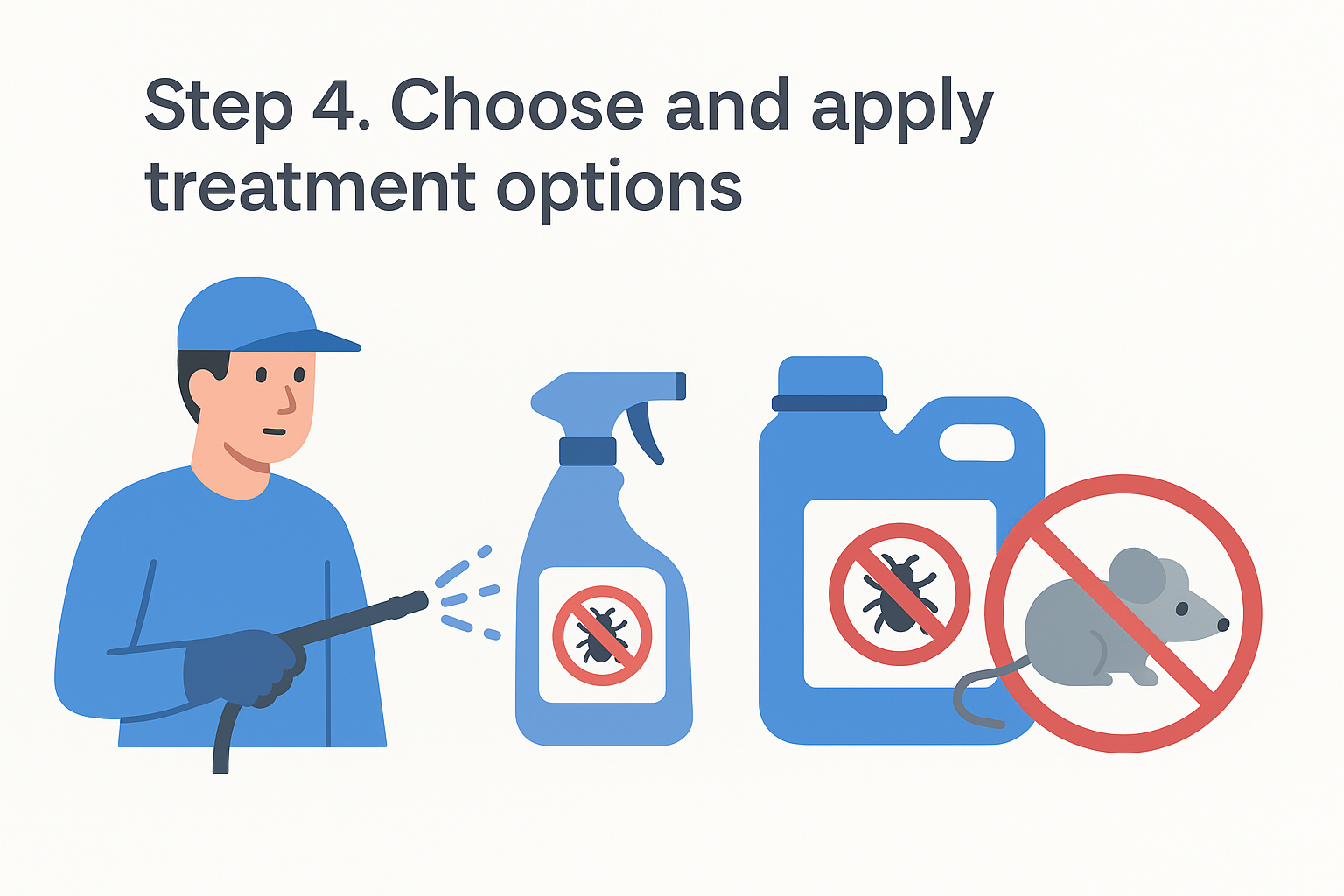
Reach for the strongest chemical last, not first, and you'll spend less over the life of the property.
Matching the method to the pest
Different pests call for different tools, often layered together:
- Exclusion : caulk gaps, screen vents, repair door sweeps
- Sanitation : remove food sources, fix moisture issues, clear clutter
- Biological control : beneficial insects for lawn pests, predator bait for rodents
- Targeted chemical treatment : localized termiticide, gel baits, or dusts applied only where activity is confirmed
When to apply
Timing matters as much as the method. Termiticide applied before a swarm is prevention; applied after wood damage is already repair work. Apply treatments during active periods identified in your monitoring log, not on a fixed calendar.
Step 5. Evaluate the results
Treatment isn't the finish line. You need to confirm it actually worked, and that means going back to the same monitoring tools from Step 2 and checking whether activity dropped. Evaluating results closes the loop on the whole IPM process, and skipping it is how homeowners end up rediscovering the same infestation three months later.
If you don't check your work, you don't actually know if the treatment worked.
What to check after treatment
Give treatments time to work, then verify with the same methods you used to monitor originally:
- Recheck sticky traps and bait stations for reduced counts
- Inspect previously active areas for new droppings, tubes, or damage
- Compare current logs against your baseline numbers from Step 2
- Note any conditions (moisture, gaps, food access) that still need fixing
If activity persists, that usually points to an unresolved conducive condition, not a failed product. Adjust the approach, re-treat if needed, and keep monitoring on a regular schedule going forward, since long-term pest control depends on catching new pressure early rather than waiting for another visible infestation.
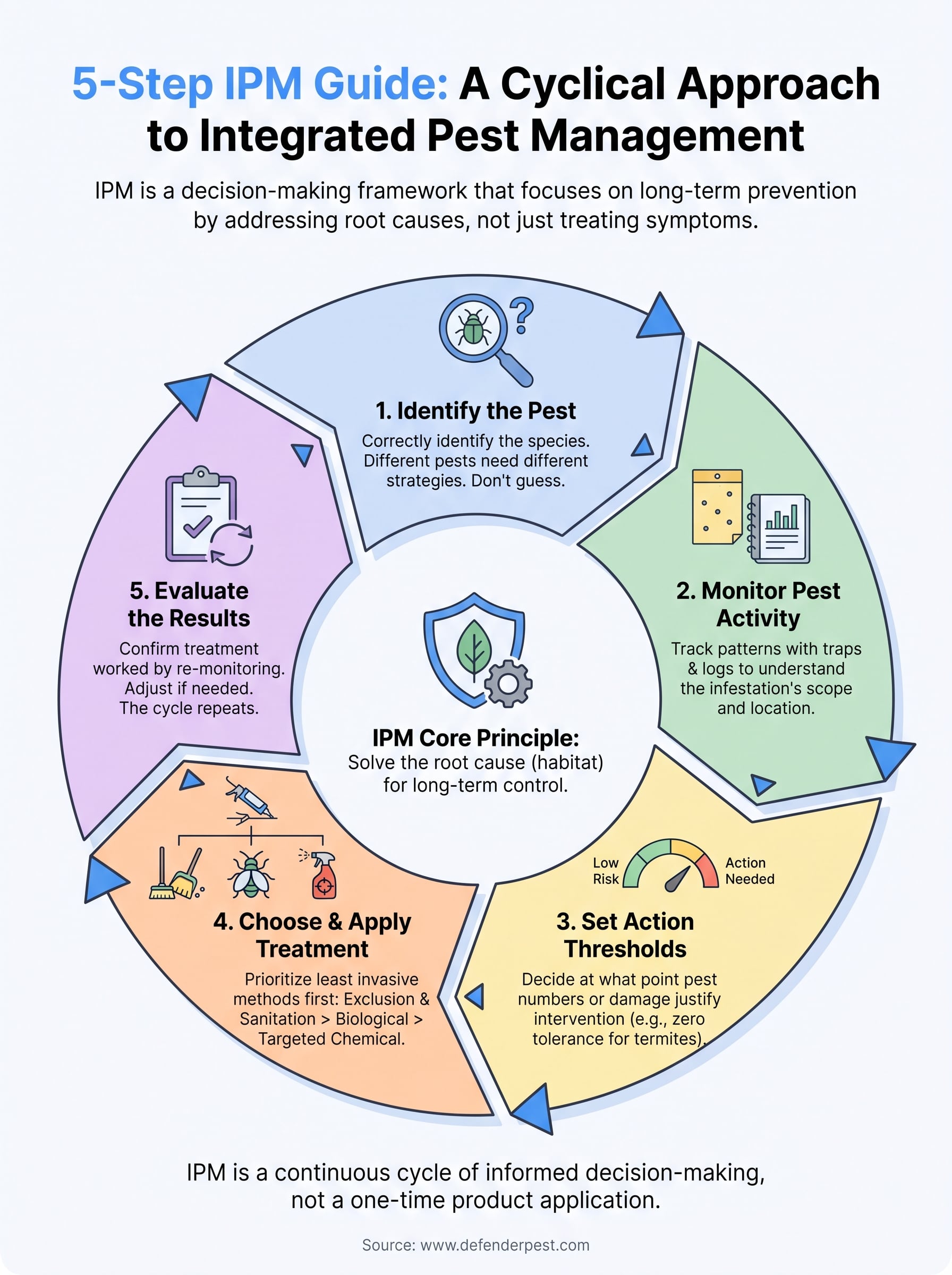
Putting your IPM plan into action
Running through these five steps once won't make pests disappear forever. IPM works because it's a repeating cycle , not a one-time fix. Identify, monitor, set your threshold, treat, evaluate, then go back to monitoring again. Skip a step or rush it, and you'll end up back where you started, wondering why the ants or termites came back after you thought you'd handled it.
Sacramento's swing between dry summers and wet winters means the conditions driving pest pressure never really stay still, so this isn't a plan you set once and forget. Some homeowners have the time and tools to run this themselves. Others would rather have someone who does this daily catch the early signs before they turn into structural damage or a full infestation.
If you'd rather have trained eyes handle the inspection and monitoring for you, get a free quote from Defender Termite & Pest Management and let us build the plan around your property.