Gopher Control: How To Get Rid Of Gophers In The Yard
If you've noticed fresh mounds of dirt popping up across your lawn, you're probably already searching for how to get rid of gophers in the yard before the damage gets worse. Gophers are relentless diggers that can destroy root systems, ruin garden beds, and undermine the structural integrity of your landscape in a matter of days. And unlike some pests that come and go with the seasons, gophers stick around year-round.
The good news is that you have options, from traps and natural deterrents to exclusion methods that keep them from coming back. Some approaches work well as DIY projects, while others call for professional-grade solutions to fully resolve the problem. Knowing which method fits your situation can save you time, money, and a lot of frustration with holes appearing faster than you can fill them .
At Defender Termite & Pest Management, we've been helping Sacramento-area homeowners deal with exactly these kinds of pest problems since 1999. This guide breaks down the most effective gopher control methods available to you, what works, what doesn't, and when it makes sense to call in a professional rather than go it alone.
Identify gopher activity and find main tunnels
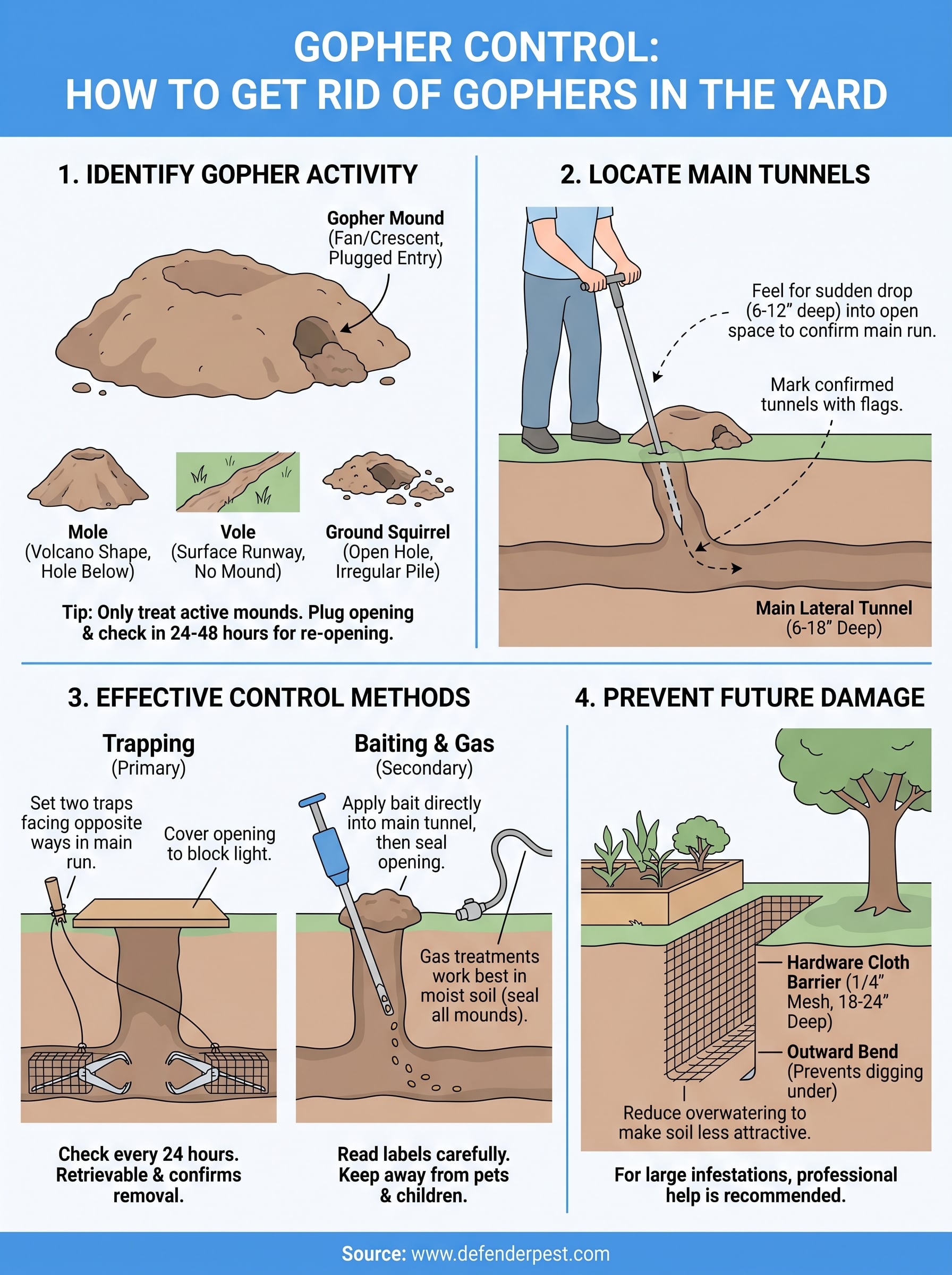
Before you can solve a gopher problem, you need to confirm you actually have gophers and not moles, voles, or ground squirrels. Each pest behaves differently, and treating for the wrong animal wastes time and money . Gophers leave behind kidney-shaped or crescent-shaped mounds with a plugged hole pushed off to one side, which is the clearest visual indicator you're dealing with a pocket gopher rather than another burrowing pest.
Tell gopher mounds apart from other pest signs
Mole mounds look like symmetrical volcanoes pushed straight up from the ground , while gopher mounds are fan-shaped and shoved to the side. Voles create surface runways in the grass without raised mounds, and ground squirrel burrows have open, unplugged entrances with scattered loose soil around them. Knowing which pest you have shapes every decision that follows, including which traps to buy, how deep to set them, and where to place them for the best results.
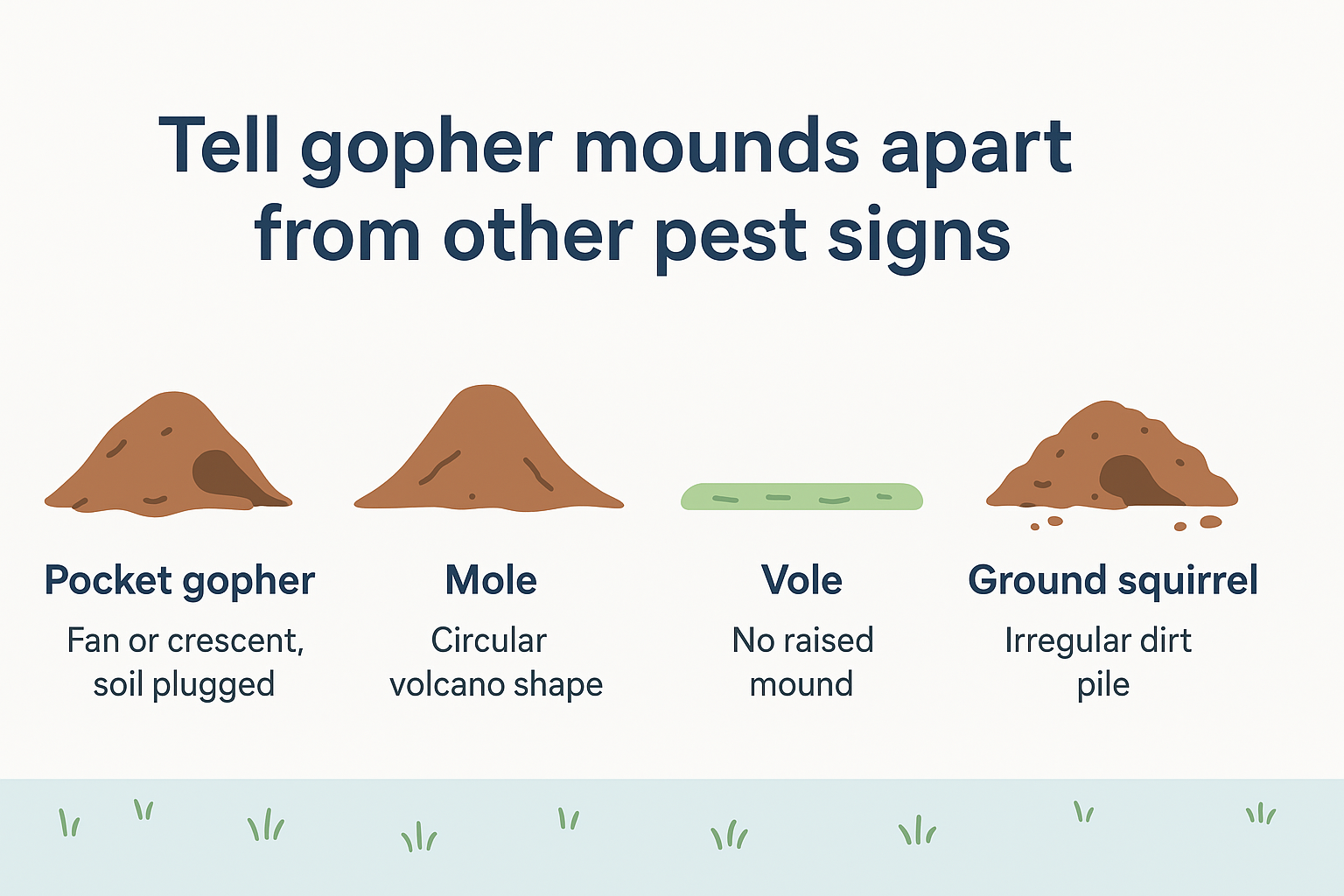
Here's a quick comparison to help you identify what you're dealing with:
| Pest | Mound Shape | Entry Hole | Typical Tunnel Depth |
|---|---|---|---|
| Pocket gopher | Fan or crescent, soil plugged | Plugged on one side | 6 to 18 inches |
| Mole | Circular volcano shape | Hidden below mound | 3 to 12 inches |
| Vole | No raised mound | Open surface runway | Surface level |
| Ground squirrel | Irregular dirt pile | Open, unplugged | 6 to 30 inches |
Probe for the main lateral tunnel
Once you've confirmed gopher activity, your next step is finding the main lateral tunnel , not just the side channels that branch off from it. Most gopher mounds connect to short side tunnels that feed into one or two main runs traveling horizontally 6 to 18 inches underground. All your trapping and baiting work will fail if you target the side tunnels and miss the main run entirely.
To locate the main tunnel, use a metal probing rod or a sturdy wooden dowel at least 18 inches long. Start about 8 to 12 inches directly in front of the plugged side of the mound, angling the probe slightly toward the mound itself. Push the probe into the soil at several points in a semicircle around that spot until you feel it drop into open space , usually at a depth somewhere between 6 and 12 inches. That sudden give tells you you've hit the main tunnel.
Mark each confirmed tunnel location with a small flag or stake before moving to the next mound. This map of active runs is the foundation your entire control plan depends on.
Check for fresh activity before you commit resources
Not every mound in your yard is active. Treating old, abandoned tunnels is a common mistake that wastes both product and effort. Before you set traps or apply any bait, plug each mound opening with a loose handful of soil and check back within 24 to 48 hours. Any mound that gets re-opened during that window is confirmed active , and that's where you direct your attention first.
Fresh gopher mounds typically appear in the early morning or evening, since gophers favor cooler parts of the day when the soil is easier to work. In the Sacramento area, activity peaks in spring and fall when the ground holds enough moisture for easy digging. If you're seeing multiple new mounds per day across different parts of your yard, you likely have more than one gopher working your property, and that changes how aggressively you need to approach the removal process.
Choose a control plan that fits your yard
Once you know where the active tunnels are, you need to pick the right approach for your specific situation. The scale of the infestation, your yard's layout, and whether you have children or pets all factor into which control method makes the most sense. Trying to learn how to get rid of gophers in the yard without matching your method to your circumstances is one of the most common reasons homeowners see limited results.
Match your method to the size of the infestation
If you're dealing with one or two active mounds in a contained area , a targeted trapping approach is usually the most practical and effective starting point. Traps let you confirm removal because you recover the animal, and they carry zero chemical risk to plants, pets, or children when set correctly. This makes trapping the default recommendation for small to moderate gopher activity.
When you find five or more active mounds spread across a large portion of your yard , a single-method approach often falls short. In those cases, combining traps in the most active zones with bait in peripheral tunnels gives you broader coverage without requiring you to monitor dozens of trap locations daily.
A good rule of thumb: start with trapping for any infestation you can map in under 30 minutes, and add baiting or professional treatment when the activity spreads beyond what you can track by hand.
Factor in your yard's specific conditions
Soil type and moisture level affect how easily you can locate tunnels and how well traps stay set. Sandy or loose soil can cause trap chambers to collapse before a gopher triggers them, so firming up the tunnel walls before setting is an extra step worth doing. Dense clay soil, common throughout the Sacramento region , holds tunnel shape better and generally makes trap placement more straightforward.
Your yard's features also shape your priorities. Garden beds, irrigation lines, and tree root zones take damage faster than open lawn, so start by targeting the tunnels that run closest to those areas first. Working outward from your highest-value landscape zones gives your control plan a clear order of operations rather than a scattered response that lets gophers keep moving while you play catch-up.
Trap gophers effectively in active runs
Trapping is the most reliable method when learning how to get rid of gophers in the yard , because you confirm removal every time you check a trap. Unlike bait, which can be ignored or avoided, a properly placed trap in an active main tunnel gives you direct, measurable results within 24 to 48 hours.
Pick the right trap for the job
Two trap types dominate gopher control: pincer-style traps like the Macabee and enclosed box traps . The Macabee is a wire trap with two spring-loaded jaws that squeeze shut when a gopher disturbs the trigger pan. Box traps like the Black Hole or Gophinator enclose the mechanism inside a tube, which keeps the trap dark and makes gophers more likely to push through rather than back away.
The Macabee remains the most widely used gopher trap among professional pest technicians: it's durable, inexpensive, and effective in most soil conditions.
For most homeowners, starting with two Macabee traps per confirmed tunnel gives you enough coverage without overcomplicating the process. Box traps cost more but perform well in compacted or clay-heavy soils where wire jaws can get fouled with debris.
Set and position traps correctly
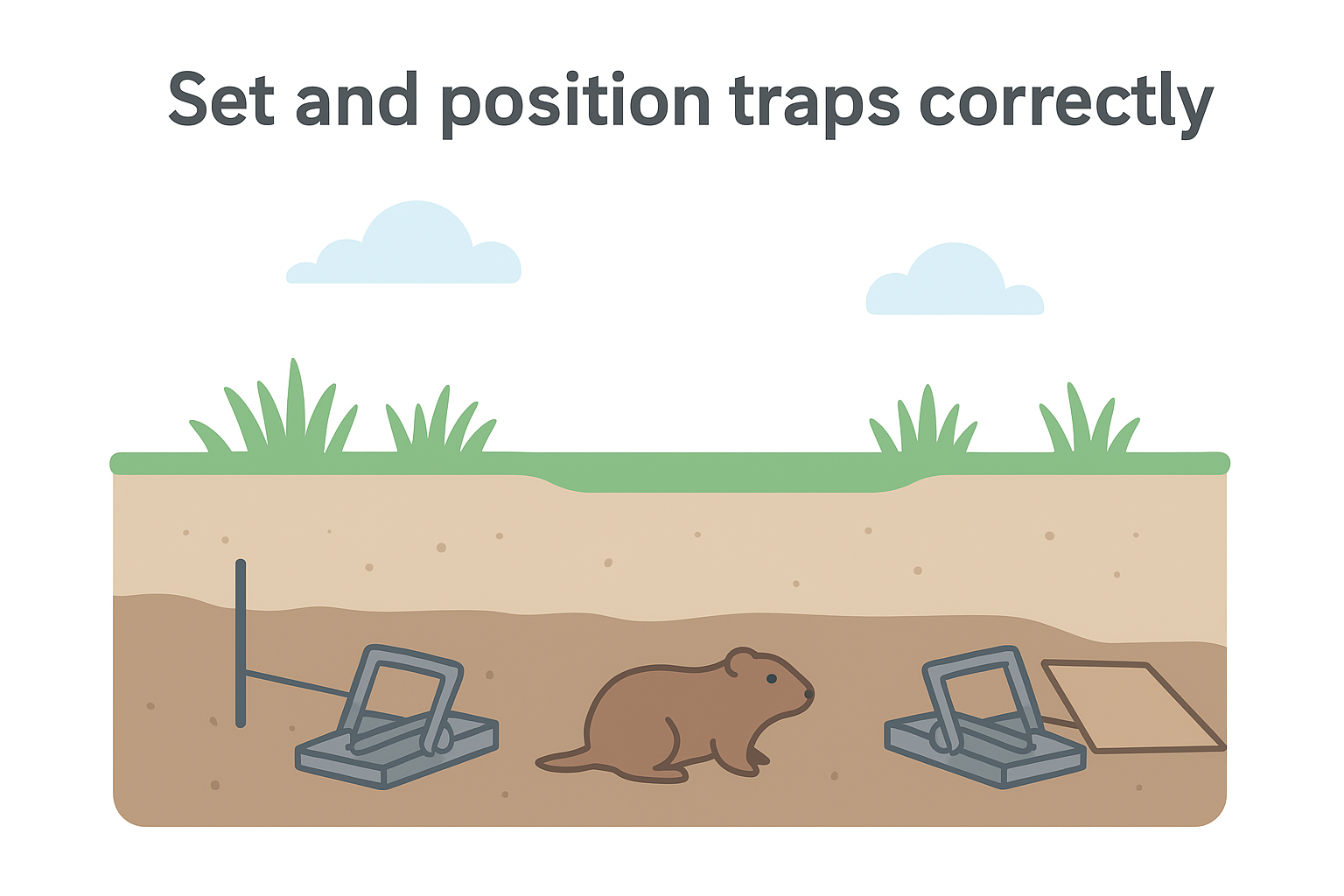
Placement makes or breaks your trapping results. Once you've probed and confirmed the main lateral tunnel , excavate just enough soil to expose an 8 to 10 inch section of the run. Follow these steps each time you set a trap:
- Clear loose dirt from inside the tunnel to give the trigger pan a clean surface .
- Set two traps facing opposite directions inside the tunnel so the gopher encounters a trap regardless of which way it travels.
- Tie each trap to a small stake with wire or string so a triggered trap stays retrievable .
- Cover the excavated opening with a flat piece of cardboard or plywood to block out light, since gophers seal off lit sections of tunnel and avoid them.
- Check traps every 24 hours and reset immediately if disturbed but not triggered.
Wearing gloves when handling traps reduces human scent transfer, which can make gophers hesitant to approach. Reset any undisturbed trap after 48 hours by moving it to a fresh tunnel location nearby.
Use baits, gas, and other tools safely
When traps alone aren't covering the full scope of your gopher problem, bait and underground gas treatments can fill in the gaps. These tools work on different principles than traps, but they carry more risk to non-target animals and require careful handling. Understanding how each option works helps you apply them where they'll be most effective and avoid mistakes that reduce their impact or create safety hazards.
Apply bait correctly for consistent results
Zinc phosphide and diphacinone-based baits are the two most common active ingredients in registered gopher baits. Zinc phosphide acts quickly, usually within 24 hours, while diphacinone is an anticoagulant that takes several days to work. For most homeowners dealing with active infestations and asking themselves how to get rid of gophers in the yard , zinc phosphide grain bait offers faster confirmation that the treatment worked.
Always read the full product label before handling any rodenticide bait, and follow application rates exactly since using more product does not improve results.
Place bait directly inside the main lateral tunnel , not in side channels or on the surface. Use a bait applicator probe or a long spoon to drop the correct amount 6 to 8 inches into the run, then seal the opening with a clod of dirt to block out light. Keep bait away from areas where pets or children have access , and store unused product in its original container in a locked location.
Use underground gas treatments with the right setup
Gas treatments, including carbon monoxide devices and aluminum phosphide tablets , work by filling the tunnel system with toxic gas. Carbon monoxide machines like the Gopher Gasser attach to a tube inserted into the main run and pump exhaust directly into the tunnel network. These devices are most effective in moist soil conditions that prevent gas from escaping through cracks before it reaches the gopher.
Aluminum phosphide is a restricted-use pesticide in most states and requires a licensed applicator. If you're considering this option, contact a licensed pest control professional rather than attempting it yourself. For gas treatments of any kind, seal every visible mound opening with soil immediately after treating so the gas stays concentrated inside the tunnel system and doesn't dissipate at the surface.
Prevent future damage with exclusion and upkeep
Removing gophers solves your immediate problem, but it doesn't stop the next one from moving in. Gopher territory opens up quickly after you clear an area, and neighboring animals often detect the vacancy within weeks. Building physical barriers and adjusting your landscape conditions gives you a durable line of defense rather than a cycle of repeated treatments.
Install physical barriers around high-value areas
Hardware cloth with a quarter-inch mesh is the most effective physical barrier for stopping gophers from reaching garden beds, tree root zones, and ornamental plantings. Standard chicken wire won't work because gophers chew through it easily. For raised beds, line the bottom and sides with hardware cloth before filling with soil, extending the barrier at least 6 inches above the soil surface to prevent gophers from climbing over at the edge.
For in-ground planting areas, bury the hardware cloth barrier at least 18 to 24 inches deep and bend the bottom edge outward at a 90-degree angle to discourage gophers from digging beneath it. Here's a simple installation checklist for a garden bed barrier:
- Dig a trench around the perimeter at least 18 inches deep
- Cut hardware cloth to fit the trench, adding 6 inches of extra height above grade
- Bend the bottom 6 inches outward, away from the bed, at a right angle
- Secure the cloth with landscape staples or wire ties at the corners
- Backfill the trench firmly so the barrier doesn't shift
A properly installed hardware cloth barrier outlasts any bait or trap program and requires no ongoing maintenance once it's in the ground.
Reduce conditions that attract gophers
Overwatered lawns and dense root systems create ideal gopher habitat by keeping the soil loose, moist, and full of food sources. Adjusting your irrigation schedule to water deeply but less frequently encourages deeper root growth and makes the top layers of soil less attractive for burrowing. In the Sacramento region, cutting back irrigation during the dry season removes one of the main reasons gophers shift into residential yards from surrounding open land.
Keeping your landscape maintained also helps you catch new activity early. If you already know how to get rid of gophers in the yard , consistent monitoring means you can respond to a single fresh mound rather than waiting until you have a network of tunnels spread across the property.
Next steps for a gopher-free yard
You now have a complete picture of how to get rid of gophers in the yard , from identifying fresh mounds and probing main tunnels to setting traps, applying bait, and installing hardware cloth barriers. Acting quickly matters most , because a single gopher can create dozens of mounds within days and attract additional animals from neighboring properties once territory opens up.
Start with the highest-priority zones first : garden beds, irrigation lines, and root zones near trees. Confirm which mounds are active, probe for the main lateral tunnel, set traps facing both directions, and check them every 24 hours. When the activity spreads beyond what you can manage on your own, or new mounds keep appearing faster than you can respond, professional treatment gives you the most reliable path forward .
Contact Defender Termite & Pest Management for expert gopher control in the Sacramento area. The team has served homeowners throughout the region since 1999 and can help you recover your yard fast.