6 Clear Signs Of Termites In A Home (And What To Do)
Termites cause billions of dollars in property damage across the United States every year, and most homeowners don't realize they have a problem until the damage is already done. That's because termites work quietly, hidden behind walls, under floors, and inside wood structures where you can't easily see them. Knowing the signs of termites in a home early can save you thousands in repair costs and protect the structural integrity of your property.
At Defender Termite & Pest Management, we've been inspecting and treating homes across the Greater Sacramento area since 1999. Over that time, our team has seen every stage of termite damage, from the earliest warning signs to full-blown infestations that required extensive wood repair and reconstruction . That hands-on experience has taught us exactly what homeowners should be watching for, and when it's time to call a professional .
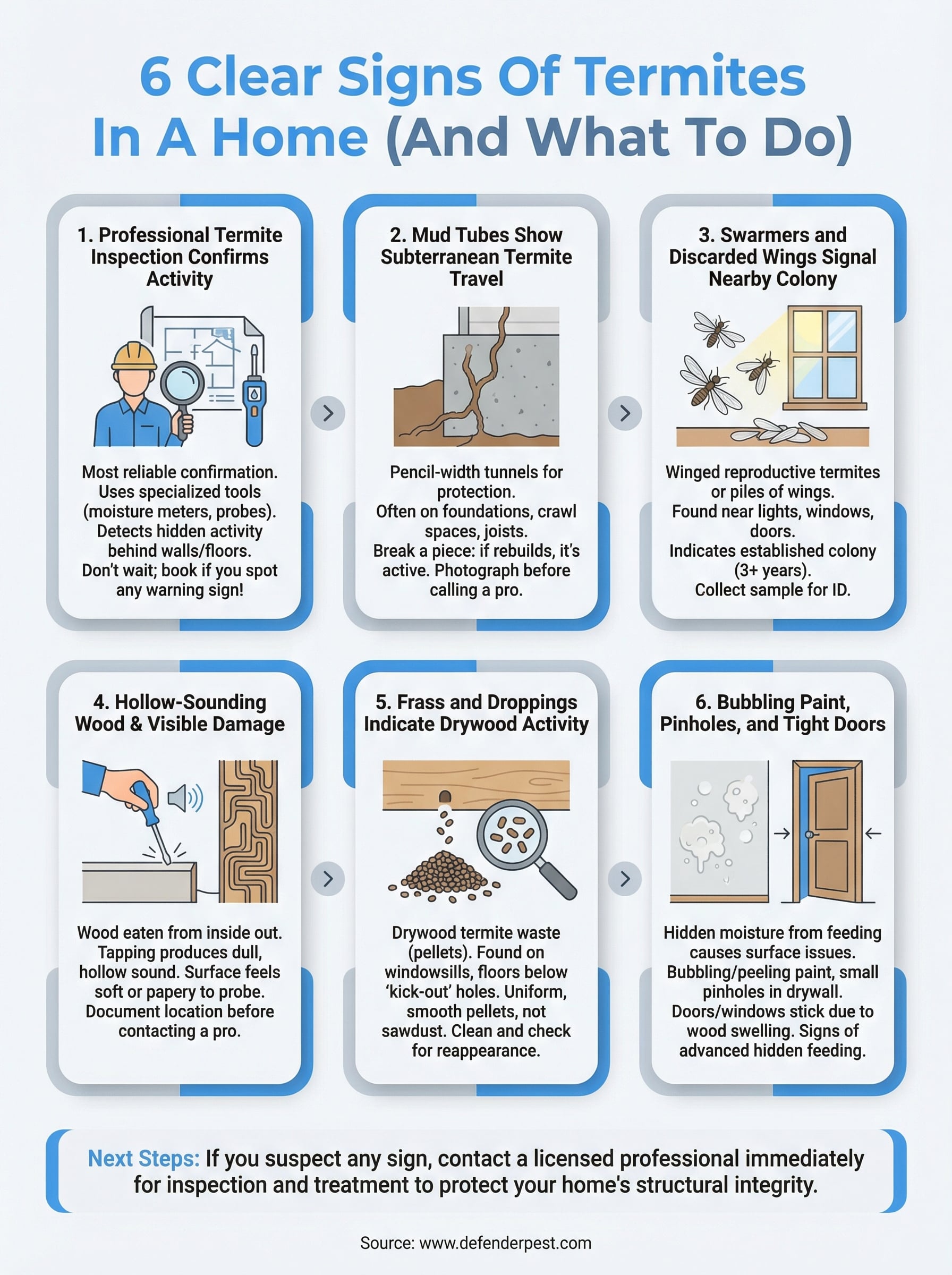
This article breaks down six clear indicators that termites may be active in your home, along with what each sign looks like and what you should do about it. Whether you're a homeowner noticing something suspicious or a buyer preparing for a real estate transaction , these are the red flags that demand your attention. Let's get into the specific signs you need to know .
1. A professional termite inspection confirms activity
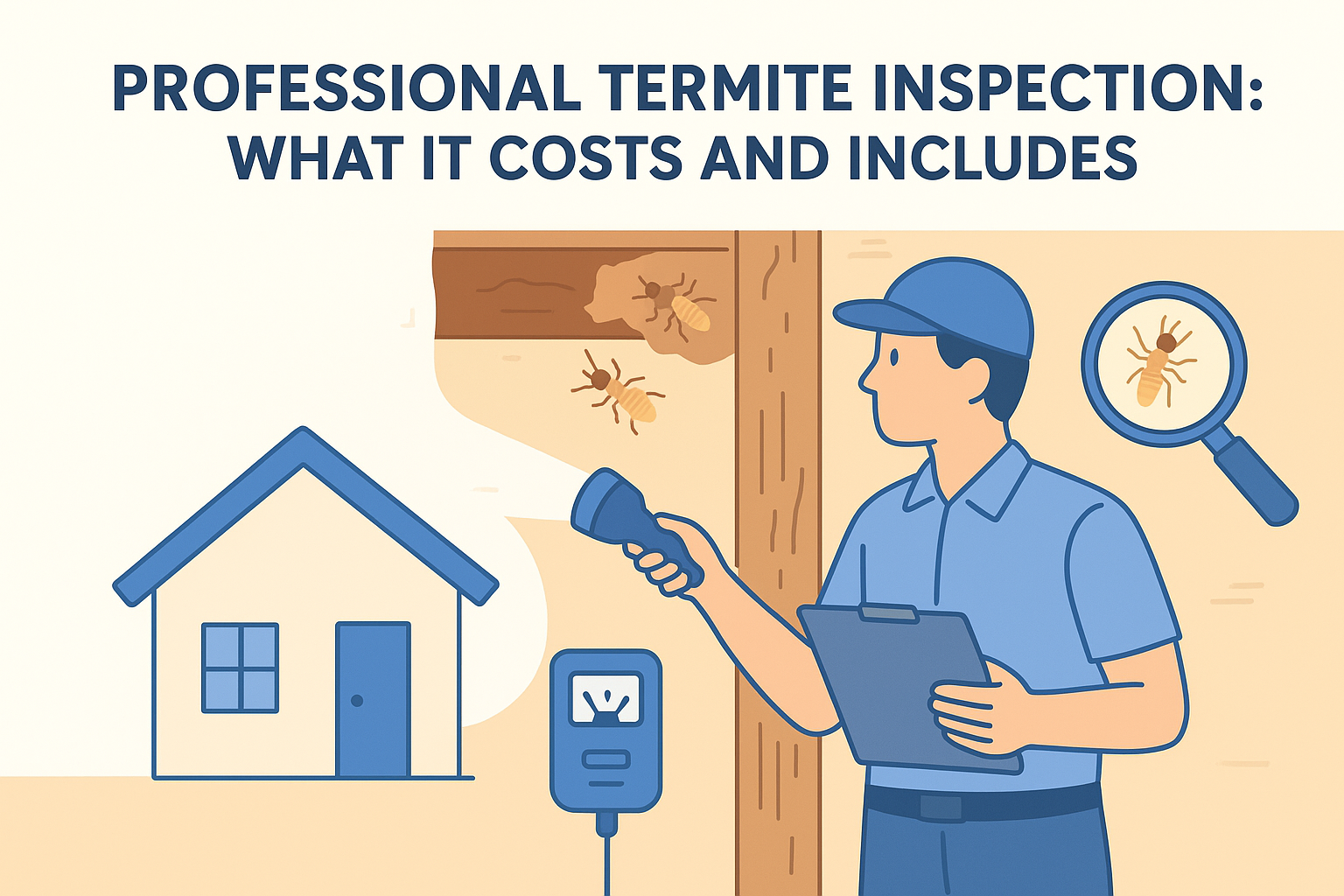
Before you start searching for individual signs of termites in a home , a certified inspector gives you the most reliable confirmation available. They use specialized tools and access points that go far beyond a standard visual check , making a professional inspection the most important step you can take when you suspect a problem.
What a professional looks for that homeowners miss
Inspectors examine areas most homeowners never access, like crawl space joists, attic framing, and wall voids . They use moisture meters and probes to detect hidden activity behind finished surfaces that shows no outward damage at all.
Your inspector also looks for subtle structural changes that signal long-term feeding, such as compressed wood grain or minor floor deflection . These findings often don't produce any visible surface damage until a colony has been active for months or longer.
When you should schedule an inspection right away
Book an inspection if you notice discarded wings near windows, hollow-sounding walls, or unexplained soft spots in floors or baseboards. You should also prioritize one before any real estate transaction in California, where a Wood Destroying Organism (WDO) report is commonly required to close a sale.
If you see even one warning sign, treat it as confirmation that a professional inspection is overdue.
Don't wait for multiple signs before you act. Termites can cause significant structural damage in a matter of months under the right conditions, and Sacramento's warm climate creates ideal conditions for year-round activity.
What to expect during a termite inspection in Sacramento-area homes
A typical inspection covers the foundation perimeter, garage framing, attic space, and any wood-to-soil contact points . Inspectors in the Sacramento area pay close attention to subterranean species because of local soil conditions and climate. Most residential inspections run 45 minutes to two hours depending on property size and access.
Your inspector documents every finding, including damage location, species evidence, and infestation severity . You receive a written report that gives you a complete picture of what's happening inside your home.
What to do next if the inspector finds termites or damage
Ask for a written report that details the species, the extent of structural damage, and recommended treatment options . Use that document to schedule targeted treatment and, if needed, wood repair to restore compromised framing or support members.
Act on the report quickly. The longer a colony feeds, the more costly and structurally complex the repair process becomes.
2. Mud tubes show subterranean termites travel into your home
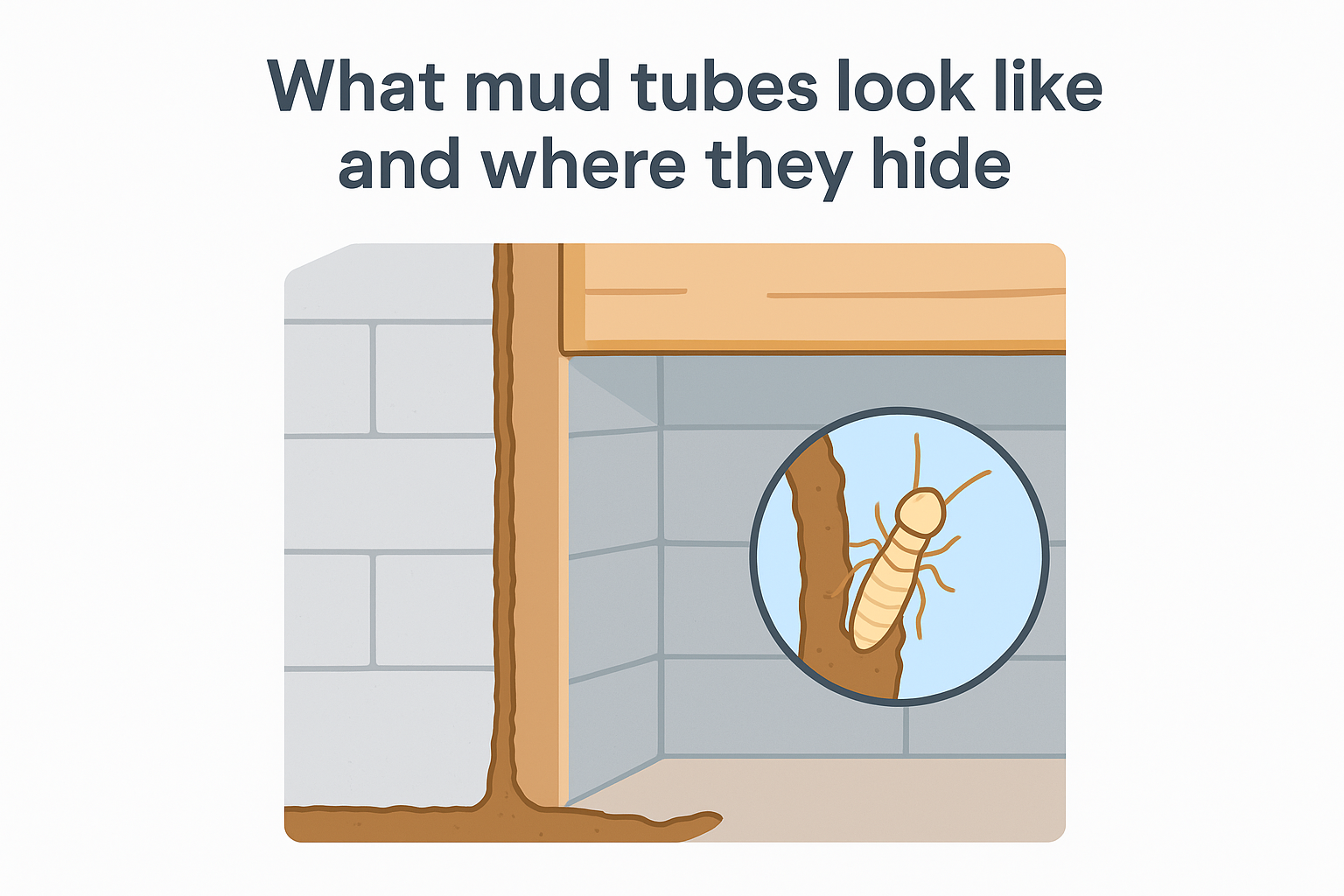
Subterranean termites build mud tubes to protect themselves while traveling between underground colonies and the wood they feed on. These pencil-width structures rank among the most reliable signs of termites in a home and appear most often along foundation walls, crawl space framing, and floor joists.
What mud tubes look like and where they hide
Mud tubes are narrow, brown tunnels roughly the diameter of a pencil. You'll find them most often running along concrete foundations, block walls, and floor joists in crawl spaces. Check also along the interior of garage walls and any exterior siding sitting close to grade level.
How to check mud tubes without making the problem worse
Break off a small section of the tube and look for live termites moving inside. Leave the rest of the tube intact so a professional can confirm the species and level of activity during an inspection without losing critical evidence.
If termites rebuild a broken section within a few days, the colony is actively using that route.
What active vs. inactive tubes can mean
Active tubes contain live termites and feel slightly moist. Inactive tubes crumble easily and dry out. An inactive tube does not mean the colony is gone. Termites often shift to a new entry point nearby, so the absence of activity in one tube rarely tells the full story.
What to do next if you find tubes on a foundation or in a crawl space
Photograph the exact location and length of each tube before touching anything further. Then schedule a licensed inspection so a professional can assess active entry points and treatment options before the colony spreads deeper into your home's framing.
3. Swarmers and discarded wings signal a nearby colony
Finding winged termites or piles of discarded wings near windows and doors is one of the clearest signs of termites in a home. Swarmers are reproductive termites that leave a mature colony to start a new one, which means a large, established colony is already somewhere on or near your property.
If swarmers appear inside your home, the source colony has likely been active for three or more years.
How to tell termite swarmers from flying ants
Termite swarmers have straight antennae, a broad waist, and two pairs of equal-length wings . Flying ants have bent antennae, a pinched waist, and unequal wings. These physical differences are the fastest way to distinguish the two before you contact an inspector.
When in doubt, collect a sample in a sealed bag and bring it to a licensed inspector for species confirmation.
Where wings and swarmers show up inside and outside
Swarmers move toward light sources , so look for them near windows, sliding doors, and light fixtures . After a swarm event, the shed wings pile up on windowsills and along baseboards since termites drop them almost immediately after landing.
What swarming season can tell you about timing and risk
In Sacramento, subterranean termites typically swarm during late winter and spring . Drywood termites swarm in late summer and fall. Knowing when you saw swarmers helps an inspector narrow down the species faster.
What to do next if you see swarmers indoors
Photograph the swarmers and collect a specimen before cleaning them up. Then contact a licensed termite professional immediately to identify the species and locate the colony before it spreads further into your home's structure.
4. Hollow-sounding wood and visible wood damage point to feeding
Termites consume wood from the inside out, leaving a thin outer shell that looks intact but has nothing solid behind it. This internal feeding is one of the most telling signs of termites in a home because the structural integrity of walls, floors, and framing weakens before any surface damage becomes obvious.
What termite-damaged wood looks and sounds like
When you tap on termite-damaged wood , it produces a dull, hollow sound instead of a solid knock. You may also notice the surface feels soft or papery under light pressure, and in advanced cases the wood shows visible galleries or a maze-like pattern of tunnels running along the grain.
Places to test safely with a tap and probe check
Check baseboards, door frames, window sills, and exposed floor joists by tapping with a screwdriver handle and listening for hollow returns. Press a probe or pointed tool gently into soft spots to measure depth, and avoid aggressive probing in load-bearing framing without a professional present.
If a screwdriver sinks into wood with minimal pressure, treat it as structural damage until an inspector confirms otherwise.
How termite damage differs from rot and water damage
Rot and water damage produce soft, discolored, or crumbling wood that smells musty. Termite damage , by contrast, runs along the grain in clean galleries and rarely shows discoloration or odor until the infestation has spread significantly.
What to do next if you find damaged baseboards, trim, or framing
Document the location and extent of any hollow or soft wood with photos before touching it further. Then contact a licensed termite inspector who can assess whether treatment, structural repair, or both are necessary to restore your home safely.
5. Frass and droppings indicate drywood termite activity
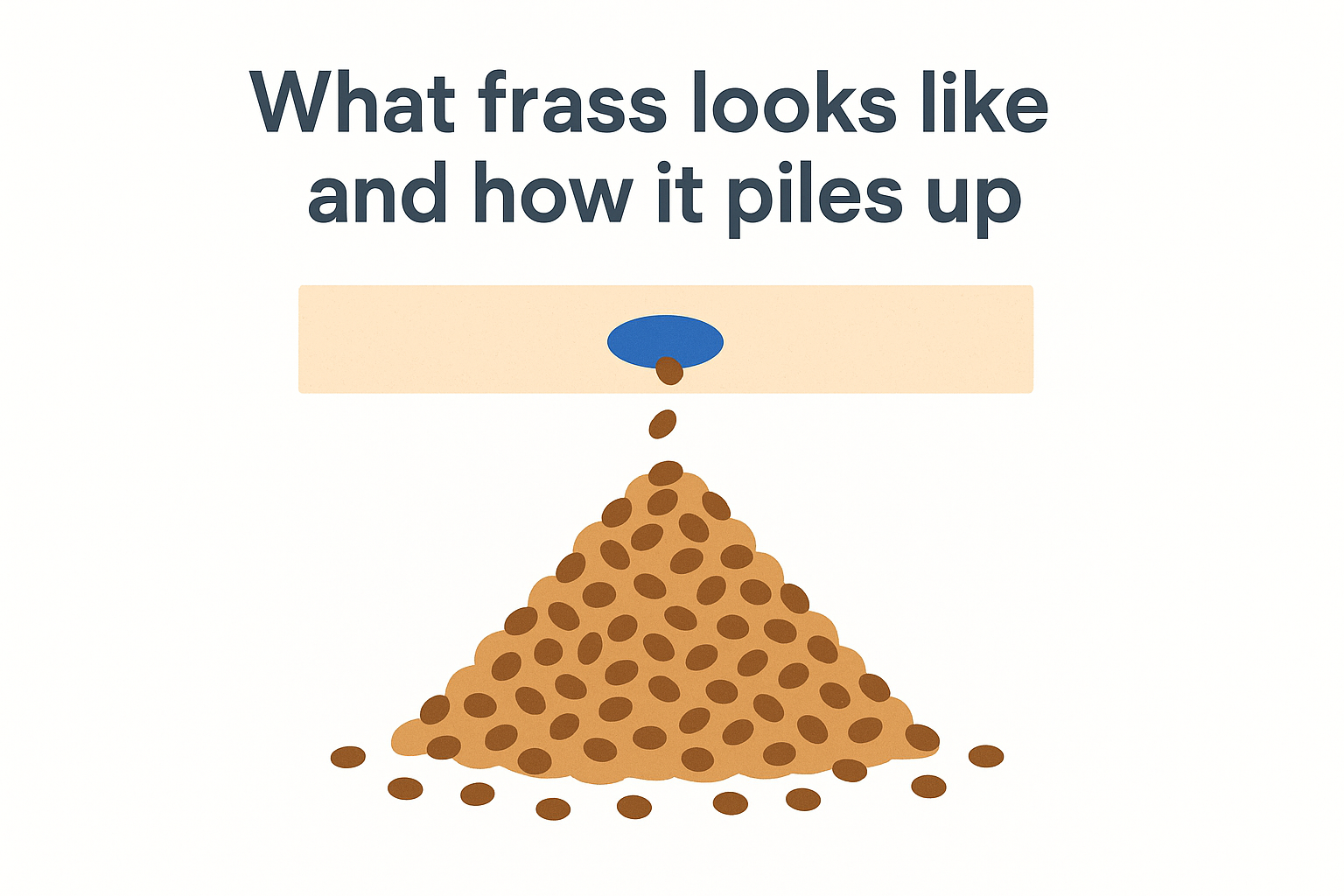
Frass is one of the more overlooked signs of termites in a home , yet it gives you a direct clue that drywood termites are actively feeding above you. Unlike subterranean termites, drywood termites push their waste out of the wood through small openings called kick-out holes, leaving behind tiny piles that accumulate on surfaces below.
What frass looks like and how it piles up
Drywood termite frass consists of tiny, pellet-shaped droppings roughly the size of a poppy seed. The pellets have six flattened or concave sides and range in color from light tan to dark brown , depending on the wood the termites are eating. You'll usually find a small cone-shaped pile directly beneath the kick-out hole.
Fresh frass piles that reappear after you clean them are a strong indicator of active feeding overhead.
Common places to find frass and kick-out holes
Look for frass along windowsills, door frames, and baseboards , especially in areas with exposed or older wood. Attic framing and garage door trim are also frequent locations in Sacramento-area homes where drywood termite pressure runs high.
How to rule out sawdust from carpenter ants or beetles
Carpenter ant debris includes wood shavings, soil, and insect body parts mixed together. Termite frass, by contrast, consists entirely of uniform, smooth pellets with no other material mixed in.
What to do next if frass comes back after you clean it
Clean the area thoroughly, then check it again in 48 to 72 hours . If a new pile appears, the colony is still active above that spot. Contact a licensed termite professional to locate the infestation and recommend a targeted drywood treatment before the colony spreads further.
6. Bubbling paint, pinholes, and tight doors show hidden damage
Some of the most overlooked signs of termites in a home appear on surfaces you look at every day. Paint changes, small pinholes, and doors that suddenly stick are quiet indicators that termites are feeding inside walls and framing you can't directly see.
What changes in paint, drywall, and wallpaper can reveal
Termites produce moisture as they feed , and that moisture pushes outward through drywall and paint. Look for bubbling, peeling, or discolored patches on walls that have no connection to plumbing or roof leaks. Small pinholes in drywall can also mark exit points where termites have broken through the surface layer.
How moisture-related warping shows up in doors, windows, and floors
When termites feed through door frames and floor joists , the surrounding wood shifts and swells. Doors and windows that recently became difficult to open or close without an obvious reason deserve a closer look, especially at ground-floor level.
A door that sticks with no recent rainfall or seasonal change is a red flag worth investigating right away.
Why these signs often appear after termites spread
By the time surface changes become visible , a colony has typically been active for a significant period. These symptoms show up late because termites consume internal wood fibers first and only affect outer surfaces once the damage reaches deeper structural layers.
What to do next if you suspect termites behind walls or under floors
Avoid cutting into walls without a professional assessment. Contact a licensed termite inspector who can use moisture meters and probes to confirm activity without causing unnecessary structural disruption. Acting quickly at this stage limits both the treatment scope and the repair costs that follow.
Next steps if you suspect termites
The signs of termites in a home covered in this article each point to a problem that gets more costly the longer you wait. Whether you found mud tubes, frass, hollow wood, or discarded wings , the next move is the same: contact a licensed professional before the damage spreads further into your framing and support structures.
Defender Termite & Pest Management has served homeowners across the Greater Sacramento area since 1999. Our team handles everything from initial inspection and species identification to targeted treatment and structural wood repair , so you don't need to coordinate multiple contractors to resolve the problem. We also offer 24/7 emergency service for situations that can't wait until a standard business day.
Schedule a termite inspection with Defender Termite & Pest Management today. Acting now protects your home's structural integrity and keeps repair costs from growing into a far larger project down the road.