5 Moles Rodent Control Methods Compared: Pros and Cons
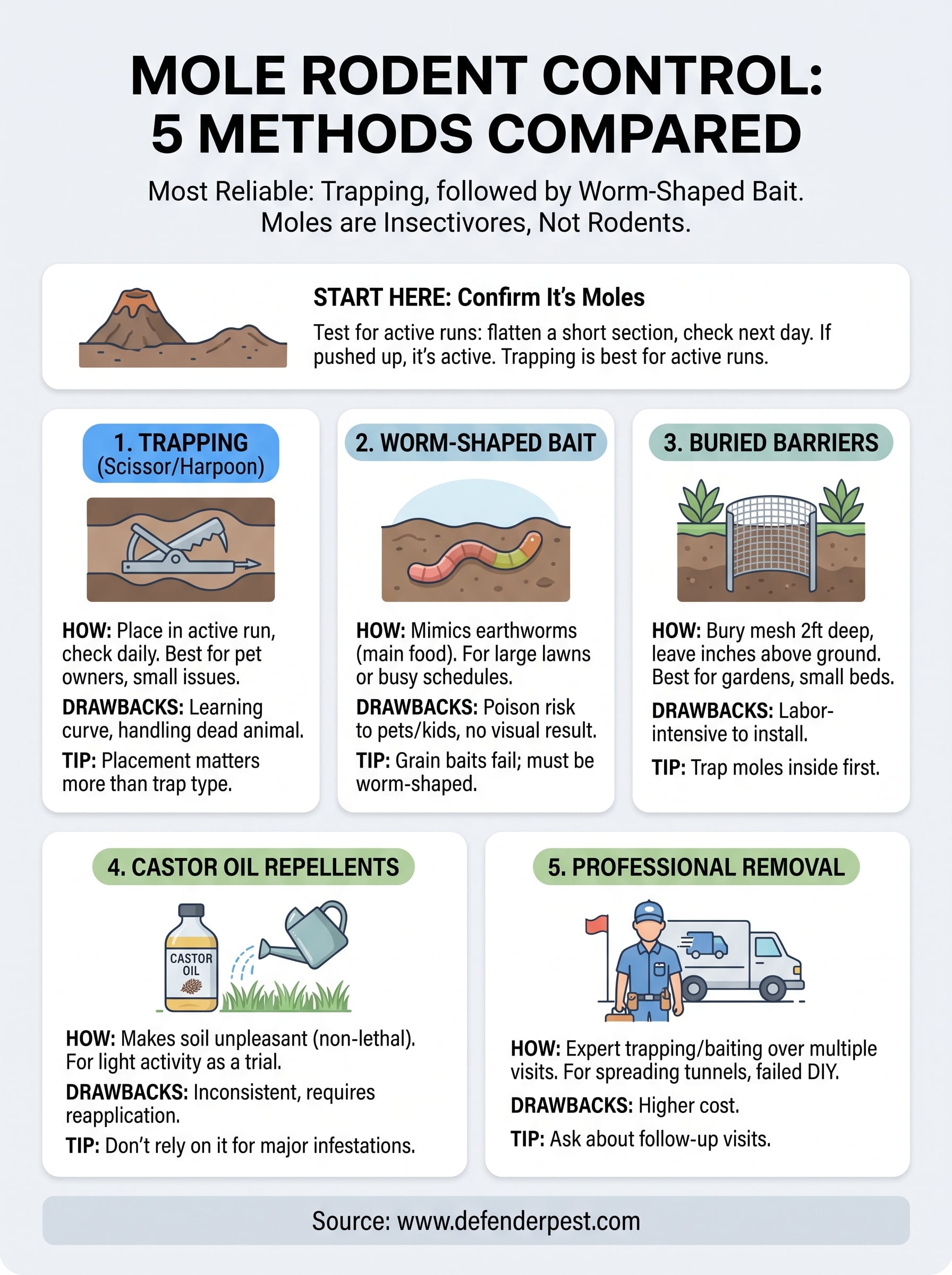
The most reliable moles rodent control method is trapping, followed by worm-shaped bait. Both work because they go after the mole itself. Buried barriers protect small areas, repellents help only in narrow cases, and most folk remedies do nothing. Trap if you can check devices daily, bait if you can't, wire off the beds you must protect, and call a pro when tunnels keep spreading.
Moles are not actually rodents. They are insectivores that live mostly on earthworms , so the grain and peanut baits sold for rats and mice get ignored. That mismatch is why so many homeowners spend money on products that never touch the problem while the lawn gets worse. This guide compares five methods on how they work, who they suit, and what they cost you in effort and risk.
At Defender Termite & Pest Management, a family-owned Sacramento company since 1999, we deal with rodents and lawn pests every week. We know a wrong diagnosis wastes the most money. Use this list to match the method to your yard.
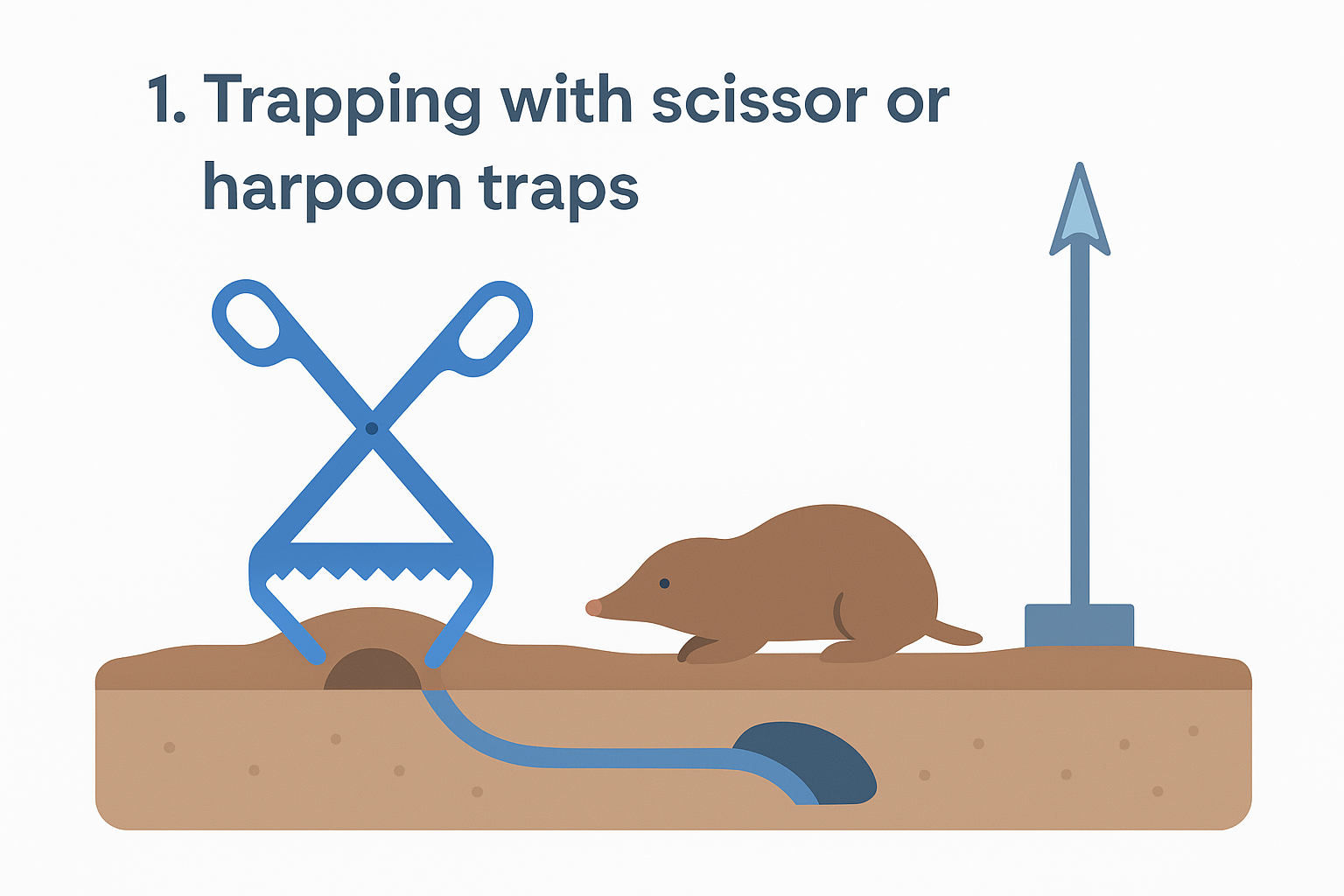
1. Trapping with scissor or harpoon traps
Trapping is the most dependable way to get rid of moles, because it removes the animal instead of hoping it leaves. Extension and wildlife damage programs keep landing on it for moles rodent control for that reason.
How it works
Scissor traps suit deeper runs, harpoon traps suit tunnels close to the surface, and choker-loop traps are a third common style. Each sits in an active runway and fires when a mole pushes through or lifts the soil. Success depends on finding a live tunnel , so test first:
- Pick a straight run, ideally one that follows a curb, walkway, or fence line. Winding tunnels are mostly foraging paths that moles abandon.
- Press a short section flat with your foot.
- Check the same spot the next day. If the ridge is pushed back up, the run is active.
- Set the trap in that run, following the package directions.
- Check it daily and move it if nothing happens within a few days.
Placement matters more than which trap you buy.
Who it suits
Trapping suits homeowners with a handful of active runs who want to avoid poison around pets and kids. You also need to be willing to look at a trap every day. Confirm you have moles first. Moles leave volcano-shaped mounds and raised ridges, while gophers, common in many California yards, leave fan-shaped mounds with a plugged hole and need differently set traps. Stomping tunnels flat is only a test for finding active runs. It will not solve anything by itself.
Cost and drawbacks
Traps are inexpensive and reusable, which makes this the cheapest effective option. The drawbacks are the learning curve, the daily checks, and handling a dead animal. Moles also dig deeper when soil dries out in summer or freezes in winter, so you may not know whether the last mole is gone . Check local rules on trapping before you start, since some places require daily checks.
2. Worm-shaped mole bait
Worm-shaped bait is the best choice when you can't check traps, because the mole takes it inside its own tunnel. Among moles rodent control products, it is the only poison that matches what moles actually eat.
How it works
These baits look and smell like earthworms, the main food moles eat , and carry a poison. Bromethalin is the active ingredient in the type Purdue's plant and pest diagnostic lab describes. Tomcat Mole Killer is one example. It comes as worm strips that, per its listing, kill moles in one feeding. Use the flatten-and-recheck test from the trapping section to find a live run, then place the bait as the label directs.
Grain, peanut, and pellet baits sold for rats and mice fail here because moles don't eat seeds.
A bait made for rats will not touch a mole, so buy one shaped like a worm.
Who it suits
Bait fits larger lawns with many tunnels and homeowners who don't want to handle the animal. It is also the easier route if your schedule rules out daily trap checks. Think twice if you have dogs that dig in the lawn or children who play in the yard . Poison near those tunnels needs extra care.
Cost and drawbacks
Bait costs more per mole than traps, and you buy a pack whether you need two worms or ten. The poison carries real risk, so keep it away from pets, kids, and wildlife , follow the label, and check what your state allows. You also rarely see a result, because the mole dies underground. Watch whether new ridges stop appearing over the following weeks.
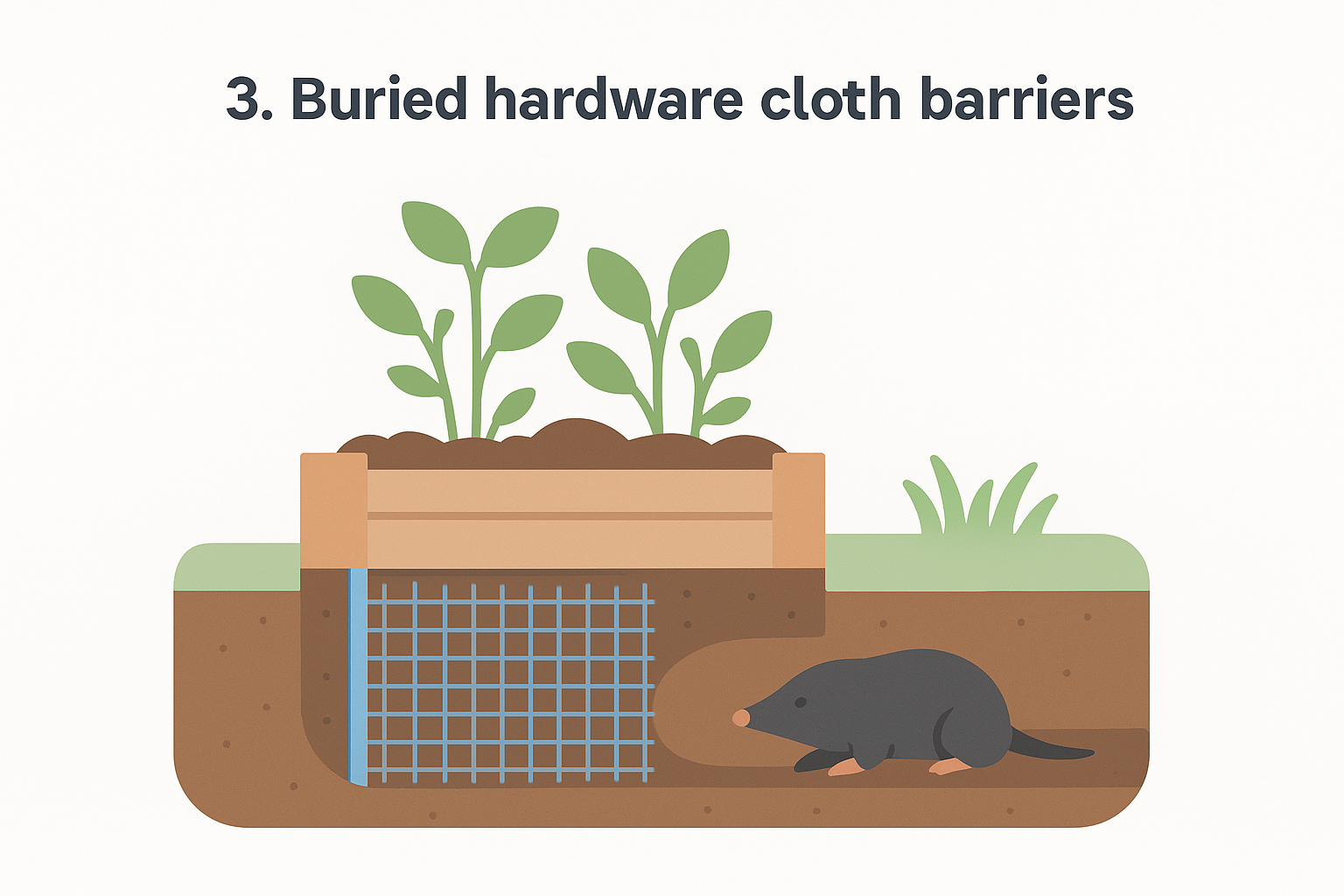
3. Buried hardware cloth barriers
A buried barrier is the only method that protects a space for the long haul, but it only works for small areas. Nothing clears a lawn permanently while the soil is full of earthworms, because new moles move in. For moles rodent control around one bed, exclusion is the closest thing to permanent.
How it works
Galvanized hardware cloth buried at least two feet deep , with a few inches left above ground, blocks tunneling into the protected area. Dig a trench around the bed, set the mesh upright, leave the top edge above grade, and backfill. Moles already inside will stay there, so trap or bait them first .
Barriers keep moles out. They do not remove the ones already inside.
Who it suits
This suits vegetable gardens, raised-bed areas, new plantings, and a prized flower bed. It is also worth it anywhere a single mound would bother you. It does not suit an open lawn, where the perimeter is too long to fence.
Cost and drawbacks
The mesh itself is affordable. The cost is labor, since digging a trench two feet deep around a large perimeter is a full weekend of work. One gap or shallow section defeats the whole effort, so take your time with the install. Moles can also still run through the lawn right up to the edge of the barrier, which means you may still see mounds nearby.
4. Castor oil repellents
Castor oil repellents are the one non-lethal product with a real following, and they work inconsistently. Treat them as a low-risk first try, not a guaranteed fix. For moles rodent control in a yard with light activity, that may be enough.
How it works
Liquid and granular castor oil products are applied to the lawn and watered in. The idea is to make the soil smell and taste unpleasant so moles move on. Homemade versions mix castor oil and dish soap with water and pour it into tunnels. These do not kill moles, and a mole may simply relocate to a neighbor's yard or stay if food is plentiful. No "rodent repellent" is made for moles, so look for a castor oil product labeled for them.
If a mole product doesn't kill, trap, or block, treat it as a maybe, not a fix.
Who it suits
Repellents suit homeowners who prefer a non-lethal approach, have only a few fresh ridges, and want to start with something easy. They make sense as a short trial before you commit to traps or bait. Don't rely on them for a lawn with dozens of active runs.
Cost and drawbacks
Products are cheap to moderately priced, but you must reapply after rain or irrigation, and results vary. The bigger cost is money lost on products that don't work. Purdue's lab says these gimmicks fail:
- Mothballs, human hair, razor blades, or chewing gum in tunnels
- Pinwheels and ultrasonic spikes
- Grub killers, because moles eat earthworms far more than grubs
Flooding tunnels with a hose is not proven either, and it wastes water.
5. Professional mole removal
Hire a professional when tunnels keep spreading, your DIY attempts have failed, or you don't want to handle traps or poison. For stubborn moles rodent control cases, a tech brings experience reading tunnels that most homeowners lack.
How it works
A technician finds the active runs with the same flag-and-recheck test, then traps or baits them and returns until no runs reopen . That often takes several weeks. A good visit also checks for other tenants. Abandoned mole tunnels can shelter mice and voles, so a lawn problem can quietly become a rodent problem .
Ask how many follow-up visits the price includes, because mole control is rarely a single trip.
Who it suits
This suits large yards, properties next to wooded lots or open land where new moles keep arriving, and busy owners. It also suits anyone who wants poison handled by a licensed person. Defender is based in Sacramento and serves Roseville, Folsom, Elk Grove, and Vacaville with rodent control and lawn pest treatments. When you request a quote, describe the mounds and ridges you see so we can sort out whether you have moles, gophers, or voles.
Cost and drawbacks
Price depends on yard size, how much activity there is, and how many visits the plan covers. Ask for a written quote that states the visit count and what happens if moles return. Professional service costs more than a $20 trap, but it saves time and avoids the trial and error that drags out a mole problem.
Where to start with your mole problem
Confirm you have moles, then trap the active runs. Use worm-shaped bait if you can't check traps daily, and fence off any bed you can't afford to lose. Keep castor oil to a short trial and skip the gimmicks. When tunnels spread faster than you can manage them, hand it off.
If you are in the Sacramento area and want a second opinion on what is tearing up your lawn, request a quote from Defender Termite & Pest Management and tell us what you see in your yard.