5 Signs Of Gophers In Your Yard And How To Spot Them Fast
You step outside one morning and notice a fresh mound of dirt sitting in the middle of your lawn. By the weekend, there are three more. If you're searching for signs of gophers in your yard , you're probably staring at exactly this kind of damage and wondering what's going on underground.
Gophers can tear through root systems, destroy garden beds, and compromise irrigation lines , all before you ever see one. The tricky part is that their surface damage looks a lot like the work of moles or voles, which means misidentifying the pest leads to wasted time and money on the wrong solution.
At Defender Termite & Pest Management, we've helped Sacramento-area homeowners deal with destructive pests since 1999 , gophers included. Below, we'll walk you through five clear indicators of gopher activity so you can identify the problem fast and take the right next step.
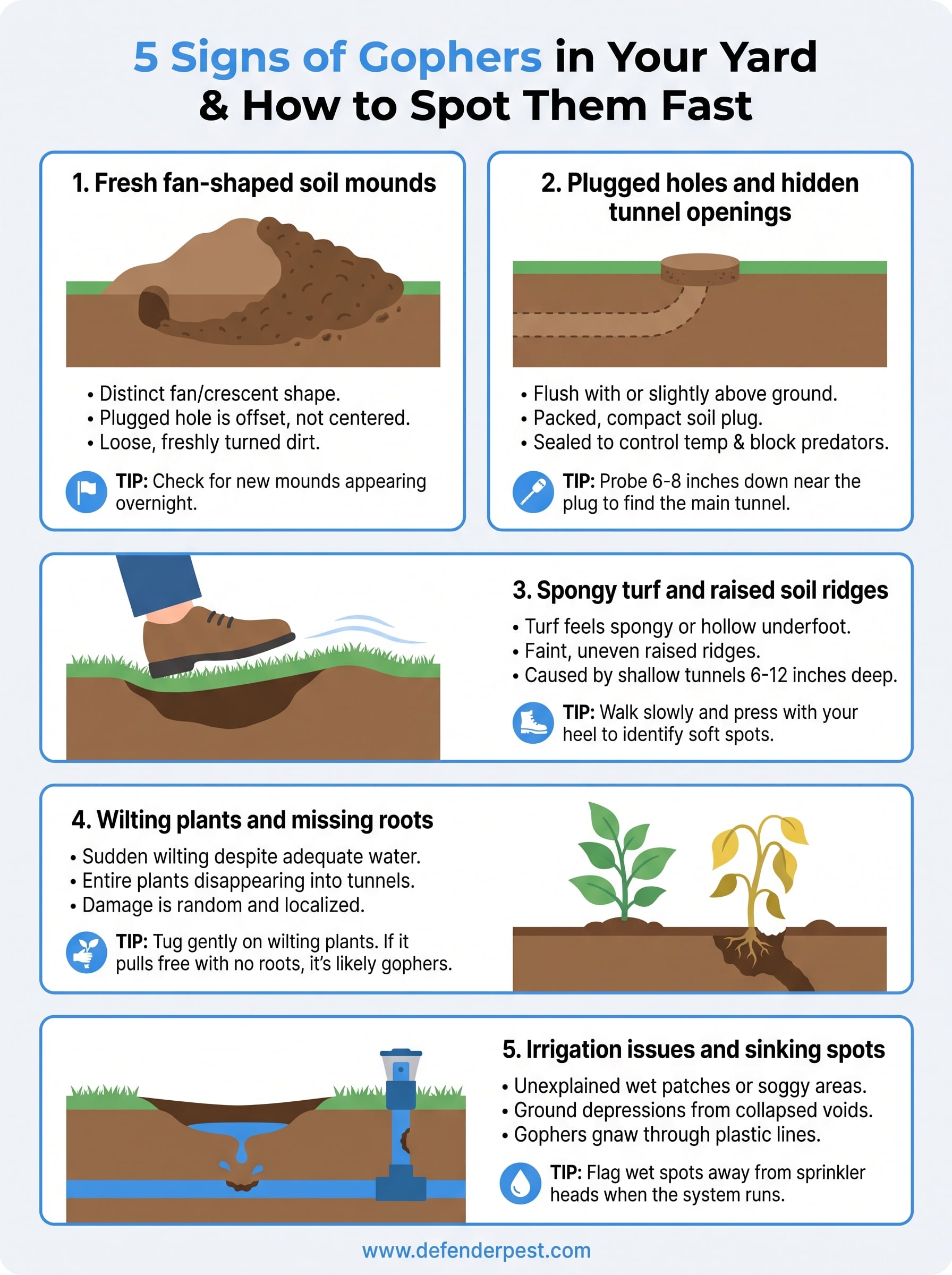
1. Fresh fan-shaped soil mounds
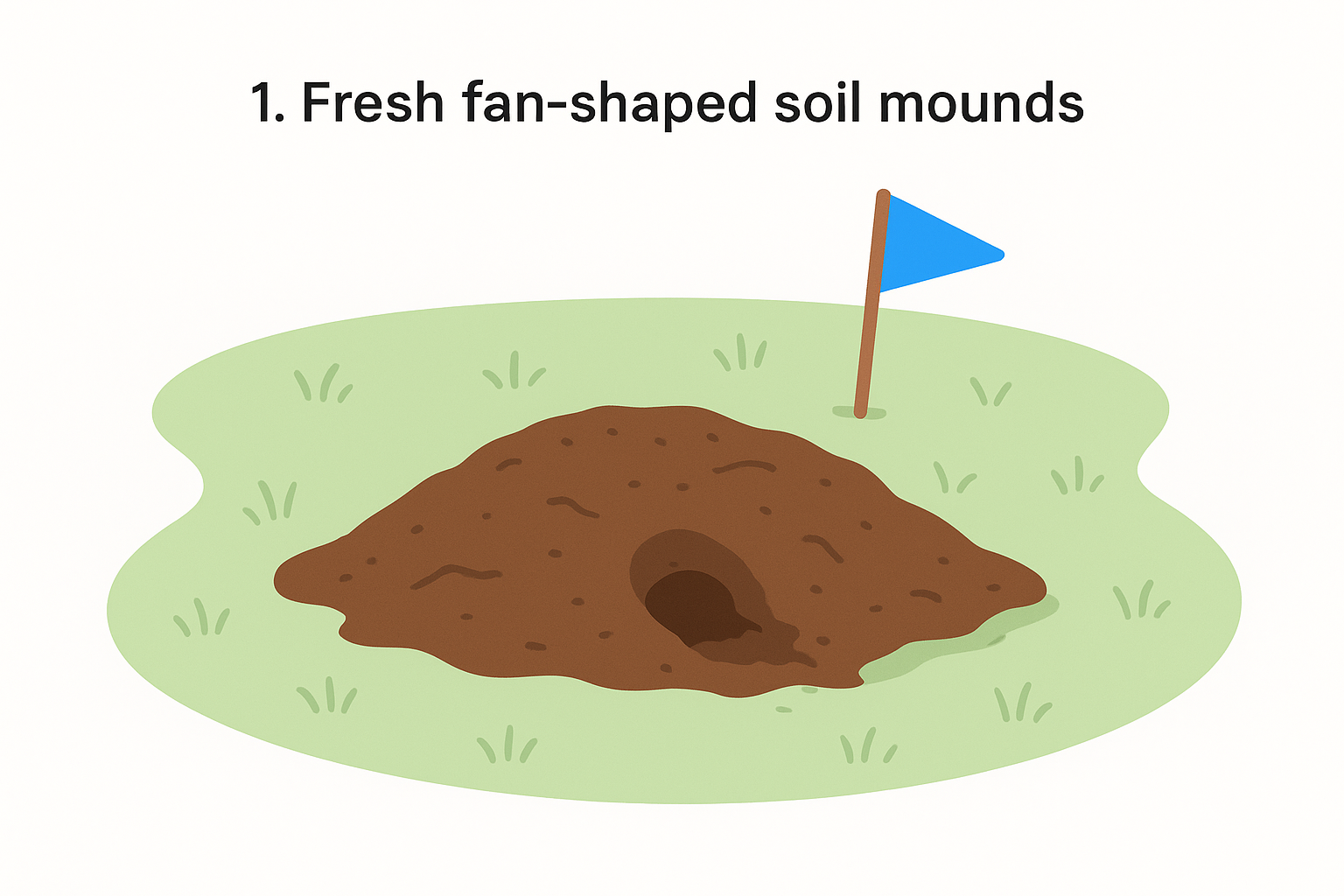
The most recognizable of all signs of gophers in your yard is a fresh mound of loose dirt sitting on the surface. Unlike a random pile, gopher mounds have a distinct fan or crescent shape , with the soil pushed out to one side and a plugged hole offset from the center.
What it looks like
Each gopher mound typically measures 6 to 24 inches across and sits fairly flat compared to other pest mounds. The dirt is loose and freshly turned , often appearing darker than the surrounding soil because it came from deeper underground.
Why gophers leave this sign
Gophers excavate extensive tunnel systems and push displaced soil up through a lateral shaft that opens at the surface. They then plug that exit hole with loose dirt, which is why the opening isn't centered in the mound. Each new mound signals active digging nearby .
A single gopher can produce up to 70 mounds per month during peak activity periods.
How to tell it from mole mounds
Mole mounds are symmetrical and volcano-shaped , with the exit hole sitting directly in the center. Gopher mounds are asymmetrical and fan-shaped , with the plug offset to one side. If your mounds resemble small volcanoes, you're likely dealing with moles rather than gophers.
Quick checks to confirm active digging
Probe the ground 4 to 6 inches deep about a foot from the mound's flat edge, pointing in the direction the fan opens toward. That's typically where the main tunnel runs. If your probe drops into open space , you've located active tunneling below.
What to do right away
Mark every fresh mound with a small flag or stake . Tracking whether new mounds appear overnight tells you immediately whether gophers are still active in that area or have moved on.
2. Plugged holes and hidden tunnel openings
Beyond mounds, gophers leave plugged surface holes near active digging zones. These are easy to miss because gophers seal them deliberately, making sealed holes one of the more overlooked signs of gophers in yard damage.
What it looks like
Each hole is roughly 1 to 2 inches across and sits flush with or slightly above the ground. The soil plug looks packed and compact, often blending with surrounding grass and going unnoticed until you look closely.
Why gophers plug openings
Gophers seal tunnel entrances to block predators and control temperature inside the burrow. Plugging is instinctive behavior that keeps the underground network protected from exposure.
A freshly plugged hole almost always means a gopher is still active directly below.
How to tell it from vole runways and small holes
Voles create open surface holes that connect to visible trails running through grass. Gopher holes are sealed tight , with no surface runway connecting them to other entry points.
Quick checks to find the main tunnel area
Probe 6 to 8 inches down next to any plugged hole. The main tunnel typically sits within 12 inches of that plug.
- Step between plugged holes and press down with your foot to locate soft ground
- Probe every 6 inches in a line from the plug to trace the tunnel direction
What to do right away
Check each plugged hole the next morning . If the plug looks freshly replaced or disturbed, gophers are still using that tunnel and you need to act quickly.
3. Spongy turf and raised soil ridges
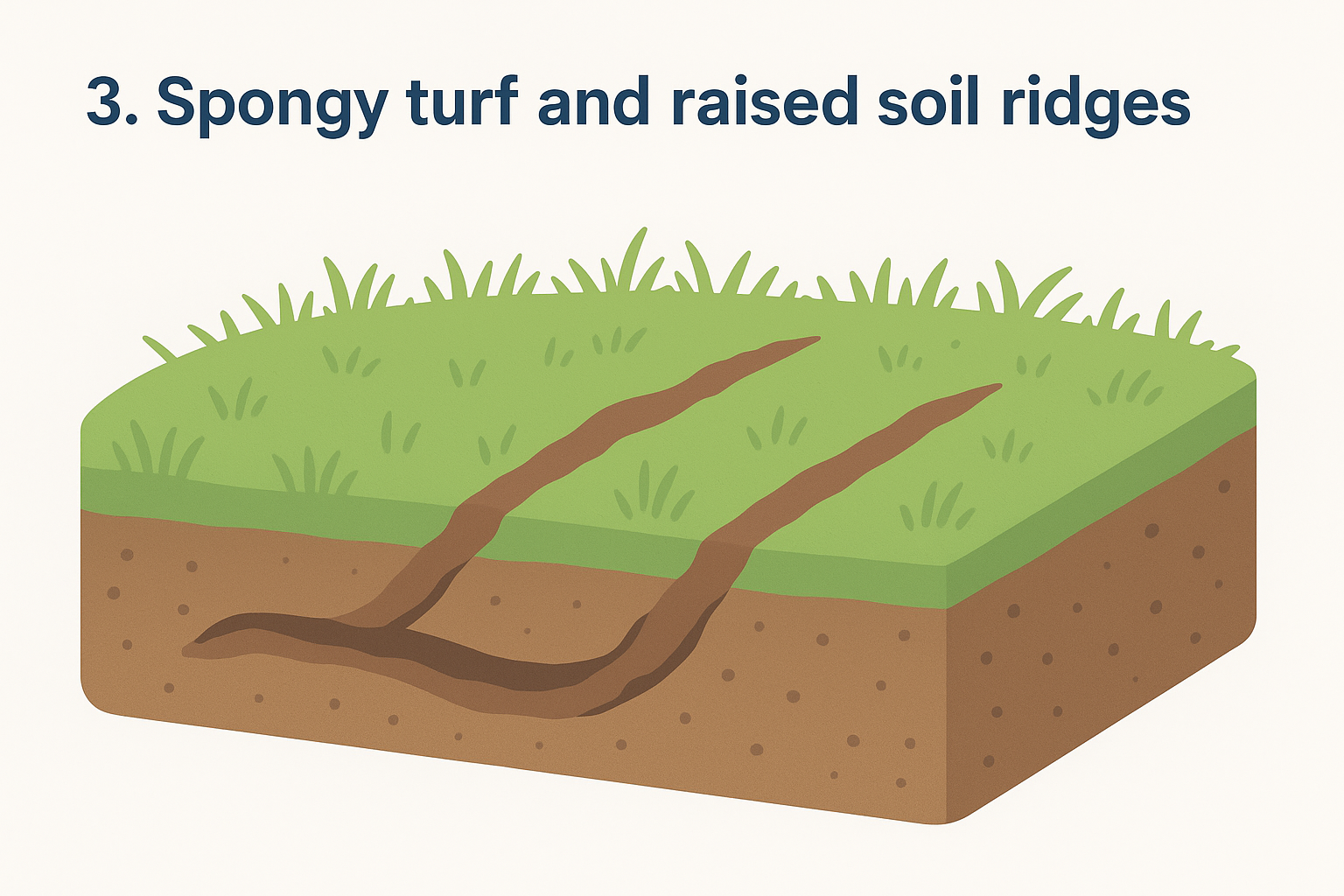
One of the subtler signs of gophers in yard conditions is how the ground feels when you walk across it. Active tunneling creates hidden voids beneath your lawn that make the turf feel spongy or hollow underfoot.
What it looks like
You may notice faint raised ridges tracing irregular lines across your grass. The turf above these ridges looks slightly lifted and uneven compared to the surrounding lawn area.
Why tunneling makes the ground feel soft
Gophers dig lateral tunnels 6 to 12 inches deep , removing soil and leaving empty space beneath the surface. That gap eliminates ground support under the turf , causing it to compress or sink when you walk over it.
A single gopher tunnel system can stretch 200 to 2,000 square feet beneath your yard.
How to tell it from surface tunnels made by moles
Moles push up continuous ridges right at the surface , often forming long winding lines clearly visible in the grass. Gopher ridges are deeper and far less defined , making them harder to detect without walking the area slowly.
Quick checks to map where tunnels run
Walk slowly across any suspect area and press down firmly with your heel every few feet. Flag each soft or hollow spot, then connect the flags to trace the tunnel path running underground .
What to do right away
Stop mowing over confirmed soft spots until you address the infestation. Running a mower over active tunnels collapses tunnel walls and makes locating entry points for trapping significantly harder.
4. Wilting plants and missing roots
One of the most frustrating signs of gophers in yard gardens is watching healthy plants wilt and collapse with no obvious cause above ground. If your plants look stressed despite adequate watering, gophers may be feeding on the root system directly below you.
What it looks like
Plants suddenly wilt, yellow, or fall over even when soil moisture looks normal. You may also notice entire plants disappearing overnight, pulled underground root-first with only a small depression left behind.
Why gophers target roots, bulbs, and young plants
Gophers are strict herbivores that feed almost entirely underground, pulling roots, bulbs, and tubers directly into their tunnels. Surface damage often looks minor while the plant is already dead below , which is why this sign gets misread so often.
Gophers can pull a full plant underground in seconds, leaving almost no trace at the surface.
How to tell it from drought stress or lawn disease
Drought stress and disease spread gradually across wide areas in predictable patterns. Gopher damage is random and localized , with healthy plants sitting right next to dead ones.
Quick checks to confirm root damage underground
Gently tug any wilting plant . If it pulls free with little resistance and no roots attached , a gopher fed on it from below.
What to do right away
Pull the affected plants and inspect the root zone immediately . Any open tunnel you uncover in that area is active and needs treatment right away.
5. Irrigation issues and sinking spots in the yard
One of the less obvious signs of gophers in yard systems is the damage they cause to underground irrigation lines . When gophers chew through buried sprinkler pipes, you'll notice wet patches, sinking ground, or a spike in your water bill.
What it looks like
Your lawn develops unexplained wet areas or soggy patches that don't match your irrigation schedule. You may also see small depressions where the ground above an active tunnel has collapsed inward.
How gophers damage sprinkler lines and create voids
Gophers gnaw through plastic irrigation lines while tunneling. Those breaches flood surrounding soil, washing away dirt and leaving underground voids that cause the surface above to sink.
A single chewed irrigation line can waste hundreds of gallons before you spot any visible surface damage.
How to rule out leaks, drainage problems, and settling
Standard irrigation leaks create consistent wet zones tied to specific heads or valves. Gopher damage produces irregular wet patches that shift location as tunnels expand further through the yard.
Quick checks to spot gopher-related water loss
Run your system and walk the area. Flag any wet spots appearing away from sprinkler heads , then probe those locations to check for open tunnels below .
What to do right away
Shut off that irrigation zone immediately and call a pest professional. Repairing the pipe before removing the gopher means the damage will repeat .
Next steps
Now that you know the five signs of gophers in your yard , you can move quickly before the damage spreads. Fresh mounds, plugged holes, spongy turf, wilting plants, and irrigation problems all point to active tunneling below your lawn . Each sign on its own warrants attention, but two or more appearing together means gophers are already well established on your property.
Acting fast matters. Gophers expand their tunnel systems rapidly , and waiting a few extra weeks gives them time to destroy more root systems, chew more irrigation lines, and push the repair costs higher. Start by flagging every sign you spot and documenting new activity daily so you have a clear picture of how active the infestation is.
If you're seeing multiple signs and need professional help, contact Defender Termite & Pest Management for a pest assessment. Our Sacramento-area team can identify the extent of the problem and put the right solution in place fast.