Do Ultrasonic Rodent Repellents Work? Facts & Alternatives
Do Ultrasonic Rodent Repellents Work? Facts & Alternatives
If you've ever searched "do ultrasonic rodent repellents work," you've probably seen bold claims from manufacturers promising a plug-in solution to your mouse or rat problem. These devices are marketed as clean, quiet, and chemical-free, which sounds almost too good to be true. For many homeowners, it is.
The short answer: ultrasonic repellents are not a reliable method for controlling rodents. Independent research and field experience consistently show that these devices fall short of their promises. At Defender Termite & Pest Management , we've served Sacramento-area homes and businesses since 1999, and we regularly get calls from frustrated property owners who already tried ultrasonic devices before reaching out for professional rodent control that actually works.
This article breaks down what the science says about ultrasonic repellents, why rodents adapt to them so quickly, and what proven alternatives exist when you need real results.
What ultrasonic rodent repellents are
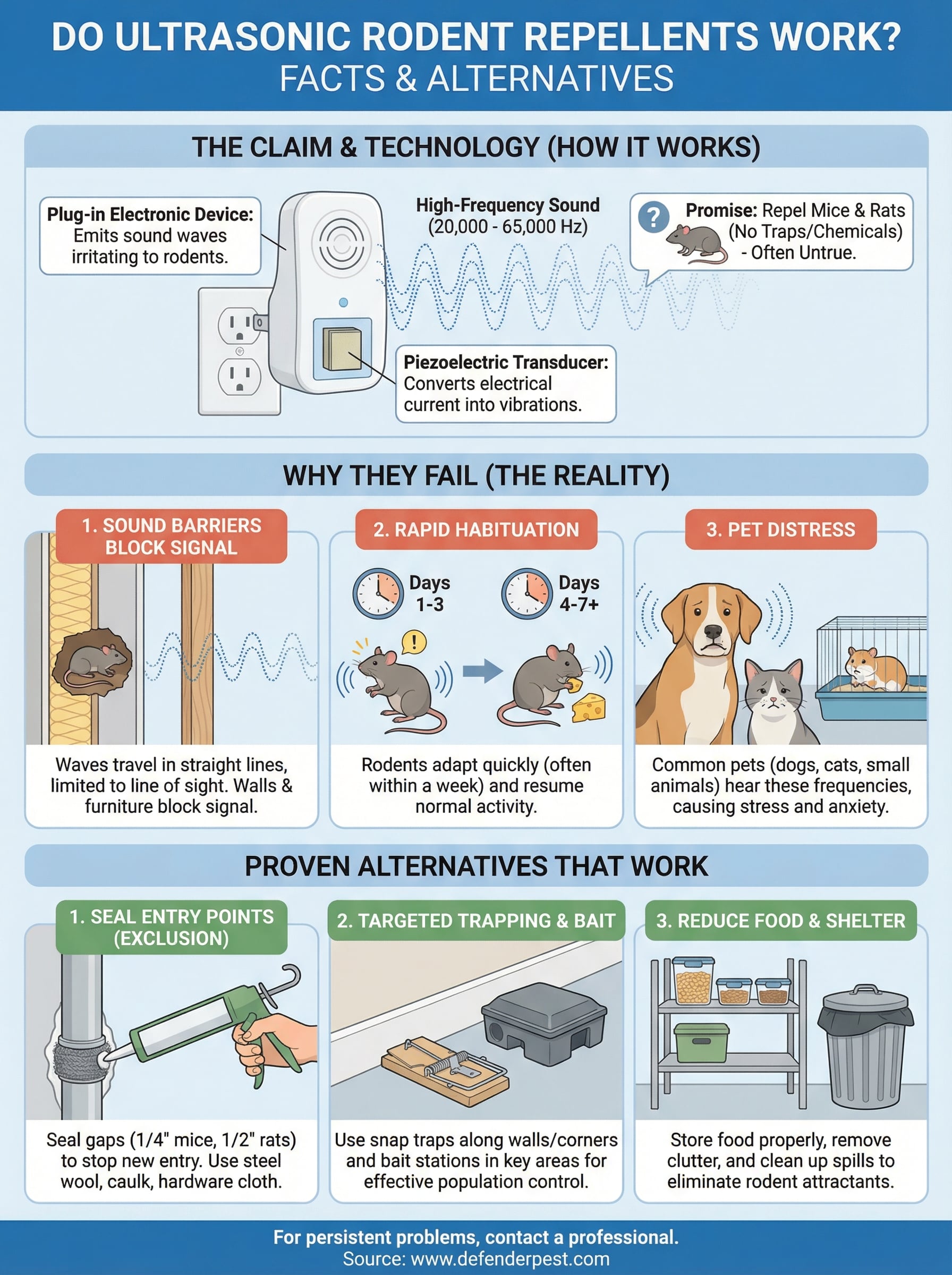
Ultrasonic rodent repellents are plug-in electronic devices that emit high-frequency sound waves, typically ranging from 20,000 to 65,000 Hz , which falls above the range of human hearing. The idea is that these sound frequencies are irritating or disorienting to rodents, driving them away from the area where the device is installed. You'll find them sold in hardware stores, online marketplaces, and big-box retail chains, often packaged as a convenient, hands-off fix to a rodent problem.
How the technology works
These devices convert standard electrical current into ultrasonic sound waves using a component called a piezoelectric transducer. The transducer vibrates at extremely high speeds to produce frequencies that rodents can theoretically detect. Because the sound waves travel through air but cannot pass through walls, furniture, or most solid objects , the effective area of any single unit is limited to a direct line of sight within one room. Most manufacturers recommend placing one device per room, which already hints at a significant practical limitation.
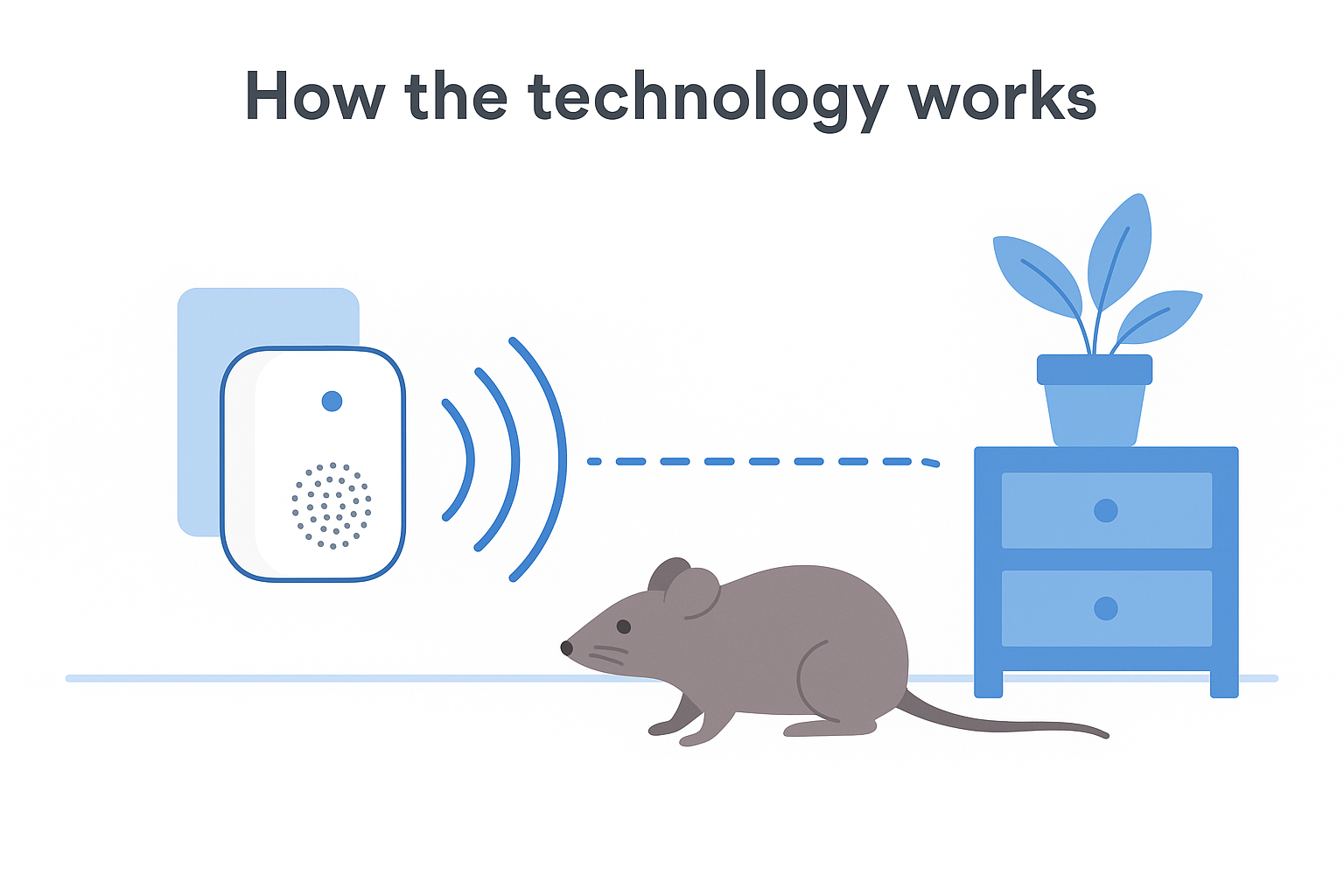
Ultrasonic waves behave like light in one key way: they do not bend around corners or penetrate barriers, so rodents in adjacent spaces are completely unaffected.
What manufacturers claim
Marketing materials for these devices tend to make bold promises. Manufacturers commonly advertise that their products will repel mice, rats, and other pests without traps, poisons, or chemicals. Some claims go further, suggesting the devices also protect against insects. Here is a quick breakdown of what you will typically see on product packaging:
- Coverage claims: 1,200 to 5,000 square feet per unit
- Target pests: Mice, rats, roaches, spiders, ants
- Chemical-free: No toxins, marketed as safe for children
- Continuous protection: Plug in and leave it running
These claims are appealing, especially if you have children or pets at home. However, the gap between what the packaging promises and what peer-reviewed research actually shows is significant, which is exactly what the next section covers.
Do ultrasonic rodent repellents work
Research consistently shows that ultrasonic rodent repellents do not work as advertised in real-world conditions. Multiple independent studies have tested these devices under controlled conditions, and the results point to one recurring pattern: rodents show a brief, temporary reaction before they return to normal behavior. That initial response fades fast, often within just four to seven days, as rodents habituate to the sound and resume feeding and nesting.
Rodents that return to a food source despite ongoing ultrasonic exposure demonstrate that hunger and routine outweigh any short-term discomfort the sound produces.
What the research shows
The FTC has taken enforcement action against several manufacturers of ultrasonic pest repellers for making unsupported claims about product effectiveness. Peer-reviewed studies confirm that rodents habituate rapidly to ultrasonic frequencies, typically within a week of first exposure, and after that adjustment window closes, the devices have no measurable effect on rodent activity, movement, or population size inside a structure.
Kansas State University researchers found that rodents moved freely around active ultrasonic units after a short acclimation period, showing no signs of stress or avoidance. Your rodent problem does not pause because a device emits a sound. The infestation continues to grow , and the structural damage from gnawing and nesting accumulates quietly while you wait for results that simply will not come.
Why they usually fail in real homes
Even if ultrasonic frequencies cause temporary discomfort , real homes are not controlled environments . The physical layout of a typical house creates conditions that actively work against these devices.
Sound barriers inside your walls
Ultrasonic waves travel in straight lines and lose intensity the moment they hit a solid surface. Insulation, drywall, cabinets, and stored boxes all block or absorb the signal before it reaches the spaces where rodents actually live. In most homes, mice and rats nest inside wall cavities , under flooring, and in attic spaces , placing them completely outside the range of any plug-in unit. A device running in your kitchen has zero effect on rodents traveling through the wall void six inches away.
If rodents are nesting inside your walls, an ultrasonic device sitting on your countertop cannot reach them.
Rodent behavior works against the device
Rodents are neophobic by nature , meaning they instinctively avoid new stimuli in their environment. That initial skittishness is what makes some homeowners think the device is working. Once rodents confirm that the sound carries no real threat , they adapt and resume normal activity. Food sources, water, and established nesting areas give rodents strong motivation to push past any residual discomfort the device produces. When you ask do ultrasonic rodent repellents work in a lived-in home, real-world conditions give you a consistent answer: they do not.
Limitations and safety for pets
Beyond the question of do ultrasonic rodent repellents work, there is another problem that product packaging often buries in fine print: these devices do not discriminate between pest species and household animals . Many common pets can hear frequencies in the ultrasonic range, which means the same signal marketed to repel rodents actively affects animals living in your home .
How ultrasonic frequencies affect household pets
Dogs hear frequencies up to roughly 65,000 Hz , and cats can detect sounds up to 79,000 Hz , both well within the range these devices operate. If you run an ultrasonic repeller continuously in a room where your pet spends time, you are exposing that animal to prolonged auditory stress it cannot communicate to you. Pets may show signs of anxiety, restlessness, or unusual behavior that you might not connect to the device.
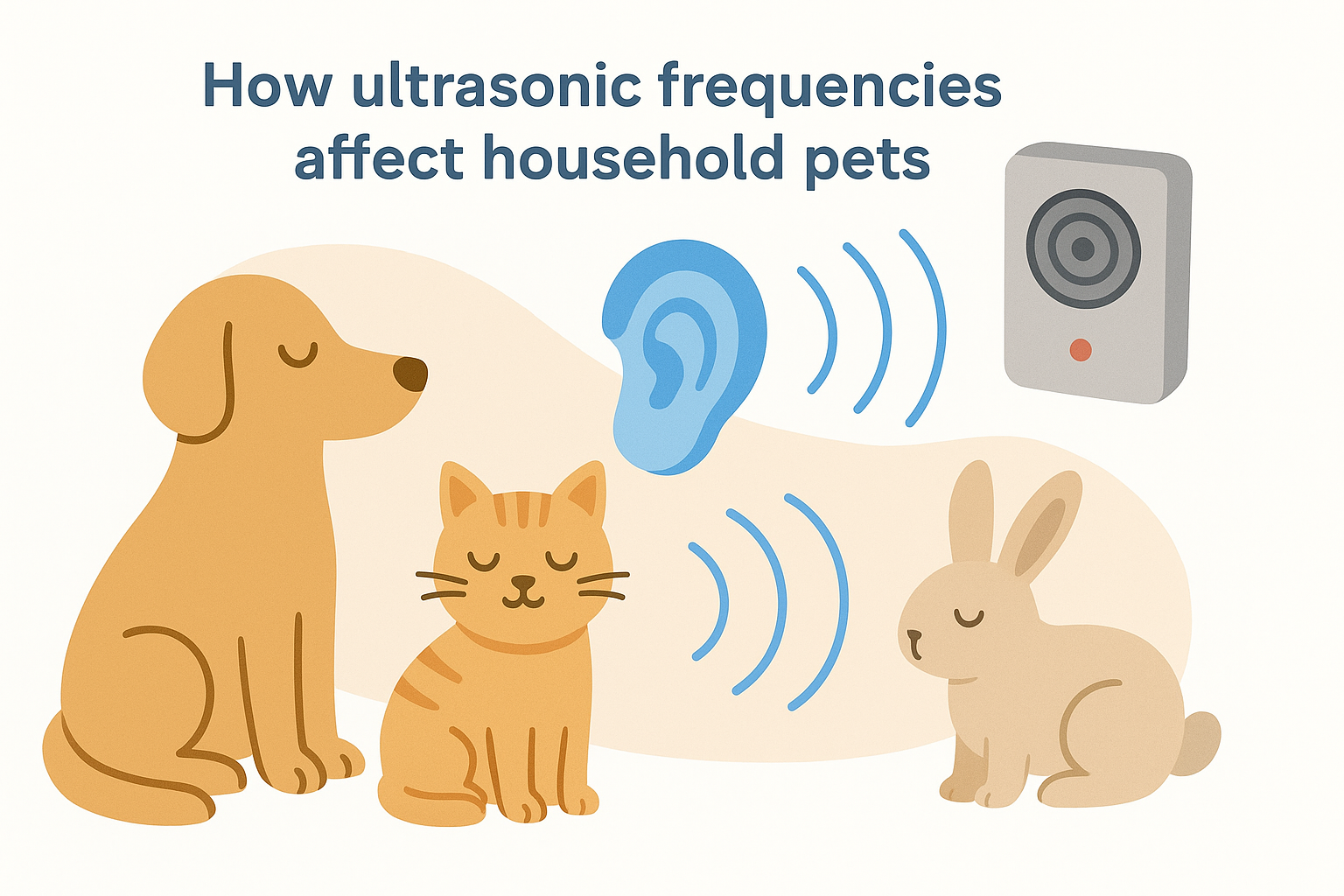
Running an ultrasonic device in a shared living space can cause ongoing stress to dogs, cats, rabbits, and other small animals without you realizing the source.
Small animals like hamsters, gerbils, and pet rabbits are particularly vulnerable because their hearing is highly sensitive and they have no way to escape the sound if their enclosure is nearby. If you share your home with any of these animals, ultrasonic devices introduce a real welfare concern that manufacturers rarely address prominently on the label.
Proven alternatives that actually work
Once you accept that the answer to do ultrasonic rodent repellents work is a firm no, you can shift your focus to methods that produce consistent, measurable results . The most effective rodent control strategy combines physical exclusion, targeted trapping, and sanitation working together rather than relying on any single solution.
Seal entry points first
Rodents enter your home through gaps as small as a quarter inch for mice and a half inch for rats. Sealing these openings with steel wool, hardware cloth, or caulk removes the root cause of the problem before it spreads. Check where utility pipes, cables, and vents pass through exterior walls, as these are the most common entry points in Sacramento-area homes.
Exclusion is the only method that stops new rodents from entering, which means every other control step works better when you do it first.
Use snap traps and bait stations
Snap traps remain one of the most effective and affordable tools available to homeowners. Place them along walls and in corners where rodents travel, since rodents hug edges and rarely cross open floor space. Bait stations with rodenticide can address larger populations but require careful placement away from children and non-target animals. Combining both approaches typically produces faster results than either method alone.
Reduce food and shelter sources
Storing food in sealed containers and removing clutter from garages, attics, and storage areas eliminates the conditions that attract and sustain rodent populations in the first place.
When to call a pro for rodent control
Once you've confirmed that do ultrasonic rodent repellents work is not the answer, and traps or exclusion attempts haven't resolved the problem, professional help is the right next step. Signs that you need a pro include droppings in multiple rooms , gnaw marks on wiring or structural wood , or sounds of movement inside walls at night. These patterns point to an established population that DIY methods alone won't eliminate.
A licensed technician brings tools and training that go beyond what hardware store products offer. Professional inspections identify every entry point , nesting site, and travel path rodents use inside your structure. Targeted treatment plans combine exclusion, trapping, and population control in a coordinated approach that produces lasting results rather than temporary relief.
If you're dealing with a persistent rodent problem in the Sacramento area , contact Defender Termite & Pest Management for an inspection and a plan that actually works.